
MVP Development Services

Where Product Ideas Become Validated Decisions

Speed without validation is just a faster route to the wrong product. At Inceptives Digital, our MVP development company helps startups and product teams reduce product risk through disciplined MVP development, aligning assumptions, user needs, and technical direction before engineering begins. Move forward with clarity that supports both product execution and investment decisions.

Why Most MVPs Fail Before They Launch

Most MVPs do not fail because of bad engineering. They fail because the wrong product gets built with conviction and no validation. The causes are consistent:

Feature overload

Feature overload

Solving an unconfirmed problem

Solving an unconfirmed problem

Assumptions treated as facts

Assumptions treated as facts

Weak product strategy

Weak product strategy

Technical shortcuts

Technical shortcuts

These create debt the moment scale is required. However, the disciplined MVP development services, grounded in evidence and strategy from day one, are what change that outcome.

Validate Product Demand Before Committing to Full-Scale Development

An MVP is not a smaller version of your product. It is a validation system for confirming the right product before full investment is committed.

Experienced teams build MVPs to reduce the cost of being wrong, testing market demand, user behaviour, and willingness to pay before committing to a full build. The output is not just a product. It establishes the foundation for everything that follows.

Prototype, PoC, or MVP:
Which One Do You Actually Need?

The distinction between these three engagements is frequently misunderstood. Getting it right before committing to a scope is one of the most consequential early product decisions.

Feature

Proof of Concept (PoC)

Prototype

MVP (Minimum Viable Product)

Purpose

Confirms technical feasibility

Validates user experience and flow

Tests real market demand

Audience

Internal team and technical stakeholders

Internal team, investors, early testers

Real end users

Output

Proof the concept can be built

Clickable simulation of the product

Functional product with core features live

Output

Proof the concept can be built

Clickable simulation of the product

Functional product with core features live

Question it answers

Can this be built?

Does this feel right to use?

Will people use and pay for this?

Investment Level

Low

Low to moderate

Moderate, scoped to core value

Best Suited For

Unproven or complex technical challenges

Design validation and pitch material

Startups ready to test in a live market

When Is an MVP the Right Product Strategy?

An MVP is the right move at specific, high-risk decision points where the cost of being wrong is still manageable. Scenarios where an MVP is the correct next step:

A new startup idea with unproven market demand.

A SaaS product entering a competitive space.

An AI-driven product dependent on real user interaction to validate.

A marketplace requiring both supply and demand validated before scaling.

A product pivot testing a new direction without full resource commitment.

Investor confidence built on traction data to support a funding conversation.

A new business model where willingness to pay remains untested.

These are precisely the situations Inceptives Digital is built for.

The earlier that conversation starts, the stronger the foundation of every decision after it rests on.

Know Whether Your Product Is Ready for an MVP

Not every idea needs the same starting point. A discovery session helps determine whether an MVP is the right approach, what should be included in version one, and what can wait until further testing.

End-to-End MVP Development Services

Inceptives Digital delivers end-to-end MVP development services, structured to take a well-tested idea from strategy to a market-ready product.

Product Discovery

Structured sessions cover user research, competitor analysis, and business goal alignment, producing a validated product brief that governs every decision made throughout the engagement.

MVP Feature Prioritization

Features are defined by what the MVP needs to prove, not by what seems valuable internally. Built around tested assumptions, so nothing enters the framework without a justified reason to be there.

UI/UX Design & Prototyping

User flow is designed and prototyped before engineering begins, confirming interaction patterns and interface decisions with real feedback so development starts on a confirmed foundation.

MVP Development & Engineering

Built on a defined, API-first architecture, modular code, and CI/CD-driven sprints ensure every technical decision serves the product’s long-term trajectory as much as its immediate requirements.

Quality Assurance & Launch

Every release goes through structured functional, performance, and regression testing before deployment. Nothing ships to a deadline. It ships when it is ready to perform under real usage conditions.

Post-MVP Growth & Iteration

Post-launch behaviour data is analyzed and used to drive the next release, keeping every roadmap decision traceable to real user signals rather than internal preference or assumption.

The Framework Behind Every Successful MVP Development

Every MVP development engagement at Inceptives Digital follows a structured six-stage process, where each stage builds directly on the one before it and informs everything that follows.

STAGE 01

Discovery & Validation

Structured market and user research, business goal alignment, and success metric definition establish the validated foundation every subsequent decision in the engagement is built on.

STAGE 02

Product Strategy & UX Design

Research findings shape a prioritized roadmap, feature scope, wireframes, and UI design, culminating in an interactive prototype tested with real feedback before engineering is committed to.
STAGE 03

MVP Engineering

With strategy and design confirmed, frontend and backend development, API-first integrations, and a modular, scalable architecture are executed against a defined technical standard ready for real-world conditions.
STAGE 04

Measure & Learn

Post-launch behavioural analytics, user feedback, and performance data are reviewed to determine what the product has confirmed, what it has not, and what that means for the next stage.

STAGE 05

Scale with Confidence

Insights from the measure stage drive roadmap updates, architecture improvements, and new feature development, ensuring every decision at scale carries the same evidence-based rigour as the build itself.

Every Successful MVP Starts With a Clear Plan

Let’s discuss defining the roadmap that gives your product the strongest chance of product-market fit.

The Reasons Founders Rely on Inceptives Digital to Develop MVPs

Discovery-First Product Thinking

Business and market decisions are evaluated before engineering begins, ensuring every technical choice throughout the engagement serves a confirmed and justified product purpose.

Senior-Led Product Teams

Every engagement is led by senior strategists, designers, and engineers with the experience to make the right calls under real product and market constraints.

Scalable Architecture from Day One

Technical decisions are made against long-term product requirements from the start, so the architecture built for the first release supports the business that follows it.

Business-Driven Product Decisions

Features are tied to a measurable business outcome before entering scope, ensuring nothing reaches the build without a validated reason to exist.

Transparent Agile Delivery

Structured sprint planning, clear communication, and full progress visibility keep every stakeholder aligned throughout the engagement with no ambiguity about where the product stands.

Long-Term Product Partnership

The engagement continues beyond launch through structured iteration cycles, supporting product growth with the same level of strategic and technical rigour applied from day one.

Your Idea Deserves Better Than Average Execution.

What Our Clients Say About Building With Us

Every successful product starts with alignment between the people building it and the people who need it. These stories reflect the collaboration, trust, and product decisions behind our work.

Inceptives Digital excels at translating complex, abstract product requirements into high-performance, production-ready software. Their execution is seamless.”

Collis Maddox
Owner/Designer, MaddTech

From initial product strategy to deployment, Inceptives Digital demonstrated exceptional technical discipline. They delivered a highly scalable mobile product ahead of schedule without compromising architectural integrity.

Kirk Flaming
Owner, Pulse Check Timer

Inceptives Digital did not just execute a brief; they aligned perfectly with our operational goals. They engineered a reliable digital ecosystem that completely modernized our workflow.

Dorrin Rosenfeld
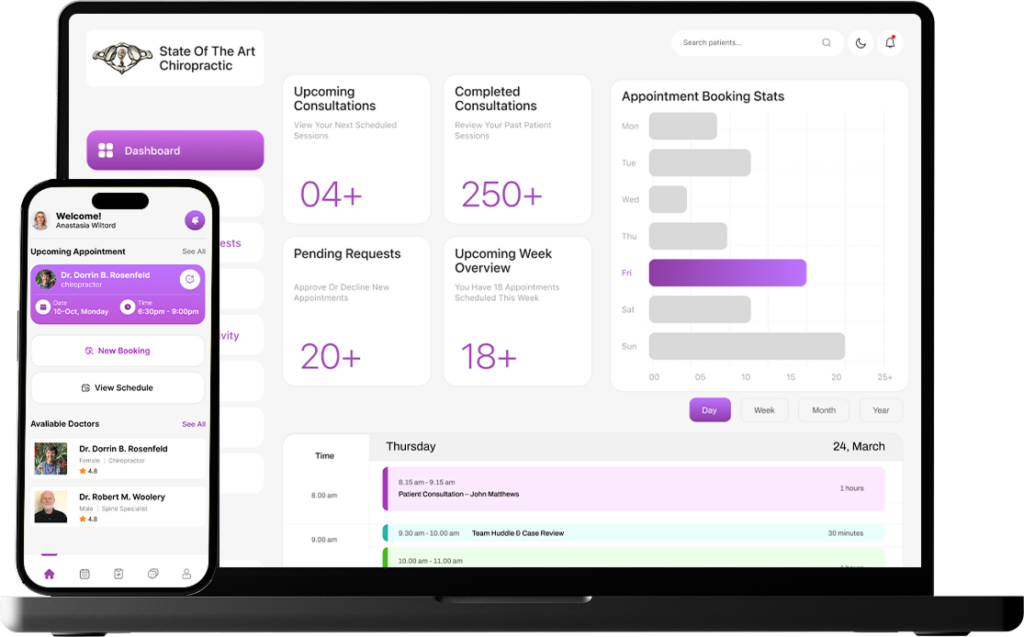
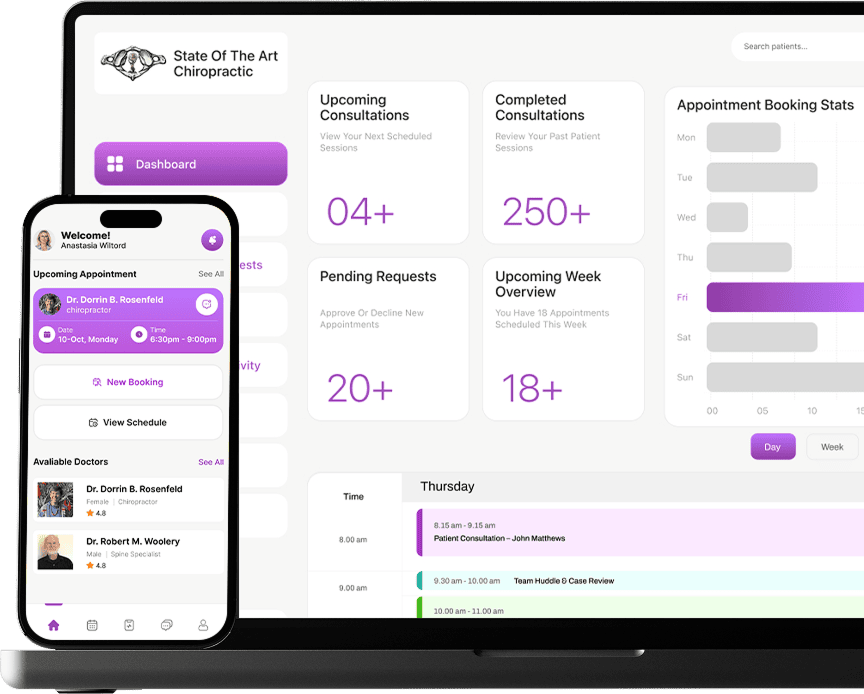
DC & Owner, State of the Art Chiropractic

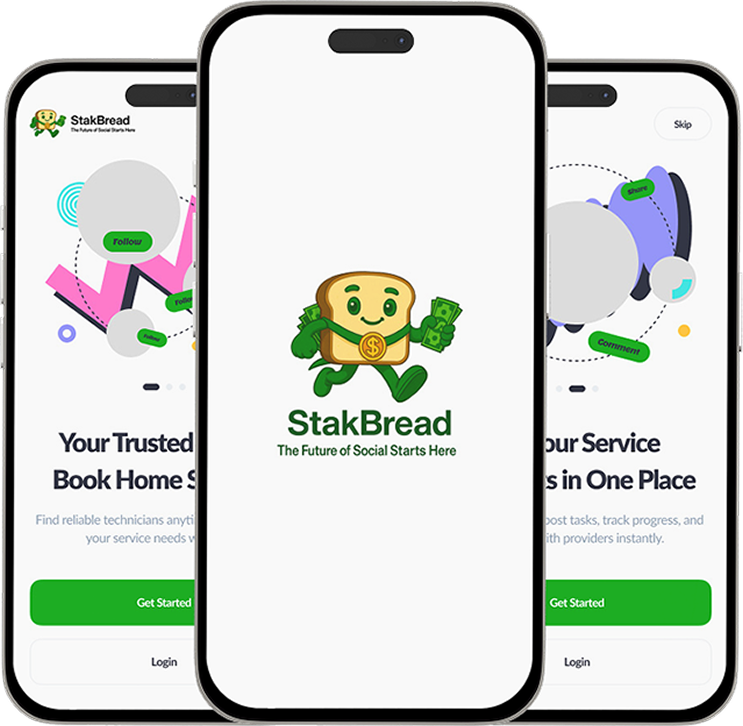
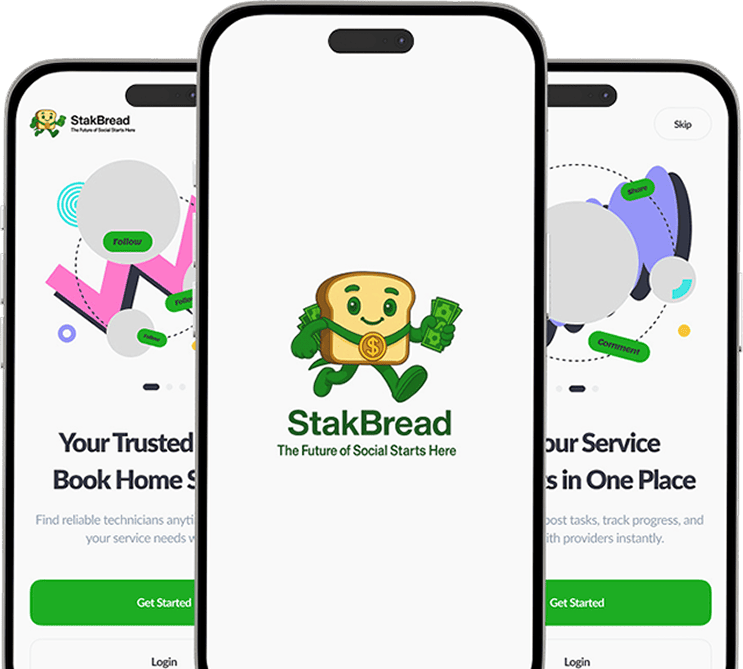
We needed an engineering partner capable of architecting a highly scalable, complex social commerce platform. Inceptives Digital mapped out a precise technical strategy demonstrating deep understanding of data architecture, system performance, and user-centric design.

Gary Dixon
Founder, StakBread

The engineering rigor at Inceptives Digital is outstanding. They managed our complex scope of work with meticulous precision from initial system architecture to the final deployment phases.

Ariel Rodriguez
Founder, Dropryde

Product Expertise Across 20+ Industries

Inceptives Digital brings domain-specific product knowledge to every engagement, with MVP development experience spanning more than 20 industries across regulated and consumer markets.

Estimated Timeline for MVP Development: What to Expect at Each Stage

Most MVP software development engagements at Inceptives Digital move from discovery to market release across four structured phases. The timeline is determined by product scope, platform requirements, and compliance obligations.

Discovery Sprint

Discovery & Planning

Every strategic decision is validated before development begins, creating a roadmap driven by evidence instead of assumptions.

Design & Prototyping

Ideas are translated into interactive experiences that stakeholders can review, refine, and validate before development begins.

trust matrics

Development

Engineering focuses on the functionality that creates immediate value while laying the groundwork for future product evolution.

150+ Developers

Testing & Launch

Before release, every critical workflow is verified to ensure the MVP performs reliably and is ready for real user adoption.


The Tech Stack Behind Every

Discovery sprints rely on the right set of collaboration, research, design, and technical planning tools. Our team works across modern product discovery technologies to map user journeys, validate concepts, document insights, and define a technical foundation that supports informed product decisions and successful development.

Web
GoDaddy
Uno Platform
Kotlin
Jetpack Compose
Android SDK
Flutter
Dart
React
Expo
Next.js
HTML5
Tailwind CSS
Next.js
NestJS
Express.js
Python
GraphQL
REST API
Spring Framework
Java logo
.NET
FastAPI
Django
PostgreSQL
Cloud Storage
Redis
Firebase
MongoDB
MySQL
Amazon Web Services (AWS)
Google Cloud Platform (GCP)
Microsoft Azure
Docker
Kubernetes
CI/CD Pipeline
Jenkins
DevOps Automation
Terraform
ChatGPT
TensorFlow
PyTorch
Scikit-learn
Hugging Face
PaddlePaddle
Computer Vision
Figma
Adobe XD
Framer
Sketch.IO
Miro
Amplitude
Sentry
New Relic
Firebase Crashlytics
Google Firebase
Mixpanel
Google Analytics
OAuth
GDPR
OWASP
JSON Web Token (JWT)
SSL Certificate

How Much Does It Cost to Build an MVP?

MVP development investment at Inceptives Digital is scoped after discovery, once the product’s actual requirements are understood. The following tiers reflect what each complexity level typically demands.

Basic MVP

$15,000 - $50,000

Mid-Complexity MVP

$50,000 - $150,000

Complex MVP

$150,000 - $300,000+

Let's Define What Your MVP Needs to Prove

If you’re ready to move from concept to market with confidence, let’s discuss what your MVP needs to prove first.

Frequently Asked Question

What is MVP development, and why does it matter for startups?

MVP development is the process of building a functional, minimum-scope version of a product to test real market demand before committing to a full build. It replaces assumption with evidence, so founders make funding, hiring, and roadmap decisions based on actual user behaviour, not internal opinion.
Cost depends on product complexity, platforms, integrations, and team composition, so there is no honest fixed price without a discovery phase. Any MVP development company quoting a firm number before understanding your product should be treated with caution.
The timeline is shaped primarily by platform count, integration complexity, and compliance needs, not by how big the idea feels. A regulated FinTech MVP will typically take longer than a simple SaaS tool, even with a similar feature set.

A proof of concept confirms something can be built, a prototype shows what it will look and feel like, and an MVP is a functional product tested with real users to validate demand. They answer three different questions: can we build it? Does it feel right? And will people use it? Most commercial products aimed at real users and investors need an MVP, not just a prototype.
Only the features needed to test your riskiest assumption, usually the core workflow that delivers your product’s primary value. Feature overload is one of the most common reasons MVPs fail, since founders often build what they imagine users want instead of what has been validated.
No. A properly structured MVP development company manages strategy, design, and engineering end-to-end. What you need is clarity on the business problem you’re solving, since that shapes every technical decision that follows.
Pre-launch, through user research and assumption testing during discovery. Post-launch, through real usage data, behavioural analytics, and direct user feedback. Skipping the pre-launch stage turns an MVP into a small product release instead of a validation system.
Launch is where assumptions start getting replaced by real evidence, not where the engagement ends. This includes analysing user behaviour, prioritising the roadmap, strengthening architecture, and expanding functionality based on actual usage.
Yes. Most MVP failures come from solving the wrong problem, skipping user validation, or building unrequested features, all of which happen before development starts. Strong engineering cannot fix a flawed strategy.
Most commonly FinTech, Healthcare, SaaS, Logistics, Education, and Retail, though the approach applies anywhere user behaviour is uncertain, and capital risk needs to be minimised. Regulated industries require compliance built in from day one, not added later.
Established businesses use MVPs just as often, typically to test a new product line, a pivot, or a new business model without committing full resources upfront. The logic is the same regardless of company size: confirm before you scale.
Look for a team that leads with discovery rather than an instant quote, involves senior strategists and engineers from the start, and designs for scalable architecture, not just fast delivery. A company that says “we don’t know the cost yet” before understanding your product is usually the more trustworthy one.