

















Computer Vision Development Company

Build Systems That See, Analyze, and Respond in Real Time

We develop computer vision solutions that detect objects, inspect products, classify images, and analyze video streams in real time to automate processes and support faster operational decisions.
Clutch Review Badge
Bark Review Badge
Trustpilot Review Badge

Computer Vision Success Depends on More Than Model Accuracy

The challenge is rarely object detection or image classification itself. The challenge is maintaining accuracy, speed, and reliability once the system is deployed in the real world

What Computer Vision Does in Production

Object detection, image classification, visual inspection, and anomaly detection that help businesses automate monitoring, quality control, and decision-making at scale.

Why Computer Vision Projects Fail

Models trained on limited datasets often struggle with real-world conditions. Changes in lighting, camera angles, image quality, and operating environments can quickly reduce performance after deployment.

What It Takes to Deploy Computer Vision Successfully

Representative training data, task-specific model architectures, and inference pipelines optimized for speed, accuracy, and reliability in production environments.

Production-Ready

Eight capabilities. Each one is scoped in Discovery and built for the specific visual task, dataset, and deployment environment your product requires.

Custom Computer Vision Development

Computer vision systems designed around your specific visual data, operational context, and performance requirements. Built from the architecture up for your use case.

Object Detection and Recognition Systems

ML models that identify, locate, and classify objects within images and video streams in real time. Built for products and operations where visual recognition drives decisions.

Image Classification and Tagging

Deep learning models that categorise and tag images at scale. Built for products that need to organise, search, and retrieve visual content without manual labelling.

Visual Inspection and Quality Control

Computer vision systems that detect defects, anomalies, and quality issues in products, components, and materials. Built for manufacturing and operational environments where human inspection cannot keep up with volume.

Face Recognition and Identity Verification

ML models that identify, verify, and authenticate individuals from images and video. Built for security, access control, and identity verification systems with enterprise-grade accuracy requirements.

Video Analysis and Real-Time Monitoring

Computer vision pipelines that process video streams, detect events, and trigger automated responses in real time. Built for surveillance, operational monitoring, and safety systems.

Medical Image Analysis

Deep learning models that analyse medical images for diagnostic support, anomaly detection, and clinical data extraction. Built for healthcare products where accuracy and compliance are non-negotiable.

Computer Vision Integration Services

Computer vision models and pipelines are integrated into existing software, APIs, and operational infrastructure. Built for businesses that need visual intelligence inside the systems they already run on.

Risks We Eliminate Early

Most computer vision failures are predictable. We address them during architecture and data preparation before development begins.

Training Data Quality

Models trained on unrepresentative data fail when real-world conditions differ from training conditions. We curate and annotate datasets that reflect the actual operational environment before training begins.

Edge Case Accuracy

Lighting variations, occlusions, and motion blur break models that performed well in testing. We test against real edge cases before deployment.

Inference Latency

Real-time video and high-volume image processing have strict latency requirements. We optimise inference pipelines for the throughput that the deployment environment demands.

Edge Device Deployment

Many computer vision systems run on hardware with limited compute. We select and optimise model architectures for the specific constraints of the deployment environment.

Model Drift

Lighting, equipment, and operational conditions shift over time and degrade accuracy quietly. We build monitoring pipelines that detect degradation before it affects outcomes.

System Integration

Computer vision outputs need to connect to the systems that act on them. Integration architecture is defined before development begins.

for Industry-Specific Challenges

Every industry has different visual data requirements, operational constraints, and accuracy standards. We build for the specific context, not a generic template.
Fintech App development

Manufacturing & Quality Control

Healthcare App development

Healthcare & Medical Imaging

Ecommerce App development

Ecommerce and Retail

Education

Security & Surveillance

Travel App development

Agriculture & Food Processing

Legal Tech

Logistics & Supply Chain

Your Idea Deserves Better Than Average Execution.

What Our Clients Say About Building With Us

Every successful product starts with alignment between the people building it and the people who need it. These stories reflect the collaboration, trust, and product decisions behind our work.

Clutch Review Badge
Bark Review Badge
Trustpilot Review Badge

Inceptives Digital excels at translating complex, abstract product requirements into high-performance, production-ready software. Their execution is seamless.”

Collis Maddox

Owner/Designer, MaddTech

From initial product strategy to deployment, Inceptives Digital demonstrated exceptional technical discipline. They delivered a highly scalable mobile product ahead of schedule without compromising architectural integrity.

Kirk Flaming

Owner, Pulse Check Timer

Inceptives Digital did not just execute a brief; they aligned perfectly with our operational goals. They engineered a reliable digital ecosystem that completely modernized our workflow.

Dorrin Rosenfeld

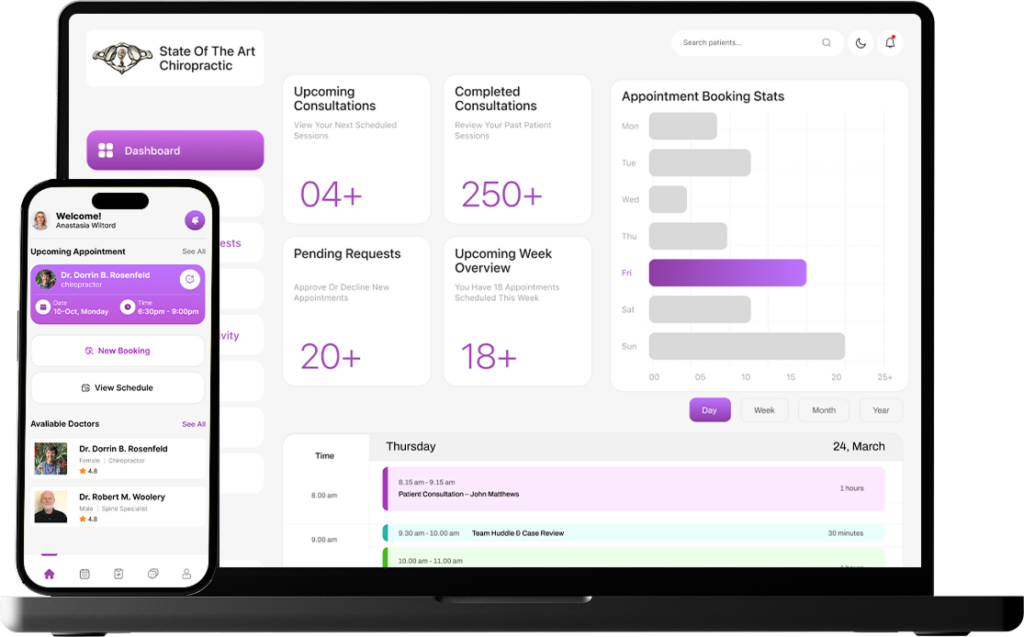
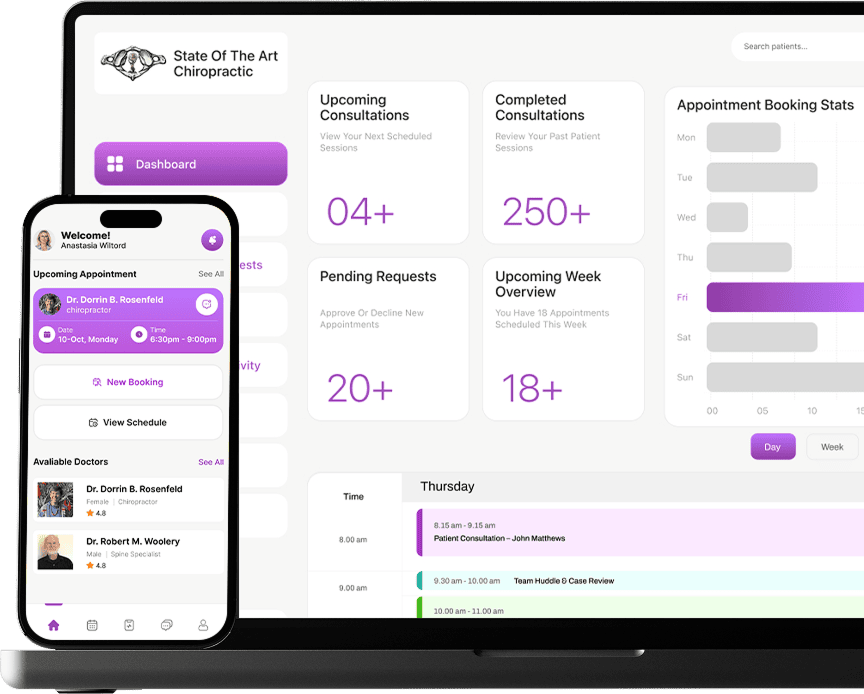
DC & Owner, State of the Art Chiropractic

We needed an engineering partner capable of architecting a highly scalable, complex social commerce platform. Inceptives Digital mapped out a precise technical strategy demonstrating deep understanding of data architecture, system performance, and user-centric design.

Gary Dixon

Founder, StakBread

The engineering rigor at Inceptives Digital is outstanding. They managed our complex scope of work with meticulous precision from initial system architecture to the final deployment phases.

Ariel Rodriguez

Founder, Dropryde

Your use case doesn't have to fit a category.

If visual data is part of the process, computer vision may be able to automate it.

from Data to Deployment

Discovery and AI Opportunity

Discovery & Assessment

The visual task, deployment environment, and data sources are evaluated before development begins. Technical constraints identified at this stage are significantly less expensive to address than after training.

UI/UX Design

Data Preparation

Training data is curated and annotated to reflect real operating conditions. Coverage gaps, class imbalance, and missing edge cases are addressed before model development begins.

AI Model

Model Training

Deep learning architectures are selected for the specific visual task and deployment requirements. Models are validated against operational data, not idealised testing conditions.

AI Product

Integration & Deployment

Computer vision outputs are integrated into existing systems and workflows. Accuracy, latency, throughput, and infrastructure compatibility are verified before release.

Monitoring

Monitoring & Optimization

Operational conditions change over time. Performance monitoring and retraining pipelines ensure model accuracy remains stable as data and environments evolve.


Computer Vision Development Tools and Technologies

The tools, models, and infrastructure behind every computer vision system we have built and deployed in production.
PyTorch
TensorFlow
Hugging Face
LangChain
LlamaIndex
pinecone
Weaviate
Meta
Meta
Milvus
Chroma
Elasticsearch
MLflow
Kubeflow
Apache Airflow
DVC
Amazon Web Services (AWS)
Google Cloud Platform (GCP)
Microsoft Azure
Docker
Kubernetes
Python
Node.js
FastAPI
Flask
Java
REST API
Apache Spark
Apache Kafka
Kubeflow
DVC

FAQ'S

Questions About Computer Vision Development Worth Asking Before You Build

What is computer vision development?
Building systems that extract actionable intelligence from images, video, and camera feeds. Object detection, image classification, visual inspection, and anomaly detection are all computer vision applications.
Manufacturing, healthcare, retail, security, agriculture, and logistics. Any industry where visual data needs to be processed at a volume and speed that human review cannot match.
A proof of concept starts from $20K. A full production system typically ranges from $60K to $250K, depending on complexity and operational requirements. Defined precisely in the Discovery Sprint.
A proof of concept takes 6 to 10 weeks. A full production system takes 3 to 8 months, depending on data readiness and operational complexity.
Labelled visual datasets that reflect real operational conditions. Data quality and volume directly determine model accuracy in production. Evaluated in Discovery before development begins.
Image processing applies predefined transformations. Computer vision uses machine learning to extract meaning and make decisions from visual data. One follows rules. The other learns them.
Yes. We optimise models for edge deployment using TensorRT and ONNX on NVIDIA Jetson and Raspberry Pi hardware. Edge deployment is defined in architecture planning before development begins.
Representative training data, edge case testing, inference optimization, and post-launch drift monitoring. Models are retrained when real-world conditions shift.

Turn Generative AI Into Reliable Operational Systems

Plan models, data flows, integrations, and controls upfront to ensure your AI works reliably at scale.