
















System Integration &

System integration and API automation services that connect applications, databases, and workflows so data moves automatically between tools without manual transfer or duplication.
Clutch Review Badge
Bark Review Badge
Trustpilot Review Badge

Operational Gaps Created by

Most operational inefficiencies come from systems that do not communicate, forcing manual data movement between tools, platforms, and databases.

Manual Data Transfer Between Systems

Data is repeatedly copied between applications like CRM, ERP, and internal tools without direct system communication.

Impact

  • Time-consuming operations
  • High error rates
  • Delayed updates across systems

Solution
Automated API connections that move data directly between systems.

Fragmented Application Ecosystems

Business tools operate in isolation, creating disconnected workflows across departments.

Impact

  • Operational silos
  • Duplicate work
  • Inconsistent data across platforms

Solution
System-level integrations that unify application communication.

Delayed Data Synchronization

Critical business data is updated manually or in batches instead of real time.

Impact

  • Outdated reporting
  • Slow decision-making
  • Misaligned operations

Solution
Real-time API-based synchronization across systems.

Integration Dependency on Manual Work

Teams manually manage system interactions through exports, imports, and middleware tools.

Impact

  • Operational overhead
  • Process delays
  • Increased dependency on technical staff

Solution
Direct system-to-system API automation eliminates manual intervention.

Inconsistent Data Across Platforms

Different systems store different versions of the same data, creating operational mismatches.

Impact

  • Reporting inconsistencies
  • Compliance risks
  • Data integrity issues

Solution
Centralized integration logic ensures consistent data flow across systems.

Lack of Workflow Connectivity

Processes are split across multiple tools without an automated flow between steps.

Impact

  • Broken workflows
  • Manual handoffs
  • Reduced operational efficiency

Solution
Connected workflows through structured API integration layers.

System Integration & Built for Connected Operations

Services focused on connecting applications, synchronizing data, and enabling direct system-to-system communication through structured API integration.

API Integration Development

Custom API integrations that connect applications, databases, and platforms into a unified operational environment.

Real-Time Data Synchronization

Systems that ensure data consistency across tools by enabling continuous, real-time synchronization between platforms.

Cross-System Workflow Integration

Workflow connections that allow processes to move between systems without manual transfer or interruption.
Adress Challenges

Enterprise Application Integration

Integration of enterprise tools such as CRM, ERP, and internal platforms into a single connected ecosystem.

Cloud & Third-Party System Integration

Secure integration between cloud services, SaaS platforms, and external APIs to enable extended system functionality.

Legacy System Modernization Integration

Connecting older systems with modern applications through API layers and middleware-based integration structures.

Middleware & Integration Layer Development

Development of middleware systems that manage communication, data transformation, and routing between disconnected applications.

Automation-Ready API Architecture

Design of API structures optimized for future automation, enabling scalable system expansion and workflow automation readiness.

What AI Automation Delivers When the Architecture Is Right

Numbers from production systems, not projections.

Reduction in manual processing time for document-heavy workflows when AI extraction and routing replace human handling.

0 %

Straight-through processing rate is achievable on high-volume operational workflows when exception handling is built into the automation architecture.

0 %

Reduction in operational errors in compliance-critical processes when AI validation replaces manual review at every stage.

0 %

Faster reporting cycles when automated data pipelines replace manual extraction, reconciliation, and formatting workflows.

0 X

Cross-Industry Business

Every industry runs structured workflows. We automate the processes that still depend on manual execution across tools and teams.

Your industry may not be listed.

Your operational problem almost certainly is. Let’s find out.

Your Idea Deserves Better Than Average Execution.

What Our Clients Say About Building With Us

Every successful product starts with alignment between the people building it and the people who need it. These stories reflect the collaboration, trust, and product decisions behind our work.

Clutch Review Badge
Bark Review Badge
Trustpilot Review Badge

Inceptives Digital excels at translating complex, abstract product requirements into high-performance, production-ready software. Their execution is seamless.”

Collis Maddox

Owner/Designer, MaddTech

From initial product strategy to deployment, Inceptives Digital demonstrated exceptional technical discipline. They delivered a highly scalable mobile product ahead of schedule without compromising architectural integrity.

Kirk Flaming

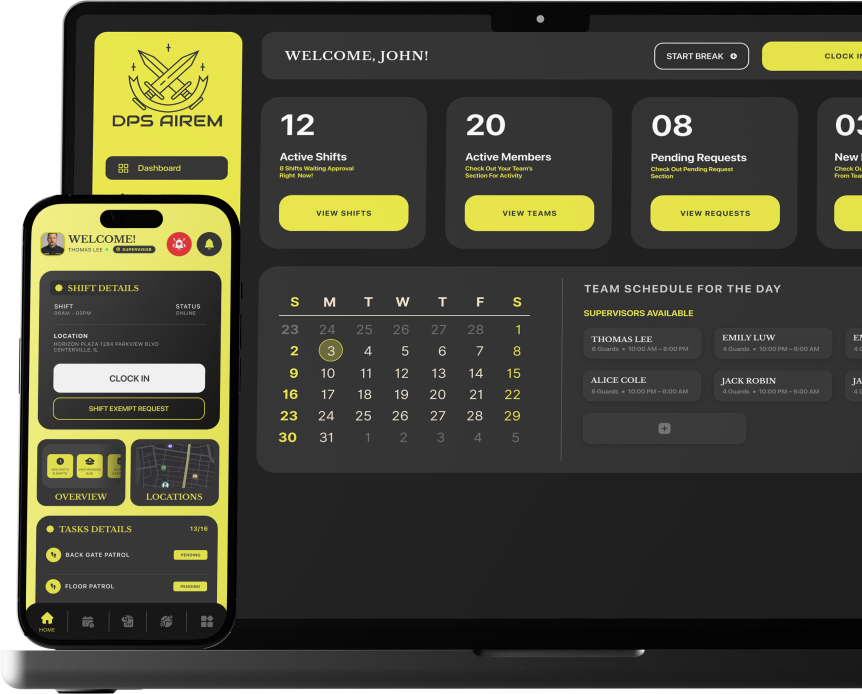
Owner, Pulse Check Timer

Inceptives Digital did not just execute a brief; they aligned perfectly with our operational goals. They engineered a reliable digital ecosystem that completely modernized our workflow.

Dorrin Rosenfeld

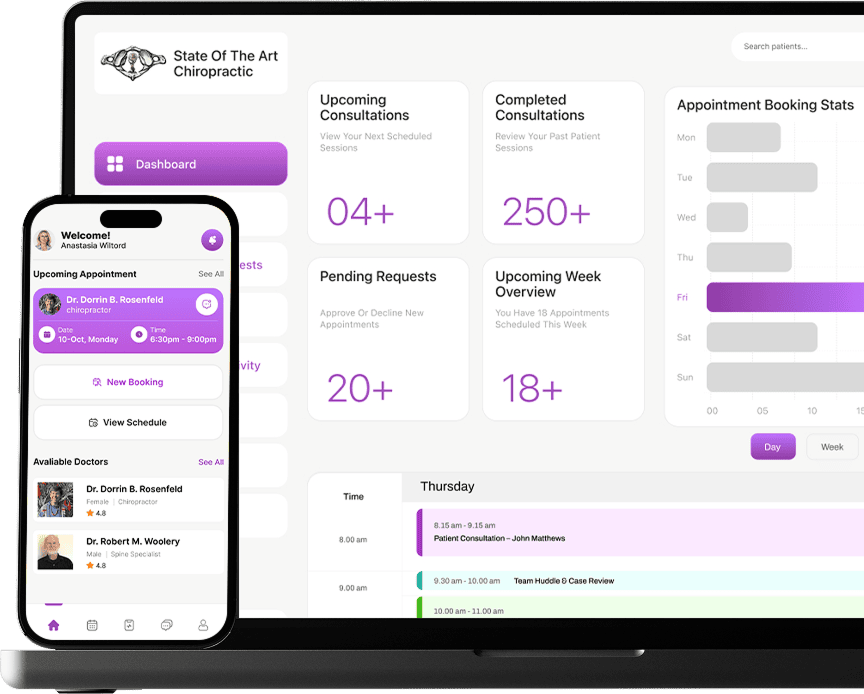
DC & Owner, State of the Art Chiropractic

We needed an engineering partner capable of architecting a highly scalable, complex social commerce platform. Inceptives Digital mapped out a precise technical strategy demonstrating deep understanding of data architecture, system performance, and user-centric design.

Gary Dixon

Founder, StakBread

The engineering rigor at Inceptives Digital is outstanding. They managed our complex scope of work with meticulous precision from initial system architecture to the final deployment phases.

Ariel Rodriguez

Founder, Dropryde

End-to-End for Operational Excellence

Discovery and AI Opportunity

Process Discovery

Current workflows mapped, manual touchpoints identified, and automation suitability confirmed before development begins. We leave this stage knowing exactly which processes are ready to automate and which need redesigning first.

UI/UX Design

Workflow Standardisation

Every process step documented, every business rule defined, every exception path mapped. The standardised workflow design that determines whether the automation executes consistently or breaks at the first variation.

AI Model

Automation Build

Automation systems built and configured around the standardised workflow design. Microsoft Power Automate, UiPath, Automation Anywhere, or low-code platforms are selected based on the specific process requirements and existing enterprise stack.
AI Product

System Connection

Automation connected to ERP, CRM, ServiceNow, Salesforce, and internal platforms via API integrations. End-to-end workflow execution is verified across every system the process touches before deployment.

Monitoring

Live and Optimise

Automation deployed to production. Workflow performance tracked, exceptions monitored, and processes refined as operational requirements evolve. The automation that launches is the starting point, not the finished state.


Core Technologies for

Every tool is selected based on the systems being connected, the data flows being automated, and the reliability requirements of the production environment.
PyTorch
TensorFlow
Hugging Face
LangChain
LlamaIndex
pinecone
Weaviate
Meta
Meta
Milvus
Chroma
Elasticsearch
MLflow
Kubeflow
Apache Airflow
DVC
Amazon Web Services (AWS)
Google Cloud Platform (GCP)
Microsoft Azure
Docker
Kubernetes
Python
Node.js
FastAPI
Flask
Java
REST API
Apache Spark
Apache Kafka
Kubeflow
DVC

Systems Work Better When They Are Connected

API automation is designed to unify disconnected tools into a single operational data flow.

FAQ'S

Questions About System Integration & API Automation Services

What is system integration in software development?
System integration connects different applications, databases, and platforms so they can exchange data and work as a unified system.
API integration enables direct communication between systems, allowing data to move automatically without manual transfer or duplication.
CRM, ERP, SaaS tools, internal databases, cloud platforms, and third-party applications can all be connected through API-based integration.
Timelines depend on system complexity, number of APIs, and data flow requirements. Most integrations take 3–8 weeks.
Yes. Legacy systems can be connected using middleware, API layers, or custom integration bridges.
It reduces manual work, improves data accuracy, enables real-time synchronization, and improves operational efficiency.
Yes. Secure authentication methods, encryption, and controlled access layers are used to ensure safe data exchange between systems.
Yes. APIs and connected systems evolve, so ongoing monitoring and updates are needed to maintain stability and performance.