Summary: Many digital products struggle long before launch because early product decisions create problems that development alone cannot fix. This guide explains the most common reasons digital products fail and shares practical frameworks, real-world case studies, and proven strategies to validate ideas, reduce risk, improve adoption, and build products that deliver lasting business value.
Introduction
Digital product development has never been easier. Cloud platforms, AI tools, and modern frameworks have lowered nearly every technical barrier, allowing teams to launch faster than ever before. Speed, though, was never the hard part.
We’ve sat across the table from teams that:
- Solved the wrong problem.
- Chased the wrong audience.
- Started development without a clear strategy.
- Prioritized features over customer needs.
- Missed measurable business goals.
By the time these warning signs became obvious, months of development, marketing, and operational effort had already been invested in products that struggled to gain traction.
The encouraging part is that most of these failures were preventable. Digital product development company that builds successful products make better decisions even before development begins.
They validate ideas, understand their users, prioritize the right features, and connect every product decision to a measurable business outcome.
This guide explains the most common reasons digital products fail, why they happen, and the practical steps you can take to reduce risk and improve your chances of building a successful digital product.
Why So Many Digital Products Fail Before They Gain Traction
You would assume weak development causes most product failures. In our experience, the code is rarely the actual problem.
Failure usually starts earlier, when a product enters development before anyone truly understands the customer, validates the opportunity, or defines what success should look like.
The Pattern Behind Unsuccessful Products
Every project looks different on the surface, but struggling products tend to share the same early warning signs:
- The idea came from internal assumptions instead of customer research.
- Features received priority over the underlying user problem.
- Stakeholders held different expectations for the same product.
- Nobody ever defined what success would actually look like.
- The team chased a launch date instead of chasing learning.
Any one of these on its own feels manageable. Stack them together, and you get uncertainty that follows your product through every stage of development.
We Make Fewer Assumptions
The team at Inceptives Digital never tries to predict what your users want. We go collect the evidence first, before a single expensive decision gets made. That usually means:
- Customer interviews
- Competitor research
- Product discovery workshops
- Technical feasibility reviews
- Early Interactive prototyping
Each activity answers a different question, but together they strip out uncertainty before you commit a real budget.
Our goal was never to eliminate every risk on your project. Our goal is to make sure you never build the wrong product.
The Cost of Product Failure Goes Beyond the Development Budget
When a product underperforms, you probably think first about the development budget you lost. That number matters, but rarely tells the full story.
| Stage | What Happens |
| Poor Validation | Assumptions replace customer research. |
| Build the Wrong Product | Features receive priority over the real problem. |
| Launch with Low Confidence | Stakeholders lack alignment, and success remains undefined. |
| Poor Adoption & Results | Customers fail to see value, and growth slows. |
Common Reasons Digital Products Fail
1. Building Without Validating the Problem
Most digital products begin with a good idea. Far fewer begin with a validated problem, and that gap matters more than founders expect.
A good idea reflects what you want to build. A validated problem reflects what your customers actually need. Skip validation, and you’re relying on opinion rather than evidence, which tends to produce a product that gets attention on launch day but loses users soon after.
Why This Happens
Feature requests get mistaken for market demand more often than you’d think. Your customers ask for more reporting options. The obvious response is to build additional reports.
Talk to those customers directly, though, and you might learn they don’t want more reports at all. They want faster access to the information that already matters most.
In that case, a real-time dashboard solves the real problem far better than twenty downloadable reports ever could.
Common Warning Signs
Pause before moving into development if you’re seeing several of these:
- Customer research never happened.
- Internal opinions are driving product decisions.
- Different stakeholders describe different goals for the same launch.
- Features change direction every week.
- Nobody agrees on how success will be measured.
These issues rarely fade once development starts. They get more expensive the longer you wait.
How to Validate Before You Build
Validation doesn’t require months of research from your team. It requires better questions.
Instead of asking users which features they want, ask what actually slows them down day-to-day:
- What task takes the most time?
- What slows your team down?
- Which manual process frustrates you the most?
- How are you solving this problem today?
Those answers tell you whether an opportunity is worth pursuing. From there, weigh the insight against your business goals.
A strong product solves a customer problem and creates measurable business value at the same time. Miss either side, and the idea still needs work.
A Simple Validation Framework
| Question | Why it matters |
| What problem are we solving? | Keep your team focused on one clear objective. |
| Who experiences this problem? | Defines the target audience precisely. |
| How do they solve it today? | Reveals existing alternatives and market gaps. |
| Why is our solution better? | Creates a clear, testable value proposition. |
| How will we measure success? | Aligns product decisions with business outcomes. |
Can’t answer these with confidence yet? Don’t start building. A week spent validating the opportunity can save you months of redesign down the line.
2. Skipping Product Discovery
You might see product discovery as a step that delays development. We see it as the step that stops you from building the wrong product.
Discovery gives your whole team a shared understanding of the problem before design and development begin. It answers the questions that become far more expensive once a project is already underway.
Skip it, and your team leans on assumptions instead, which tends to produce shifting requirements, missed deadlines, and features that never solve your user’s actual problem.
What Product Discovery Should Achieve
A structured discovery sprint should answer a few critical questions before anyone writes code.
- Who are your primary users?
- What problem does the product solve?
- Which features create the most value?
- What technical risks need early attention?
- How will you measure success after launch?
Signs Your Project Needs Discovery
| Warning sign | Why it creates risk |
| Stakeholders disagree on priorities | Your teams end up building toward different goals. |
| Requirements change every week | Scope keeps growing without direction. |
| User roles remain unclear | The product tries to serve everyone equally, and poorly. |
| Technical decisions happen too early | Technology starts driving strategy instead of supporting it. |
| Success metrics don’t exist | You have no way to measure whether the product works. |
None of these resolve themselves. Left alone, they get more expensive as development progresses.

Case Study: How Product Discovery Shaped DPS Airem
DPS Airem needed a workforce management platform for security teams operating across multiple client locations in the United States. The business had grown fast, but operations hadn’t kept pace.
DPS Airem relied on paperwork for attendance, phone calls for shift management, and manual follow-ups to monitor field operations.
Instead of starting with development, we began with product discovery, interviewing stakeholders and mapping workflows to identify operational bottlenecks, validate priorities, and build a solution around real business challenges rather than assumptions.
That process surfaced five priorities:
- Verify attendance without manual supervision.
- Track field activity across multiple locations.
- Support unreliable network conditions.
- Reduce paperwork.
- Improve emergency response for field teams.
Discovery revealed that each user role had unique responsibilities, leading to four dedicated interfaces for guards, supervisors, managers, and super admins.
It also identified unreliable connectivity as a critical challenge, prompting an offline-first architecture that kept attendance and field operations running without interruption and synchronized data automatically once connectivity returned.
Results
| Outcome | Business impact |
| 90% reduction in paperwork | Attendance, reporting, and payroll moved to a single platform. |
| 1,000+ field operatives tracked | Managers gained real-time visibility across multiple sites. |
| Four dedicated interfaces | Every user worked within a workflow built for their role. |
| Live production platform | The system still supports active field operations today. |
3. Trying to Build Everything in Version One
Feature ideas rarely stop once development begins.
Marketing wants one capability, sales requests another, and internal stakeholders keep pushing just one more feature.
Before long, your product has grown far past its original vision, and that growth is one of the fastest ways to blow past a launch date.
More Features Don’t Create More Value
Plenty of digital products have launched with fewer features than their competitors and still won the market.
They won because they solved one problem exceptionally well.
Chase every possible feature instead, and you usually get the opposite result: longer development, messier testing, and users who can’t tell what your product actually does best.
A focused product almost always beats a crowded one.
Build an MVP With Purpose
A Minimum Viable Product isn’t a stripped-down version of your final vision. It’s the smallest version capable of solving your customer’s primary problem. A well-built MVP answers your most important questions fast:
- Do customers understand the product?
- Will they use it regularly?
- Which features matter most to them?
- What should the next release include?
Real customer behavior gives you better answers here than months of internal debate ever will.

Prioritize Features by Business Value
| Priority | Include in MVP? | Reason |
| Must have | Yes | Essential to solving the core problem. |
| Should have | Usually later | Improves the experience but isn’t critical. |
| Could have | Future release | A nice addition once user feedback supports it. |
| Future idea | Validate first | Needs stronger evidence before any investment. |
Every feature you build should support the product’s primary objective. If it doesn’t, save it for a later release.
Case Study: Family Entertainment Group Focused on the Real Problem
Family Entertainment Group already had GoPro cameras installed across its attractions, so capturing video was never the challenge. The real issue was the manual workflow. Staff had to transfer footage, edit videos, and deliver them to guests, creating delays and increasing operational workload.
Instead of building another media management system, the team identified business process automation as the real need. The product automated the entire process, from synchronizing footage from multiple GoPro cameras to generating branded highlight reels and delivering them to guests through email or SMS within minutes.
Key Product Decisions
- Automated the complete video production workflow.
- Synchronized footage from multiple GoPro cameras.
- Delivered finished videos instantly via email and SMS.
- Built a management dashboard for operational visibility.
| Results | Impact |
| Fully automated workflow | Eliminated manual editing and production tasks |
| Professional highlight reels | Improved guest experience and shareability |
| Instant video delivery | Guests received videos before leaving the venue |
| Centralized dashboard | Increased operational visibility across venues |
By focusing on the biggest operational bottleneck instead of adding unnecessary features, the platform transformed a slow, manual process into a scalable system integration that improved efficiency, enhanced the guest experience, and created a new revenue opportunity.
4. Ignoring User Experience Instead of Solving User Problems
A product can offer powerful functionality and still lose its users. Usually, the reason comes down to one thing: people can’t use it efficiently.
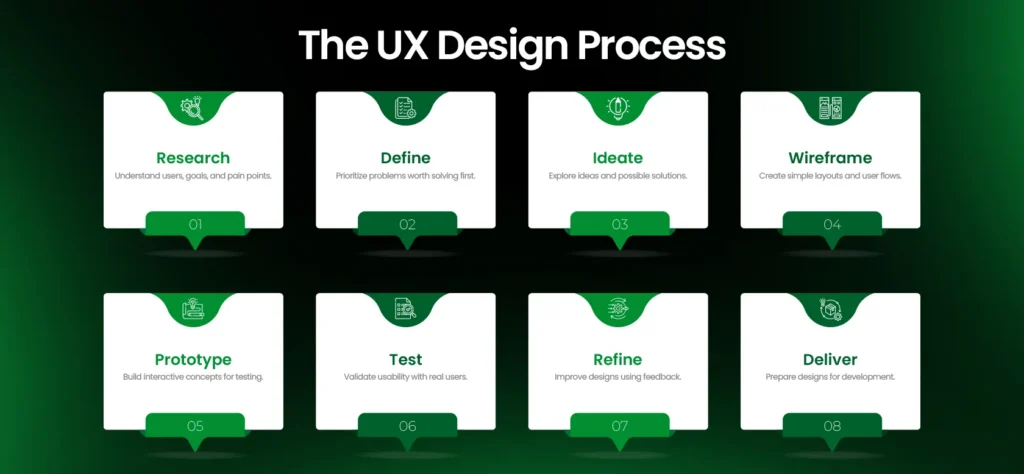
UI/UX design isn’t about making a product look modern. It’s about helping users finish their tasks with the least amount of effort.
Every intuitive action keeps users engaged. Every frustrating one pushes adoption down.
You might think of UX as a late-stage design phase, but we treat it as a product decision that starts much earlier than that.
Good UX Starts With Understanding User Behavior
Design should reflect how your users actually work, not how the business expects them to work.
Signs Your UX Needs Improvement
Small UI/UX design mistakes often point to bigger product problems. Watch for these:
- Users need training to complete basic tasks.
- Important features are hard to find.
- Customers abandon onboarding before finishing it.
- Support requests focus on navigation instead of functionality.
- Teams build workarounds outside the product.
If your users avoid the product even though it solves their problem, the experience needs attention.
Design for Outcomes
Many teams measure design progress by counting finished screens. We’d rather measure how easily users complete the tasks that matter. Ask questions like:
- Can a new user finish the first task without guidance?
- How many steps does the process require?
- Where do users hesitate or abandon the workflow?
- Which actions happen most frequently?
The answers usually reveal ways to simplify the product. Cutting five unnecessary clicks can lift adoption more than adding five new features ever would.
UX Priorities Before Launch
| Focus area | Why it matters |
| Simple onboarding | Helps users reach value quickly. |
| Clear navigation | Reduces confusion during daily use. |
| Consistent layouts | Builds familiarity across the product. |
| Fast performance | Keeps users engaged during repetitive tasks. |
| Accessibility | Makes the product usable for a wider audience. |
5. Choosing Technology Before Defining Business Goals
Every product needs the right technology, but that technology should support your business strategy, never define it.
Plenty of projects start with debates about frameworks, programming languages, or cloud platforms before anyone agrees on what the product needs to achieve.
Should we use Flutter or React Native? Should we build on AWS or Azure? Those questions matter, but they come later. The first question is simpler: what business outcome are you actually chasing?
Business Goals Should Guide Technical Decisions
Imagine two companies building a mobile app. One wants to launch fast across iOS and Android to validate a new idea.
The other needs advanced hardware integrations only available through native development.
Both need different technical approaches, because they’re chasing different business goals.
There’s no universally best tech stack. There’s only the stack that best supports your product strategy.

Questions to Answer Before Selecting Technology
| Question | Why it matters |
| Who will use the product? | Influences platform and architecture decisions. |
| How quickly do we need to launch? | Shapes the overall development approach. |
| How many users should the product support? | Determines scalability requirements. |
| Will the product integrate with existing systems? | Identifies technical dependencies early. |
| What are our long-term business goals? | Prevents short-term choices from limiting future growth. |
Once your business objectives are clear, evaluating technology gets a lot easier.
Avoid Chasing Trends
Every year brings new frameworks, AI tools, and development platforms. Some become the standard.
Others disappear within a few years. Building around trends instead of your actual requirements creates risk you don’t need.
Choose technology that fits your product, your team’s expertise, and your long-term roadmap instead.
6. Poor Stakeholder Alignment Creates Expensive Rework
Few projects fail because people stop working. Most fail because people keep working toward different goals.
As your product grows, more stakeholders get pulled in.
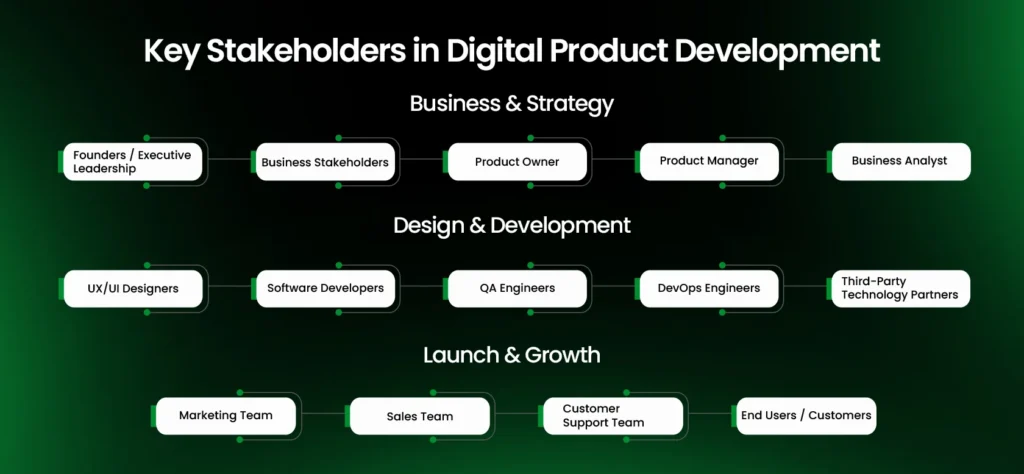
Founders, product managers, marketing, developers, operations, investors: everyone brings a valuable angle. Problems start when those angles never line up.
One team pushes growth, another pushes operational efficiency, a third keeps requesting more features, and development marches on while the product loses direction.
Alignment Starts Before Development
We spend time upfront building shared expectations for exactly this reason.
Everyone on your team should understand the business objective, the target audience, the MVP scope, the success metrics, and their own role in getting there.
Leave any of that unclear, and your team ends up debating decisions instead of delivering value.
Signs of Poor Alignment
Watch for these patterns if alignment needs work:
- Priorities shift after every stakeholder meeting.
- New features show up without any evaluation of business value.
- Teams interpret the same requirements differently.
- Product decisions ride on individual opinions instead of agreed criteria.
- Deadlines keep slipping because scope keeps expanding.
These issues slow your progress and quietly chip away at your team’s confidence.
Keep Everyone Moving Toward the Same Goal
Regular communication stops small misunderstandings from turning into expensive ones.
We lean on discovery workshops, a shared product roadmap, clearly defined MVP goals, sprint planning sessions, and regular stakeholder reviews.
Alignment doesn’t mean everyone agrees on every call. It means everyone understands why a call was made.
Alignment checklist
| Area | Everyone should agree on |
| Business goal | What success actually looks like |
| Target audience | Who the product serves |
| MVP scope | What will and won’t be included |
| Timeline | Major milestones and release dates |
| Success metrics | How performance will be measured |
7. Building Without Measuring Success
Plenty of teams celebrate release day, then move straight to the next project without ever measuring how the product actually performs.
That leaves the important questions unanswered.
Are users adopting the product? Which features drive real value? Where do customers get stuck? Without data, every future improvement turns into a guess dressed up as a decision.
Define Success Before Development Begins
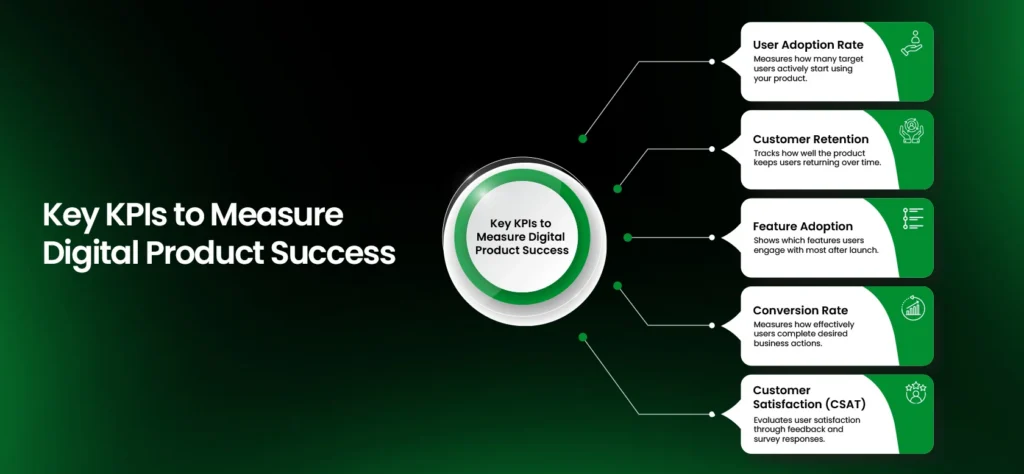
High-performing products launch with success metrics already in place, tied directly to the original business goals:
| Business goal | Metric to measure |
| Increase customer adoption | Monthly active users |
| Improve retention | 30-day retention rate |
| Reduce manual work | Time saved per task |
| Generate revenue | Conversion rate or recurring revenue |
| Improve efficiency | Task completion time |
Measure, Learn, Improve
Post-launch analytics surface opportunities that no amount of planning could have predicted.
User behavior tends to reveal features customers rarely touch, steps where they abandon a workflow, high-performing user journeys, common support issues, and new feature opportunities you hadn’t considered.
The strongest products keep evolving because their teams keep learning after launch, building every iteration on real customer behavior instead of assumptions.
8. Weak Go-to-Market Planning
Building a great product doesn’t guarantee your customers will find it.
Design and development often get the budget, while marketing, onboarding, and customer acquisition get pushed to the final weeks before launch. By then, your product is ready, but your business isn’t.
A successful launch starts months before release with a strong product launch strategy.
It defines who the product serves, how those users will discover it, and why they should choose it over whatever they’re already using.
A Launch Plan Should Answer These Questions
Make sure you can answer these with confidence before your product goes live:
- Who is the ideal customer?
- What problem does the product solve better than existing solutions?
- Which channels will attract your first users?
- How will you onboard new customers?
- What feedback will you collect after launch?
Skip these answers, and even a well-built product can struggle to find traction.
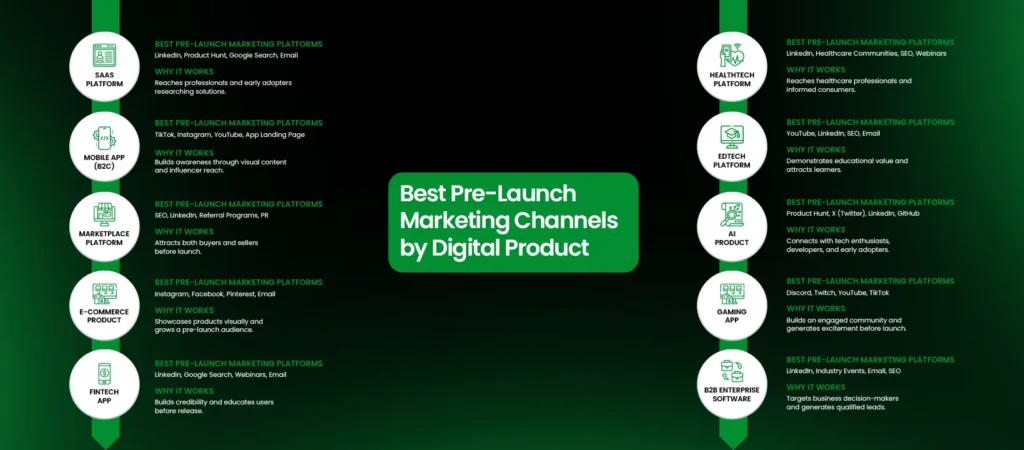
Common Launch Mistakes
| Mistake | Business impact |
| No defined target audience | Marketing reaches the wrong people. |
| Unclear value proposition | Customers fail to understand the product. |
| Weak onboarding | Users leave before experiencing real value. |
| No feedback process | Teams miss chances to improve quickly. |
| Launching without marketing | Adoption starts slowly and stays inconsistent. |
Build Momentum Before Launch
We treat launch as the start of customer validation, not the finish line.
That usually means landing pages that capture early interest, beta programs with selected users, product demonstrations, educational content, and onboarding resources built for new customers.
These activities build awareness before release and surface feedback that improves the product long before most competitors even know it exists.
9. Treating Launch as the Finish Line
Many products get months of planning before launch and almost no attention afterward. That approach caps how far your product can grow.
Your first release hands you something far more valuable than finished software: real users interacting with the product every day.
Those interactions reveal what no planning session ever could, including which features people actually use, where they get stuck, what they ignore, and which improvements would move the needle most.
Ignore that feedback, and growth stalls. Listen to it, and every release gets better than the last.
Continuous Improvement Keeps Products Competitive
Successful digital products evolve because customer needs keep evolving too.
Rather than planning one big release a year, we ship smaller improvements more often.
This approach lets your team respond to feedback faster, fix usability issues sooner, test new ideas at lower risk, and deliver value consistently instead of in occasional bursts.
Build a Feedback Loop
Customer feedback should become a permanent part of your product process.
Common sources include user interviews, customer surveys, product analytics, support tickets, sales conversations, and feature requests.
Any single source only tells part of the story. Combine a few, and you get a much clearer picture of both user behavior and customer expectations.

10. Choosing the Wrong Development Partner
Choosing a good development partner does more than write code for you. They help you make better product decisions along the way.
You’ve probably evaluated agencies on hourly rates, delivery timelines, or technical expertise alone.
Those factors matter, but they say little about how well a team actually understands product strategy.
A strong partner challenges your assumptions when needed, asks thoughtful questions, and helps reduce your business risk before anyone writes a single line of code.
What to Look For
A strong product partner starts by understanding your business goals and user needs before discussing technology or features.
They recommend discovery when needed, explain technical trade-offs clearly, and build with your long-term product growth in mind.
The focus should stay on solving your problem, not just delivering whatever’s written in a brief.
Questions to Ask Before Hiring
| Ask this | Strong answer | Red flag |
| How do you validate product ideas? | Discovery, research, and user validation guide decisions. | “We’ll start building immediately.” |
| How do you prioritize features? | Business goals and user value determine priorities. | “We’ll build everything in the brief.” |
| How do you measure success? | Success metrics are defined before development. | No clear measurement approach exists. |
| What happens after launch? | Ongoing support, analytics, and iteration. | The engagement ends at delivery. |
| Can you show similar products in production? | Demonstrates relevant, applicable experience. | Only concept designs or prototypes exist. |
Choose the right partner, and you cut uncertainty across the entire project, not just during development.
Digital Product Failure Warning Signs
Products often show trouble long before customers stop using them. Catch these signals early, and you still have a real chance to adjust course and go for product rescue and scaling.
| Warning sign | What it usually means | Recommended action |
| Requirements change constantly | The problem was never clearly defined. | Revisit discovery and product priorities. |
| Every stakeholder requests different features | Your team lacks alignment. | Agree on shared business objectives. |
| Users abandon onboarding | The product doesn’t communicate value fast enough. | Simplify the onboarding experience. |
| Low feature adoption | Features don’t solve meaningful problems. | Review analytics and talk to users directly. |
| Support requests keep rising | Customers struggle to complete key tasks. | Improve workflows before adding features. |
| Development slows significantly | Scope has grown too large. | Reprioritize back down to the MVP. |
Catch these early, and you’ll spend far less than you would rebuilding after launch.
A Practical Framework to Reduce Product Failure
Every successful product follows its own path, but the teams that scale successfully tend to follow a similar decision-making process. They reduce uncertainty one step at a time instead of rushing into development.
Step 1: Validate the Problem
Confirm it exists through customer conversations, research, and market analysis. Don’t rely on internal assumptions alone.
Step 2: Run Product Discovery
Understand your users, map their workflows, identify technical risks, and define measurable business goals before you commit resources.
Step 3: Prioritize the MVP
Focus on the smallest feature set that solves the primary problem. Everything else can wait until customer feedback supports it.
Step 4: Design Around Users
Build experiences that match how people actually work. Simple workflows usually beat feature-heavy interfaces.
Step 5: Build in Iterations
Release, measure, and improve. Smaller releases cut risk and speed up learning.
Step 6: Measure What Matters
Track adoption, engagement, retention, and operational outcomes, and let that data guide your next decisions instead of assumptions.
Product Failure Prevention Checklist
Run through this with your team before approving development:
- The customer problem has been validated.
- Target users are clearly defined.
- Product discovery is complete.
- Business goals are documented.
- Success metrics have been agreed upon.
- The MVP focuses on core functionality only.
- Stakeholders share the same priorities.
- Technology supports the business objectives.
- A launch strategy is ready.
- A post-launch improvement plan is in place.
This checklist won’t guarantee success. It will meaningfully improve your odds of building a product that delivers lasting business value.
Build Smarter Before You Build Bigger
Digital products rarely fail because of one single mistake. Small decisions made early in a project tend to compound over time, until they show up in adoption, growth, and revenue.
The teams that win reduce that risk by validating customer problems, investing in product discovery, prioritizing an MVP, and improving continuously after launch.
Whether you’re building a new platform or modernizing an existing one, the goal stays the same: make every product decision serve real user needs and measurable business value.
A thoughtful strategy before development will always cost less than fixing the wrong product after launch.
Reduce Product Risk Before You Invest in Development
Every successful digital product starts with informed decisions. Validate your idea, cut the uncertainty, and build with real confidence from day one.
Book a Free Discovery CallFrequently Asked Questions
Most digital products fail because they solve the wrong problem, skip product discovery, pack in too many features too early, or launch without a clear strategy for adoption and continuous improvement.
Building without validating the problem first. If your customers don’t actually need the solution, even flawless software will struggle to succeed.
Discovery helps your team understand users, validate assumptions, prioritize features, and identify technical challenges before development begins, which prevents costly changes later in the project.
In most cases, yes. An MVP helps you validate assumptions, collect real user feedback, and improve the product without investing in features nobody asked for yet.
During discovery, and it should continue through design, development, and every round of post-launch improvement.
Yes, as long as you catch the underlying problems early. User research, analytics, and customer feedback often reveal ways to reposition the product, simplify its workflows, or reprioritize toward more valuable features.
It depends on your business goals. Common metrics include customer adoption, retention, engagement, conversion rates, operational efficiency, and revenue growth.
Look for a partner that prioritizes discovery, understands business strategy, validates ideas before development starts, and supports continuous improvement after launch.