Skip to content
  • Services
    Services
    Application Development
    • Mobile App Development
    • Blockchain Development
    By Platform
    • iOS App
    • Android App
    • React Native App
    • Flutter
    • Kotlin Multiplatform
    By Type
    • Web App Development
    • Backend and API
    • Cross-Platform Development
    • Web Development
    • Mobile Game Development
    • AR App Development
    • VR Development
    Launch & Growth
    • App Store Optimization
    • Product Launch Strategy
    • Post Launch Analytics and Iteration
    Artificial Intelligence
    AI Services
    • AI Development
    • AI App Development
    • AI Chatbot Development
    • AI Agent Development
    • Generative AI Development
    • Machine Learning Development
    • NLP Development
    • AI MVP Development
    Automation
    • AI Automation
    • System Integration & API Automation Services
    • Business Process Automation Services
    • RPA Development
    • IoT Development
    Digital Product Development
    By Engagement
    • Digital Product Development
    • Discovery Sprint
    • MVP Development
    • Product Rescue & Scaling
    • Product Strategy & Consulting
    • Custom Software Development
    • Staff Augmentation
    By Craft
    • UI/UX Design
    • Interactive Prototyping
  • Industries
    Industries
    • Healthcare App Development
    • Fitness App Development
    • Fintech App Development
    • Education App Development
    • Real Estate App Development
    • Travel App Development
    • Food Delivery App Development
    • Dating App Development
  • Locations
    Locations
    • San Francisco
    • New York
    • Austin
    • Toronto
    • London
    • Dubai
    • Singapore
  • Case Studies
  • Company
    Company
    • About
    • Blogs
    • Press & Media
    • Partnership
    • Life At Inceptives Digital
    • Leadership
    • Founder's Letter
    • Contact Us
Inceptives Digital
  • (469) 788-8527
Get In Touch
  • Blogs
App Development
  • How to Choose the Right Mobile App Development Company?

How to Choose the Right Mobile App Development Company?

  • Last Updated: October 9, 2025
  • Picture of Shahzaib Khan Written By: Shahzaib Khan
Muhammad Usman
Reviewed by: Muhammad Usman
On this page
Share
How to Choose the Right Mobile App Development Company
  • Define your app’s goals, essential features, target audience, and budget before contacting development companies.
  • Examine real applications and case studies rather than relying solely on portfolio visuals.
  • Compare technical expertise, communication, security practices, pricing transparency, and post-launch support.
  • Review proposals for clear deliverables, payment milestones, and intellectual property ownership.
  • Choose a development company based on proven capabilities and project requirements, not simply the lowest quote.

Choosing a mobile app development company can be challenging, especially when every agency seems to promise experienced developers, successful projects, and competitive pricing.

But how do you know which company can actually deliver what your app needs?

A polished portfolio or attractive quote doesn’t tell the whole story. Two companies may offer similar services, yet differ significantly in their technical expertise, development process, and ability to handle challenges during the project.

And those differences matter to users. A February 2026 survey by Luciq found that 15.4% of respondents uninstall an app after a single crash, showing how quickly poor performance can affect retention.

Choosing the wrong partner can also lead to missed deadlines, unexpected costs, or an application that fails to meet your requirements.

That’s why choosing the right mobile app development company requires more than comparing prices. You need to look at how the team communicates, manages development, handles testing, and supports your app after launch.

This guide walks you through 15 practical steps to evaluate development companies, identify potential red flags, and choose a partner that fits your project and budget.

1. Define Your App Development Goals and Requirements

Before contacting any mobile app development company, you need a clear idea of what you want to build. Start by identifying your target audience, the problem your app will solve, and the core features it must include. A discovery sprint can help you work through these requirements before approaching development companies. 

If you’re still refining your idea, exploring different mobile app ideas can help you validate your concept before investing in development.

Next, decide whether you want iOS, Android, or cross-platform app development. This choice will directly impact your budget, timeline, and overall development approach.

Finally, document everything in a simple requirement sheet covering features, user flow, and design expectations. This acts as a clear blueprint for mobile app development services and helps avoid confusion, delays, and unnecessary changes during the project.

CategoryDetails / Questions to DefineExample / Notes
App PurposeWhat main problem does the app solve?Help parents monitor children’s chores.
Target AudienceWho will use the app (age, interests, device)?Busy parents with children aged 6–15.
Core Features (Must-Haves)Essential functions required for the app to work.User login, dashboard, task tracker.
Additional Features (Nice-to-Haves)Features that enhance user experience but aren’t critical.Push notifications, chatbot assistant.
Platform ChoiceWhich platforms will the app support?iOS and Android (cross-platform).
Design GoalsHow should the app look and feel?Clean, family-friendly, intuitive interface.
Budget RangeWhat’s your realistic cost limit?$30,000–$50,000 for MVP.
TimelineDesired launch or delivery date.4–5 months, including testing.

2. Research Mobile App Development Companies

Time to find some solid companies. Start with online directories like Clutch and GoodFirms, where you’ll see vetted firms with real reviews. LinkedIn is another good spot to find mobile app development services or get referrals from people you trust. 

Check out company websites. 

  • Do they look legit? 
  • Does their portfolio demonstrate relevant experience?
  • Can you verify their past projects and technical capabilities?

A custom software development company might be a great pick if your app needs custom backend work, like for a delivery platform.

Look for case studies that show actual results, not just pretty designs. Industry directories or word-of-mouth can also lead you to great firms. A quick search for the best mobile app development companies can give you ideas, but don’t just stop there. Dig into their reputation and past work. This step is about building a list of 5-10 companies worth a closer look.

3. Shortlist & Compare App Development Companies 

Now, narrow your list to 3–5 companies that seem promising. Make a scoring matrix to compare their technical expertise, industry experience (like healthcare or retail), communication, and collaboration. 

Are they quick to reply to your emails? Do they get your niche? A company that has built apps for, say, fintech or education, will likely understand your needs better.

Ask: How do I shortlist potential firms? Don’t just focus on price, as a lower quote may exclude features or services another company includes. Check if they’ve handled projects like yours in size or complexity. Good communication early on is a sign they’ll keep you updated later. This step helps you zero in on companies that are the best match for your app’s goals.

4. Evaluate Portfolio and Case Studies 

A portfolio showcases the true potential of a company. A common question people ask is (How do I evaluate an app development company portfolio?). We suggest looking into the apps they have built. It would be a bonus if they have built an app in your industry. Download them and see if the users are happy with the apps, and look for feedback to see how they are performing. Read their case studies to see what challenges they faced during the development, how they overcame them, and what the result was, like a hike of 25% in user engagement or anything like that.

The diversity of their project is a good sign; it shows they can handle cross-industry app development projects. Choosing an app development company with a strong app development portfolio increases your chance of success.

For example, a company might showcase visually appealing apps, but if those apps have poor user retention or low ratings on app stores, it signals deeper issues in usability or performance. Always go beyond visuals and evaluate how those apps actually perform in real-world usage.

How to Evaluate a Mobile App Development Company (Scorecard)

Once you’ve shortlisted a few mobile app development companies, the next step is to evaluate them in a structured way. Instead of relying on assumptions or just pricing, it’s better to compare each company based on key factors that directly impact your app’s success.

A simple scoring system can help you make a more confident and objective decision.

Mobile App Development Company Evaluation Scorecard

CriteriaWhat to Look ForScore (1–5)
Portfolio QualityReal, functional apps with strong UI/UX and relevant industry experience1 = weak, 5 = excellent
Technical ExpertiseUse of modern technologies, scalable architecture, and secure development practices1 = outdated, 5 = advanced
Communication & TransparencyClear updates, responsiveness, and willingness to explain processes1 = poor, 5 = excellent
Industry ExperienceExperience in building apps similar to your business model or niche1 = none, 5 = highly relevant
Pricing TransparencyDetailed estimates with no hidden costs or vague pricing structures1 = unclear, 5 = fully transparent
Post-Launch SupportOngoing maintenance, updates, performance monitoring, and bug fixes1 = none, 5 = comprehensive
Security & Quality AssuranceEvidence of secure development practices, testing, and quality checks1 = weak, 5 = excellent

How to Use This Scorecard

  • Rate each company from 1 to 5 for every criterion
  • Add up the total score for each company
  • Compare results across all shortlisted options

A higher score usually indicates a more reliable and well-rounded development partner, even if they are not the cheapest option.

Using this approach removes guesswork and helps you choose based on real value instead of surface-level impressions.

5. Check Client Reviews and Testimonials

Client testimonials and reviews give you the real scoop on a company. Check platforms like Clutch, GoodFirms, or Google Reviews for honest feedback. 

Look for specific comments. Did they deliver on time? Handle issues well? Vague “they’re awesome” reviews don’t cut it. Ask for references and call past clients to hear about their experience. Any red flags?

Client feedback helps you understand how the company performs beyond its marketing claims. Real feedback builds confidence. If a company won’t share references, ask whether confidentiality restrictions apply and request other evidence of completed projects.

Look for consistent, detailed praise across reviews. Pay particular attention to comments about communication, missed deadlines, technical issues, and how the team responds when problems arise.

6. Assess Technical Expertise and Technology Stack

Technical expertise is the backbone of app development. The company you are collaborating with should have proven technical expertise in mobile tools such as Swift, which is for iOS app development, Kotlin for Android, and Flutter or React Native for developing cross platform applications. Also, check if they can handle third-party APIs. Suppose an Android app development company should be skilled in frameworks like Kotlin and Java. Evaluate how they make sure an app is compatible, secure, and optimized for publishing on app stores.

Are they up to date on trends like AI or AR? Can they handle your app’s needs? A custom software development company might be ideal if you need custom integrations. This step is about making sure your app is built right, not just patched together.

In many real projects, apps fail not because of poor design, but because they are not built for scalability. For instance, an app that works fine with 1,000 users may start crashing when it reaches 50,000 users if the backend architecture isn’t planned properly from the start.

Need a Team That Can Handle Your App’s Technical Requirements?

From custom APIs to complex user workflows, our developers can handle the engineering your app requires.

Hire Experienced App Developers!

7. Communication and Collaboration Practices 

Good communication and collaboration keep things smooth. Ask: What project management tools should the team use? Tools like Jira, Trello, or Asana make updates easy to track. How often will they share progress—weekly? Daily? Time zones and cultural fit matter, especially with global teams.

You want a company that’s open and responsive. If they’re hard to reach now, it’ll only get worse. Clear communication during the mobile app development process prevents mix-ups. This step sets you up for a partnership that feels easy, not stressful.

One of the most common reasons app projects fail is poor communication. Delays, misunderstood requirements, and repeated revisions often happen when there’s no clear communication structure in place from day one.

8. App Development Methodology (Agile vs Waterfall)

The development methodology shapes how your app gets built. Agile, backed by the Project Management Institute, uses short cycles called sprints, so you can test and tweak as you go. It’s great for apps that might change. Waterfall is more rigid, with set phases, better for projects with fixed plans.

Some teams also combine both approaches, defining major milestones upfront while allowing flexibility during development.

Agile vs Waterfall App Development Methodologies

AspectAgileWaterfall
FlexibilityHigh, adjusts as you goLow follows the set plan
TestingOngoing during sprintsAt the end
Best ForComplex, evolving appsSimple, defined apps

Ask: Which development methodology is better (Agile vs Waterfall)? Agile usually works best for modern apps, but talk to your developer to pick what suits your project.

9. Request Proposals and Compare Pricing Models

Request detailed estimates for each of the companies you shortlisted. A solid proposal will outline features, timeline, milestones and payment schedule. You will next want to compare fixed-price models (good for more set projects) versus hourly, which would be a better model for apps that might evolve. You might not want just the cheapest estimate, but the best value. You may be asking, How do I request and compare cost estimates? A clear proposal helps prevent any surprise costs in the future.

10. Gauge Legal Agreements and Contract Terms

A solid contract and terms protect both sides of the deal. Look for clauses regarding the ownership of intellectual property, non-disclosure agreements, deliverables, payment terms, warranties, and dispute handling. Ask yourself: What do I want included in the contract? A thorough contract can eliminate drama later and keep your app and data safe. Read the contract thoroughly; it is your armor.

11. Understand Budget and Development Timeline
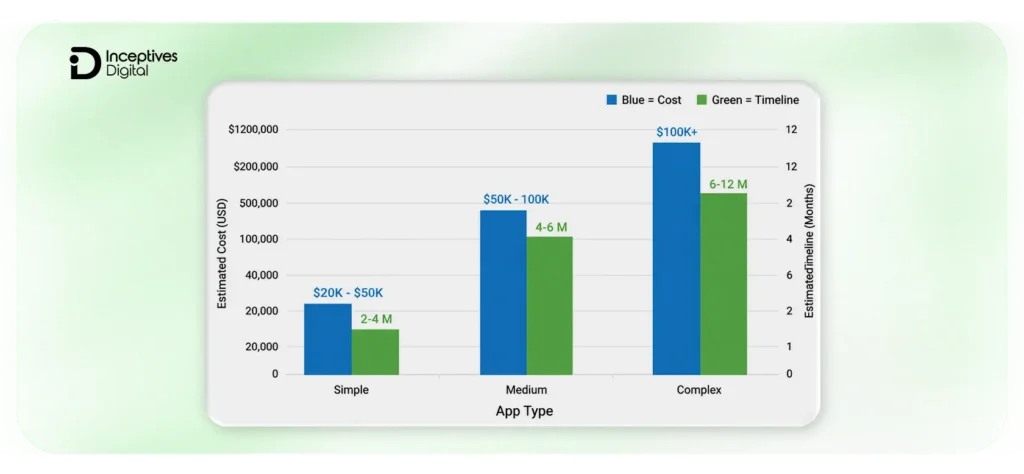
Let’s talk straightforwardly about money and time. The cost of a mobile app depends on its features, platform requirements, integrations, and overall complexity.

For instance, a basic app, such as a task manager, could be in the range of $20,000 to $50,000. On the other hand, a complicated app from a blockchain app development company might just surpass the figure of $100,000.

Fees for app stores, APIs, and maintenance, among others, are some of the hidden costs that you would not want to be faced with.

As far as timelines are concerned, design may take 2–4 weeks, development 2–6 months, and testing several additional weeks, depending on the project. These activities can also overlap.

Cost and Timeline by App Complexity

App TypeCost RangeTimeline
Simple$20,000-$50,0002-4 months
Medium$50,000-$100,0004-6 months
Complex$100,000+6-12 months

Many businesses underestimate mobile app development costs by focusing only on initial development. In reality, post-launch expenses like updates, server costs, and performance optimization can significantly impact the total cost over time.

Get a Mobile App Development Quote Based on Your Requirements

Know what you want to build? Let Inceptives Digital price your features, integrations, and development timeline.

Get My Project Quote!

12. Quality Assurance and App Testing Process

Mobile app testing and quality assurance are essential to ensure a positive user experience. Testing will cover functionality, performance, design, security, and compatibility with iOS and Android devices. Ask yourself: How should I engage in the development process? Effective testing will identify bugs early, which will help avoid stress later. Ask for confirmation that effective testing happens to provide you with a solid app.

13. Post-Launch Support and Maintenance 

Evaluate a mobile app development company on its ability to scale applications and maintain performance after launch. Review its technical approach and request evidence from previous projects.

Focus on these evaluation criteria:

  • App scalability: Load testing, scalable backend architecture, database optimization, and mobile app performance optimization.
  • Load testing, scalable backend architecture, and database optimization.
  • Performance monitoring: Crash reporting, API response times, and application performance metrics.
  • Release management: OS compatibility updates, regression testing, and deployment procedures.
  • Maintenance support: Documented SLAs, bug resolution timelines, and security patches.

Ask shortlisted companies for performance benchmarks and examples of scaling applications under growing user demand. Their post-launch support agreement should clearly define responsibilities, response times, and ongoing maintenance costs.

14. Assess Industry & Domain Specialization

Domain expertise is crucial if you are building an app for a certain industry, like a video game. A mobile game development company must have expertise with popular game engines to ensure an uninterrupted and smooth gaming experience. A company with expertise in your industry understands the regulations, leaving you to focus on your users, while still building a high-performing app. Look for experience with an app in your specific industry to ensure both technology and compliance.

15. Final Decision and Common Mistakes to Avoid

At this point, use a decision matrix to evaluate portfolios, technical skills, communication, and pricing. Watch out for red flags such as ambiguous statements, lack of a contract, or slow returns on your messages. Other things to avoid when hiring mobile app developers include the cheaper price option and skipping maintenance. Find mobile app developers that seems like an equal partner for the success of your application.

Common Mistakes to Avoid While Choosing a Mobile App Development Company

Here’s what to steer clear of:

  • Picking the cheapest bid, low cost often means low quality.
  • Skipping quality assurance, untested apps lead to bugs and bad reviews.
  • Not defining your scope, vague goals cause delays and extra costs.
  • Ignoring communication issues, gaps now mean trouble later.

Avoid these, and you’re on the right track.

To Conclude: Where Can I Find the Right Mobile App Developers to Hire?

Choosing the right mobile app development company comes down to clarity, structure, and careful evaluation.

When you clearly define your app goals, compare companies based on real experience, and assess them through factors like technical expertise, communication, pricing transparency, and post-launch support, the decision becomes much more objective.

Instead of relying on assumptions or surface-level impressions, a structured approach helps you identify a partner who can actually deliver a stable, scalable, and user-friendly product.

If you’re currently exploring options for your project, working with reliable mobile app development services can make the entire process more organized and predictable.

The right team will not only build your application but also guide you through planning, development, and long-term maintenance, so your product stays relevant after launch.

Before making your decision, compare each shortlisted company against your requirements and confirm the scope, pricing, and contract terms.

Hire Mobile App Developers Who Understand Your Business

Build your app with Inceptives Digital, from technical planning to launch and ongoing support.

Hire Our App Developers

Frequently Asked Questions (FAQs)

1. How do I choose the right mobile app development company?

Start by defining your app goals and required features. Then, shortlist companies based on their portfolio, technical expertise, and client reviews. Compare them using clear criteria like communication, pricing transparency, and post-launch support to make a confident decision.

2. How much does it cost to hire a mobile app development company?

The cost of hiring a mobile app development company depends on app complexity, features, and the location of the development team. A simple app may cost $20,000–$50,000, while more complex applications can exceed $100,000. Ongoing costs like maintenance, updates, and third-party integrations should also be considered.

3. How long does it take to develop a mobile app?

Mobile app development timelines vary based on complexity. A basic app may take 2–4 months, while more advanced apps can take 6–12 months or longer. The timeline includes design, development, testing, and deployment stages.

4. What should I look for in an app development company?

Focus on experience, technical skills, communication practices, and portfolio quality. It’s also important to check if the company offers post-launch support and has experience in your industry or similar types of applications.

5. Should I choose a local or offshore app development company?

Both options have advantages. Local companies offer easier communication and collaboration, while offshore teams may provide cost savings. The best choice depends on your budget, project complexity, and preferred level of involvement.

6. What questions should I ask before hiring an app development company?

Ask about their development process, technology stack, past projects, communication methods, and support after launch. Also, clarify pricing structure, timelines, and ownership of the app’s code and intellectual property.

7. Do app development companies provide post-launch support?

Most professional companies offer post-launch services such as bug fixes, updates, and performance monitoring. It’s important to confirm what’s included in their maintenance plan before signing a contract.

Picture of Shahzaib Khan

Shahzaib Khan

Shahzaib is an experienced SEO content writer at Inceptives Digital, specializing in crafting high-quality, SEO-optimized content that boosts traffic and enhances online visibility. With a strong command of SEO principles, he creates engaging blogs, articles, and web copy tailored for diverse industries, including mobile app development company clients. His content is designed to drive results and support businesses in achieving their digital marketing goals. Shahzaib keeps up with the latest SEO trends and best practices, ensuring that his work consistently delivers maximum impact.
✦ Summarize with AI
ChatGPT Claude Perplexity Gemini Grok

Have a Product in Mind?

Let’s build it the right way, together
Start the Conversation
Blog / App Development / How to Choose the Right Mobile App Development Company?

How to Choose the Right Mobile App Development Company?

Shahzaib Khan
WRITTEN BY Shahzaib Khan
Muhammad Usman
REVIEWED & APPROVED BY Muhammad Usman
On This Page
1. Define Your App Development Goals and Requirements2. Research Mobile App Development Companies3. Shortlist & Compare App Development Companies4. Evaluate Portfolio and Case StudiesHow to Evaluate a Mobile App Development Company (Scorecard)5. Check Client Reviews and Testimonials6. Assess Technical Expertise and Technology StackNeed a Team That Can Handle Your App’s Technical Requirements?7. Communication and Collaboration Practices8. App Development Methodology (Agile vs Waterfall)9. Request Proposals and Compare Pricing Models10. Gauge Legal Agreements and Contract Terms11. Understand Budget and Development TimelineCost and Timeline by App ComplexityGet a Mobile App Development Quote Based on Your Requirements12. Quality Assurance and App Testing Process13. Post-Launch Support and Maintenance14. Assess Industry & Domain Specialization15. Final Decision and Common Mistakes to AvoidCommon Mistakes to Avoid While Choosing a Mobile App Development CompanyTo Conclude: Where Can I Find the Right Mobile App Developers to Hire?Hire Mobile App Developers Who Understand Your BusinessFrequently Asked Questions (FAQs)
Share This Article
How to Choose the Right Mobile App Development Company?
  • Define your app’s goals, essential features, target audience, and budget before contacting development companies.
  • Examine real applications and case studies rather than relying solely on portfolio visuals.
  • Compare technical expertise, communication, security practices, pricing transparency, and post-launch support.
  • Review proposals for clear deliverables, payment milestones, and intellectual property ownership.
  • Choose a development company based on proven capabilities and project requirements, not simply the lowest quote.

Choosing a mobile app development company can be challenging, especially when every agency seems to promise experienced developers, successful projects, and competitive pricing.

But how do you know which company can actually deliver what your app needs?

A polished portfolio or attractive quote doesn’t tell the whole story. Two companies may offer similar services, yet differ significantly in their technical expertise, development process, and ability to handle challenges during the project.

And those differences matter to users. A February 2026 survey by Luciq found that 15.4% of respondents uninstall an app after a single crash, showing how quickly poor performance can affect retention.

Choosing the wrong partner can also lead to missed deadlines, unexpected costs, or an application that fails to meet your requirements.

That’s why choosing the right mobile app development company requires more than comparing prices. You need to look at how the team communicates, manages development, handles testing, and supports your app after launch.

This guide walks you through 15 practical steps to evaluate development companies, identify potential red flags, and choose a partner that fits your project and budget.

1. Define Your App Development Goals and Requirements

Before contacting any mobile app development company, you need a clear idea of what you want to build. Start by identifying your target audience, the problem your app will solve, and the core features it must include. A discovery sprint can help you work through these requirements before approaching development companies. 

If you’re still refining your idea, exploring different mobile app ideas can help you validate your concept before investing in development.

Next, decide whether you want iOS, Android, or cross-platform app development. This choice will directly impact your budget, timeline, and overall development approach.

Finally, document everything in a simple requirement sheet covering features, user flow, and design expectations. This acts as a clear blueprint for mobile app development services and helps avoid confusion, delays, and unnecessary changes during the project.

CategoryDetails / Questions to DefineExample / Notes
App PurposeWhat main problem does the app solve?Help parents monitor children’s chores.
Target AudienceWho will use the app (age, interests, device)?Busy parents with children aged 6–15.
Core Features (Must-Haves)Essential functions required for the app to work.User login, dashboard, task tracker.
Additional Features (Nice-to-Haves)Features that enhance user experience but aren’t critical.Push notifications, chatbot assistant.
Platform ChoiceWhich platforms will the app support?iOS and Android (cross-platform).
Design GoalsHow should the app look and feel?Clean, family-friendly, intuitive interface.
Budget RangeWhat’s your realistic cost limit?$30,000–$50,000 for MVP.
TimelineDesired launch or delivery date.4–5 months, including testing.

2. Research Mobile App Development Companies

Time to find some solid companies. Start with online directories like Clutch and GoodFirms, where you’ll see vetted firms with real reviews. LinkedIn is another good spot to find mobile app development services or get referrals from people you trust. 

Check out company websites. 

  • Do they look legit? 
  • Does their portfolio demonstrate relevant experience?
  • Can you verify their past projects and technical capabilities?

A custom software development company might be a great pick if your app needs custom backend work, like for a delivery platform.

Look for case studies that show actual results, not just pretty designs. Industry directories or word-of-mouth can also lead you to great firms. A quick search for the best mobile app development companies can give you ideas, but don’t just stop there. Dig into their reputation and past work. This step is about building a list of 5-10 companies worth a closer look.

3. Shortlist & Compare App Development Companies 

Now, narrow your list to 3–5 companies that seem promising. Make a scoring matrix to compare their technical expertise, industry experience (like healthcare or retail), communication, and collaboration. 

Are they quick to reply to your emails? Do they get your niche? A company that has built apps for, say, fintech or education, will likely understand your needs better.

Ask: How do I shortlist potential firms? Don’t just focus on price, as a lower quote may exclude features or services another company includes. Check if they’ve handled projects like yours in size or complexity. Good communication early on is a sign they’ll keep you updated later. This step helps you zero in on companies that are the best match for your app’s goals.

4. Evaluate Portfolio and Case Studies 

A portfolio showcases the true potential of a company. A common question people ask is (How do I evaluate an app development company portfolio?). We suggest looking into the apps they have built. It would be a bonus if they have built an app in your industry. Download them and see if the users are happy with the apps, and look for feedback to see how they are performing. Read their case studies to see what challenges they faced during the development, how they overcame them, and what the result was, like a hike of 25% in user engagement or anything like that.

The diversity of their project is a good sign; it shows they can handle cross-industry app development projects. Choosing an app development company with a strong app development portfolio increases your chance of success.

For example, a company might showcase visually appealing apps, but if those apps have poor user retention or low ratings on app stores, it signals deeper issues in usability or performance. Always go beyond visuals and evaluate how those apps actually perform in real-world usage.

How to Evaluate a Mobile App Development Company (Scorecard)

Once you’ve shortlisted a few mobile app development companies, the next step is to evaluate them in a structured way. Instead of relying on assumptions or just pricing, it’s better to compare each company based on key factors that directly impact your app’s success.

A simple scoring system can help you make a more confident and objective decision.

Mobile App Development Company Evaluation Scorecard

CriteriaWhat to Look ForScore (1–5)
Portfolio QualityReal, functional apps with strong UI/UX and relevant industry experience1 = weak, 5 = excellent
Technical ExpertiseUse of modern technologies, scalable architecture, and secure development practices1 = outdated, 5 = advanced
Communication & TransparencyClear updates, responsiveness, and willingness to explain processes1 = poor, 5 = excellent
Industry ExperienceExperience in building apps similar to your business model or niche1 = none, 5 = highly relevant
Pricing TransparencyDetailed estimates with no hidden costs or vague pricing structures1 = unclear, 5 = fully transparent
Post-Launch SupportOngoing maintenance, updates, performance monitoring, and bug fixes1 = none, 5 = comprehensive
Security & Quality AssuranceEvidence of secure development practices, testing, and quality checks1 = weak, 5 = excellent

How to Use This Scorecard

  • Rate each company from 1 to 5 for every criterion
  • Add up the total score for each company
  • Compare results across all shortlisted options

A higher score usually indicates a more reliable and well-rounded development partner, even if they are not the cheapest option.

Using this approach removes guesswork and helps you choose based on real value instead of surface-level impressions.

5. Check Client Reviews and Testimonials

Client testimonials and reviews give you the real scoop on a company. Check platforms like Clutch, GoodFirms, or Google Reviews for honest feedback. 

Look for specific comments. Did they deliver on time? Handle issues well? Vague “they’re awesome” reviews don’t cut it. Ask for references and call past clients to hear about their experience. Any red flags?

Client feedback helps you understand how the company performs beyond its marketing claims. Real feedback builds confidence. If a company won’t share references, ask whether confidentiality restrictions apply and request other evidence of completed projects.

Look for consistent, detailed praise across reviews. Pay particular attention to comments about communication, missed deadlines, technical issues, and how the team responds when problems arise.

6. Assess Technical Expertise and Technology Stack

Technical expertise is the backbone of app development. The company you are collaborating with should have proven technical expertise in mobile tools such as Swift, which is for iOS app development, Kotlin for Android, and Flutter or React Native for developing cross platform applications. Also, check if they can handle third-party APIs. Suppose an Android app development company should be skilled in frameworks like Kotlin and Java. Evaluate how they make sure an app is compatible, secure, and optimized for publishing on app stores.

Are they up to date on trends like AI or AR? Can they handle your app’s needs? A custom software development company might be ideal if you need custom integrations. This step is about making sure your app is built right, not just patched together.

In many real projects, apps fail not because of poor design, but because they are not built for scalability. For instance, an app that works fine with 1,000 users may start crashing when it reaches 50,000 users if the backend architecture isn’t planned properly from the start.

Need a Team That Can Handle Your App’s Technical Requirements?

From custom APIs to complex user workflows, our developers can handle the engineering your app requires.

Hire Experienced App Developers!

7. Communication and Collaboration Practices 

Good communication and collaboration keep things smooth. Ask: What project management tools should the team use? Tools like Jira, Trello, or Asana make updates easy to track. How often will they share progress—weekly? Daily? Time zones and cultural fit matter, especially with global teams.

You want a company that’s open and responsive. If they’re hard to reach now, it’ll only get worse. Clear communication during the mobile app development process prevents mix-ups. This step sets you up for a partnership that feels easy, not stressful.

One of the most common reasons app projects fail is poor communication. Delays, misunderstood requirements, and repeated revisions often happen when there’s no clear communication structure in place from day one.

8. App Development Methodology (Agile vs Waterfall)

The development methodology shapes how your app gets built. Agile, backed by the Project Management Institute, uses short cycles called sprints, so you can test and tweak as you go. It’s great for apps that might change. Waterfall is more rigid, with set phases, better for projects with fixed plans.

Some teams also combine both approaches, defining major milestones upfront while allowing flexibility during development.

Agile vs Waterfall App Development Methodologies

AspectAgileWaterfall
FlexibilityHigh, adjusts as you goLow follows the set plan
TestingOngoing during sprintsAt the end
Best ForComplex, evolving appsSimple, defined apps

Ask: Which development methodology is better (Agile vs Waterfall)? Agile usually works best for modern apps, but talk to your developer to pick what suits your project.

9. Request Proposals and Compare Pricing Models

Request detailed estimates for each of the companies you shortlisted. A solid proposal will outline features, timeline, milestones and payment schedule. You will next want to compare fixed-price models (good for more set projects) versus hourly, which would be a better model for apps that might evolve. You might not want just the cheapest estimate, but the best value. You may be asking, How do I request and compare cost estimates? A clear proposal helps prevent any surprise costs in the future.

10. Gauge Legal Agreements and Contract Terms

A solid contract and terms protect both sides of the deal. Look for clauses regarding the ownership of intellectual property, non-disclosure agreements, deliverables, payment terms, warranties, and dispute handling. Ask yourself: What do I want included in the contract? A thorough contract can eliminate drama later and keep your app and data safe. Read the contract thoroughly; it is your armor.

11. Understand Budget and Development Timeline

Let’s talk straightforwardly about money and time. The cost of a mobile app depends on its features, platform requirements, integrations, and overall complexity.

For instance, a basic app, such as a task manager, could be in the range of $20,000 to $50,000. On the other hand, a complicated app from a blockchain app development company might just surpass the figure of $100,000.

Fees for app stores, APIs, and maintenance, among others, are some of the hidden costs that you would not want to be faced with.

As far as timelines are concerned, design may take 2–4 weeks, development 2–6 months, and testing several additional weeks, depending on the project. These activities can also overlap.

Cost and Timeline by App Complexity

App TypeCost RangeTimeline
Simple$20,000-$50,0002-4 months
Medium$50,000-$100,0004-6 months
Complex$100,000+6-12 months

Many businesses underestimate mobile app development costs by focusing only on initial development. In reality, post-launch expenses like updates, server costs, and performance optimization can significantly impact the total cost over time.

Get a Mobile App Development Quote Based on Your Requirements

Know what you want to build? Let Inceptives Digital price your features, integrations, and development timeline.

Get My Project Quote!

12. Quality Assurance and App Testing Process

Mobile app testing and quality assurance are essential to ensure a positive user experience. Testing will cover functionality, performance, design, security, and compatibility with iOS and Android devices. Ask yourself: How should I engage in the development process? Effective testing will identify bugs early, which will help avoid stress later. Ask for confirmation that effective testing happens to provide you with a solid app.

13. Post-Launch Support and Maintenance 

Evaluate a mobile app development company on its ability to scale applications and maintain performance after launch. Review its technical approach and request evidence from previous projects.

Focus on these evaluation criteria:

  • App scalability: Load testing, scalable backend architecture, database optimization, and mobile app performance optimization.
  • Load testing, scalable backend architecture, and database optimization.
  • Performance monitoring: Crash reporting, API response times, and application performance metrics.
  • Release management: OS compatibility updates, regression testing, and deployment procedures.
  • Maintenance support: Documented SLAs, bug resolution timelines, and security patches.

Ask shortlisted companies for performance benchmarks and examples of scaling applications under growing user demand. Their post-launch support agreement should clearly define responsibilities, response times, and ongoing maintenance costs.

14. Assess Industry & Domain Specialization

Domain expertise is crucial if you are building an app for a certain industry, like a video game. A mobile game development company must have expertise with popular game engines to ensure an uninterrupted and smooth gaming experience. A company with expertise in your industry understands the regulations, leaving you to focus on your users, while still building a high-performing app. Look for experience with an app in your specific industry to ensure both technology and compliance.

15. Final Decision and Common Mistakes to Avoid

At this point, use a decision matrix to evaluate portfolios, technical skills, communication, and pricing. Watch out for red flags such as ambiguous statements, lack of a contract, or slow returns on your messages. Other things to avoid when hiring mobile app developers include the cheaper price option and skipping maintenance. Find mobile app developers that seems like an equal partner for the success of your application.

Common Mistakes to Avoid While Choosing a Mobile App Development Company

Here’s what to steer clear of:

  • Picking the cheapest bid, low cost often means low quality.
  • Skipping quality assurance, untested apps lead to bugs and bad reviews.
  • Not defining your scope, vague goals cause delays and extra costs.
  • Ignoring communication issues, gaps now mean trouble later.

Avoid these, and you’re on the right track.

To Conclude: Where Can I Find the Right Mobile App Developers to Hire?

Choosing the right mobile app development company comes down to clarity, structure, and careful evaluation.

When you clearly define your app goals, compare companies based on real experience, and assess them through factors like technical expertise, communication, pricing transparency, and post-launch support, the decision becomes much more objective.

Instead of relying on assumptions or surface-level impressions, a structured approach helps you identify a partner who can actually deliver a stable, scalable, and user-friendly product.

If you’re currently exploring options for your project, working with reliable mobile app development services can make the entire process more organized and predictable.

The right team will not only build your application but also guide you through planning, development, and long-term maintenance, so your product stays relevant after launch.

Before making your decision, compare each shortlisted company against your requirements and confirm the scope, pricing, and contract terms.

Hire Mobile App Developers Who Understand Your Business

Build your app with Inceptives Digital, from technical planning to launch and ongoing support.

Hire Our App Developers

Frequently Asked Questions (FAQs)

1. How do I choose the right mobile app development company?

Start by defining your app goals and required features. Then, shortlist companies based on their portfolio, technical expertise, and client reviews. Compare them using clear criteria like communication, pricing transparency, and post-launch support to make a confident decision.

2. How much does it cost to hire a mobile app development company?

The cost of hiring a mobile app development company depends on app complexity, features, and the location of the development team. A simple app may cost $20,000–$50,000, while more complex applications can exceed $100,000. Ongoing costs like maintenance, updates, and third-party integrations should also be considered.

3. How long does it take to develop a mobile app?

Mobile app development timelines vary based on complexity. A basic app may take 2–4 months, while more advanced apps can take 6–12 months or longer. The timeline includes design, development, testing, and deployment stages.

4. What should I look for in an app development company?

Focus on experience, technical skills, communication practices, and portfolio quality. It’s also important to check if the company offers post-launch support and has experience in your industry or similar types of applications.

5. Should I choose a local or offshore app development company?

Both options have advantages. Local companies offer easier communication and collaboration, while offshore teams may provide cost savings. The best choice depends on your budget, project complexity, and preferred level of involvement.

6. What questions should I ask before hiring an app development company?

Ask about their development process, technology stack, past projects, communication methods, and support after launch. Also, clarify pricing structure, timelines, and ownership of the app’s code and intellectual property.

7. Do app development companies provide post-launch support?

Most professional companies offer post-launch services such as bug fixes, updates, and performance monitoring. It’s important to confirm what’s included in their maintenance plan before signing a contract.

✦ Summarize with AI

Shahzaib Khan
WRITTEN BY

Shahzaib Khan

Shahzaib is an experienced SEO content writer at Inceptives Digital, specializing in crafting high-quality, SEO-optimized content that boosts traffic and enhances online visibility. With a strong command of SEO principles, he creates engaging blogs, articles, and web copy tailored for diverse industries, including mobile app development company clients. His content is designed to drive results and support businesses in achieving their digital marketing goals. Shahzaib keeps up with the latest SEO trends and best practices, ensuring that his work consistently delivers maximum impact.

Muhammad Usman
REVIEWED & APPROVED BY

Muhammad Usman

Usman is an experienced organic growth expert with 3+ years of expertise in helping businesses increase visibility, attract qualified audiences, and achieve sustainable online growth. At Inceptives Digital, he develops data-driven organic growth strategies tailored to diverse industries, including clients in the mobile app development space. His approach focuses on understanding audience behavior, identifying growth opportunities, optimizing digital channels, and building strategies that generate consistent, measurable results. By staying ahead of evolving digital trends and user behavior, Usman helps businesses strengthen their online presence, expand their reach, and achieve long-term organic growth.

✦ Summarize with AI

Have a Product in Mind?

Discuss your idea with our product development team.

Start the Conversation →
On This Page
1. Define Your App Development Goals and Requirements2. Research Mobile App Development Companies3. Shortlist & Compare App Development Companies4. Evaluate Portfolio and Case StudiesHow to Evaluate a Mobile App Development Company (Scorecard)5. Check Client Reviews and Testimonials6. Assess Technical Expertise and Technology StackNeed a Team That Can Handle Your App’s Technical Requirements?7. Communication and Collaboration Practices8. App Development Methodology (Agile vs Waterfall)9. Request Proposals and Compare Pricing Models10. Gauge Legal Agreements and Contract Terms11. Understand Budget and Development TimelineCost and Timeline by App ComplexityGet a Mobile App Development Quote Based on Your Requirements12. Quality Assurance and App Testing Process13. Post-Launch Support and Maintenance14. Assess Industry & Domain Specialization15. Final Decision and Common Mistakes to AvoidCommon Mistakes to Avoid While Choosing a Mobile App Development CompanyTo Conclude: Where Can I Find the Right Mobile App Developers to Hire?Hire Mobile App Developers Who Understand Your BusinessFrequently Asked Questions (FAQs)
Locations

Get in touch!

Scalable solutions from teams worldwide!

  • Privacy Policy
  • |
  • Terms of Services
Inceptives Digital

We build apps, digital products, and AI-powered systems for businesses that cannot afford to get it wrong.

  • info@inceptivesdigital.com
  • (469) 788-8527
Linkedin Instagram Facebook
Services
  • Mobile App Development
  • AI Development
  • Digital Product Development
  • Mobile App Development
  • AI Development
  • Digital Product Development
Industries
  • Healthcare
  • Fitness
  • Dating
  • Education
  • Real Estate
  • Travel
  • Food Delivery
  • Healthcare
  • Fitness
  • Dating
  • Education
  • Real Estate
  • Travel
  • Food Delivery
Case Studies
  • WordSmith Pro
  • DPS Airem
  • State of the Art Chiropractic
  • Family Entertainment Group
  • StakBread
  • WordSmith Pro
  • DPS Airem
  • State of the Art Chiropractic
  • Family Entertainment Group
  • StakBread
Locations
  • San Francisco
  • Toronto
  • Austin
  • New York
  • Singapore
  • London
  • Dubai
  • San Francisco
  • Toronto
  • Austin
  • New York
  • Singapore
  • London
  • Dubai
Company
  • About
  • Blog
  • Press & Media
  • Partnership
  • Life At Inceptives Digital
  • Leadership
  • Founder’s Letter
  • Contact Us
  • About
  • Blog
  • Press & Media
  • Partnership
  • Life At Inceptives Digital
  • Leadership
  • Founder’s Letter
  • Contact Us
Recognized and Reviewed On

Independent reviews and industry recognition from established B2B platforms.

Clutch Review Badge
Bark Review Badge
Trustpilot Review Badge
Our Locations
United States
New York, USA

1178 Broadway, 3rd Floor New York, NY 10001 United States

United States
San Francisco, USA

490 Post St, Ste 500 San Francisco, CA 94102 United States

United States
Austin, USA

5900 Balcones Drive, Suite 100 Austin, Texas 78731 United States

United States
Allen, USA

450 Century Parkway, Suite 250 1005 Allen, TX 75013, USA

Canda
Toronto, Canada

2482 Yonge Street Toronto, ON M4P 2H5 Canada

united kingdom
London, UK

Office 1776, 60 Tottenham Court Road, Fitzrovia, London W1T 2EW

Dubai, UAE

IFZA Business Park Building A2, Dubai Silicon Oasis Dubai, UAE

Singapore
Singapore

No. 7 Temasek Boulevard #12-07, Suntec Tower One Singapore 038987

Pakistan
Karachi, Pakistan

Office No. 1, Najeeb Center 172-B Tariq Road, PECHS Karachi 74400, Pakistan

© 2026 IT Core Solutions LLC DBA Inceptives Digital. All Rights Reserved.

  • Privacy Policy
  • Terms of Use
DMCA.com Protection Status

Get Expert Direction for Your Next Digital Product

Inceptives Digital has helped businesses across regions bring their visions to life. See what their experience says about working with us. We don’t do magic. We build with expertise.

“
Inceptives Digital has been professional, responsive, and genuinely committed to understanding our vision for Evoltion Enterprise. The team communicated clearly, explained technical details patiently, and made payments hassle-free. Special thanks to Aaron Francis for his clarity and support throughout. Highly recommend them as a transparent, easy-to-work-with technology partner
Tyrrell Gibson CEO, Evoltion Enterprise
When I came to these guys, it was just me in an idea. I’ve had ideas before that. I thought were good and sat on them only to watch others take the initiative and reap the rewards because I lacked confidence. When I had the idea for my app I figured, “Not this time.
Edward Eller, GoRyde
I absolutely recommend this company. This team is absolutely Amazing!
I can't say enough good things about them. I had tried 3 other app makers before finding them. All of them fell short in the end. The Inceptive team was the literal answer of my prayers.
DC & Owner, State of the Art Chiropractic
AWARDS & RECOGNITION
Inceptives Digital award badge 1
Top Mobile App Developers 2025
Inceptives Digital award badge 3
RightFirms company badge
Inceptives Digital award badge 5
FEATURED ON MEDIA & REVIEW PLATFORMS
Associated Press
Trustpilot
Google
The New York Times
The Globe and Mail
USA Today

Let us help you build the next innovative digital product with precision and expertise. Share your idea and get a customized roadmap to your app within 24 hours.

Fully NDA-Protected
  • Privacy Policy
  • |
  • Terms of Services

Schedule a Meeting

Loading calendar...
Calendar is taking longer than expected

Please try again, or open Calendly directly to book your meeting.

Open Calendly