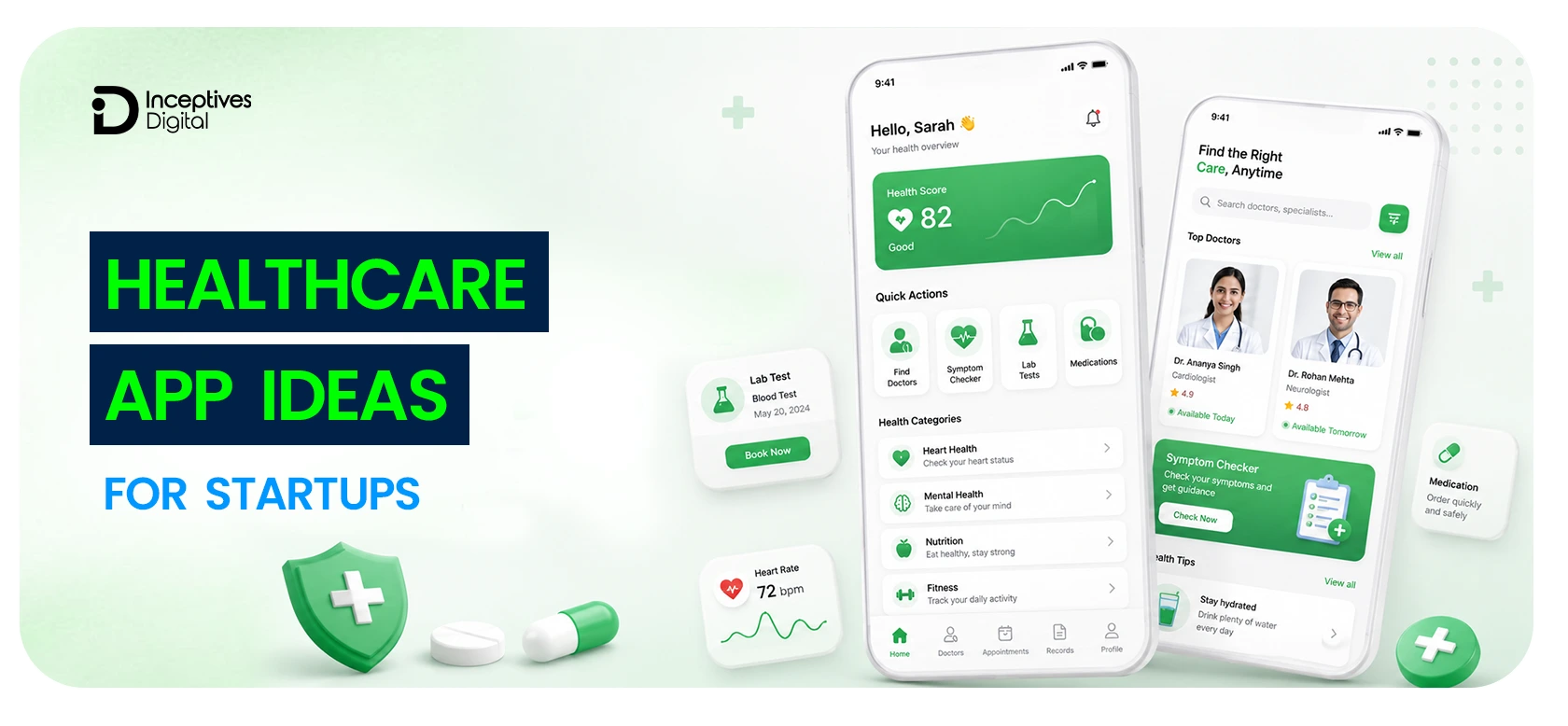
- Telemedicine, AI symptom checkers, and remote patient monitoring are promising healthcare app opportunities for startups.
- Mental health apps can generate revenue through subscriptions and paid therapy sessions.
- Wearable technology allows healthcare apps to track patient health beyond hospitals and clinics.
- AI-powered healthcare apps can support symptom assessment and help providers identify potential health risks.
- Healthcare startups must consider HIPAA, patient data security, and system integrations from the beginning.
- A healthcare MVP helps test patient needs before investing in a complete platform.
- Healthcare app development costs range from $20,000 for basic apps to over $300,000 for advanced solutions.
- Telemedicine platforms and digital pharmacies offer several revenue opportunities through consultations, commissions, and subscriptions.
- Poor usability and weak patient trust can prevent adoption even when an app functions correctly.
- Testing with real patients and healthcare professionals helps identify problems before launch.
Healthcare is already halfway through a quiet rebuild. Not in theory, but in how people actually get care now. A quick video call replaces a clinic visit. A smartwatch flags something before a person even feels off. Prescription refills show up without anyone calling a pharmacy. It’s all becoming normal faster than most healthcare systems were designed to handle. And the scale behind it is not small.
The global mHealth market is expected to reach USD 86.37 billion by 2030, growing at a steady pace as mobile-first healthcare stops being optional and becomes routine. That shift is coming from real usage, not hype, especially in remote care, chronic condition tracking, and everyday wellness tools.
That’s where most new healthcare app ideas are coming from right now. Not abstract innovation, but very specific gaps showing up inside clinics, hospitals, and even daily life. A diabetic patient who needs constant tracking. A doctor who wants fewer repetitive follow-ups. A caregiver is trying to coordinate across three different systems that don’t talk to each other.
This is also where a healthcare app development company quietly becomes part of the equation. Not as a branding line, but because turning any of these ideas into something that’s actually safe, compliant, and usable in real healthcare environments is a different game compared to building a regular consumer app.
The rest of this guide breaks down those ideas in a practical way, focusing on what’s actually being built, what’s getting adoption, and where startups still have room to move without guessing their way through it.
What Are Healthcare Apps?
Healthcare apps are digital tools that help people manage health, connect with doctors, or support clinical workflows. They can run on mobile devices or web platforms and are used for anything from booking appointments to tracking chronic conditions.
Patient-Facing vs Provider-Focused Apps
Patient-facing apps are built for individuals managing their own health, such as:
- Appointment booking
- Medication reminders
- Fitness and wellness tracking
- Symptom checking
- Mental health support
Provider-focused apps are used by doctors, hospitals, and clinics, such as:
- Patient records and EHR systems
- Clinical dashboards
- Scheduling and workflow tools
- Remote monitoring systems
How Healthcare Apps Improve Care Delivery
Healthcare apps mainly improve access and coordination. Patients can reach care faster, track their health more consistently, and avoid unnecessary visits. Providers get better visibility into patient data, which helps in quicker decisions and more continuous care outside hospital settings.
Profitable Healthcare App Ideas for Startups
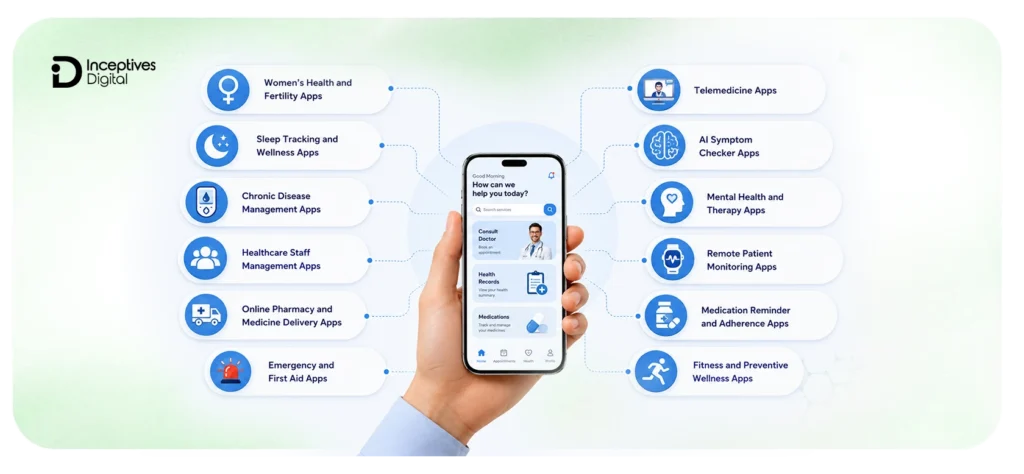
1. Telemedicine Apps
Telemedicine app development sits at the center of modern digital healthcare. They remove the need for physical visits in many cases and let patients connect with doctors through video calls, chat, or structured online consultations. What started as a convenience has now turned into a standard layer of healthcare delivery in many systems.
Why Is This Healthcare App Idea Growing?
Access is the main driver. Patients prefer quick consultations without clinic visits, especially for non-urgent issues. At the same time, hospitals use telemedicine apps to reduce in-person load and manage routine cases more efficiently.
Remote care has also become more accepted for follow-ups and minor conditions, especially when it saves time and cost.
With digital prescriptions, insurance integration, and stable video infrastructure, telemedicine is now a core part of healthcare delivery rather than just an add-on.
Best Target Audience
- Urban patients looking for fast consultations
- People with chronic but stable conditions need regular follow-ups
- Working professionals with limited time for clinic visits
- Elderly patients who struggle with mobility
- Clinics and hospitals aiming to extend services digitally
Core MVP Features
- Video consultation system with doctors
- Patient registration and profile management
- Appointment scheduling with availability slots
- Digital prescription generation
- Chat support for follow-ups
- Basic payment integration
- Doctor profiles with specialization filters
Revenue Model
- Consultation fees per appointment
- Subscription plans for unlimited or discounted consultations
- Commission per doctor booking
- Clinic licensing for white-label platforms
- Pharmacy partnerships for prescription fulfillment
Real-World Example
Teladoc Health is one of the most widely recognized telemedicine platforms globally, offering virtual healthcare services across multiple specialties and serving millions of users. Its growth shows how digital consultations have moved from convenience-based usage to mainstream healthcare delivery.
2. AI Symptom Checker Apps
AI symptom checker apps help users assess possible health conditions based on symptoms, medical history, and basic health inputs. Specialized AI app development services can support these features with appropriate clinical safeguards.
Instead of immediately visiting a clinic for every concern, users can get preliminary guidance, risk insights, and recommendations on whether medical attention is necessary.
Market Opportunity
People already search online before booking medical appointments. Through AI chatbot development, symptom checker apps can make preliminary health assessments more structured and easier to navigate while directing users toward appropriate medical care.
The demand is growing quickly alongside broader AI adoption in healthcare. According to a recent OpenAI report, 55% of surveyed users said they used AI tools to check or explore symptoms, showing how common AI-assisted health queries have already become.
Healthcare providers are also using AI-assisted triage tools to reduce unnecessary appointments and prioritize urgent cases more efficiently.
Best Target Audience
- Patients seeking quick preliminary health guidance
- Hospitals and clinics handling high patient volumes
- Rural users with limited healthcare access
- Health insurance and telehealth platforms
- Preventive healthcare startups
Core MVP Features
- AI-powered symptom input system
- Health risk assessment engine
- NLP-based chatbot interface
- Symptom history tracking
- Doctor or telemedicine referral suggestions
- Emergency alert recommendations for critical symptoms
Revenue Model
- Freemium model with advanced assessments
- Subscription-based health insights
- Telemedicine referral commissions
- B2B licensing for clinics and hospitals
- Insurance and healthcare partnerships
Real-World Example
Ada Health became one of the most recognized symptom assessment platforms by combining AI-driven health analysis with conversational interfaces, helping millions of users perform preliminary health checks before seeking medical care.
3. Mental Health and Therapy Apps
Mental health apps are becoming one of the most active segments in digital healthcare. Users increasingly look for accessible support systems they can use privately, consistently, and without long waiting times.
Why Are Users Adopting Mental Wellness Platforms?
Convenience plays a major role. Many users prefer digital therapy sessions, guided meditation, mood tracking, or stress management tools that they can access anytime without visiting a clinic.
The demand is also backed by rising mental health awareness globally. According to the World Health Organization, anxiety and depression increased by more than 25% worldwide during recent years, accelerating demand for accessible mental wellness support.
Best Target Audience
- Young adults and Gen Z users
- Working professionals facing burnout or stress
- Users seeking anonymous therapy support
- Individuals managing anxiety, depression, or sleep disorders
- Corporate wellness programs
Core MVP Features
- Mood and habit tracking
- Guided meditation and breathing exercises
- AI chatbot or journaling support
- Therapist booking and video sessions
- Push notifications for wellness routines
- Anonymous community or support features
Revenue Model
- Subscription-based premium access
- Paid therapy consultations
- Freemium meditation content
- Corporate wellness partnerships
- In-app purchases for advanced programs
Real-World Example
Headspace gained global adoption by combining guided meditation, sleep support, mindfulness programs, and wellness tracking into a subscription-based mental health platform.
4. Remote Patient Monitoring Apps
Remote Patient Monitoring (RPM) apps help healthcare providers track patient health data outside hospitals or clinics. Reliable wearable fitness app integration can support data collection from compatible connected devices.
These apps are widely used for chronic disease management, post-treatment monitoring, and elderly care.
Why Are RPM Apps Expanding?
Healthcare is moving from occasional checkups to continuous monitoring. RPM apps make it possible to track vitals like blood pressure, glucose levels, and oxygen saturation outside clinical settings, which is especially important for chronic care and elderly patients.
The market is expanding quickly due to rising chronic disease cases and wearable adoption. According to MarketsandMarkets, the remote patient monitoring market is projected to reach USD 121.4 billion by 2029.
Best Target Audience
- Patients with chronic illnesses
- Elderly individuals requiring continuous monitoring
- Hospitals and outpatient clinics
- Home healthcare providers
- Insurance and telehealth platforms
Core MVP Features
- Wearable and IoT device integration
- Real-time health tracking dashboard
- Automated alerts for abnormal readings
- Patient history and health reports
- Doctor-patient communication system
- Medication and appointment reminders
Revenue Model
- Subscription-based monitoring services
- Hospital and clinic licensing
- Insurance partnerships
- Device integration partnerships
- Premium analytics and reporting features
Real-World Example
Dexcom became a leading example of remote patient monitoring by enabling diabetic patients to track glucose levels continuously through connected mobile platforms and wearable sensors.
5. Medication Reminder and Adherence Apps
Medication reminder apps help patients follow prescribed treatment schedules without missing doses. They’re especially useful for long-term conditions where consistency directly impacts recovery and health outcomes.
Why Medication Tracking Matters?
Medication non-adherence is still a major healthcare issue, often leading to complications, hospital readmissions, and avoidable health risks. A simple missed dose can reduce treatment effectiveness, especially in chronic conditions like diabetes or hypertension.
According to the World Health Organization, improving medication adherence can have a far greater impact on population health than many medical treatments themselves.
Best Target Audience
- Patients with chronic conditions
- Elderly individuals managing multiple prescriptions
- Post-surgery recovery patients
- Caregivers managing family medication schedules
- Pharmacies and healthcare providers
Core MVP Features
- Smart medication reminders and alerts
- Prescription schedule tracking
- Dosage history logs
- Refill reminders and pharmacy integration
- Caregiver notification system
- Drug interaction warnings
Revenue Model
- Freemium app with premium tracking features
- Subscription plans for advanced health insights
- Pharmacy partnerships and refill commissions
- B2B licensing for clinics and hospitals
- Insurance-backed medication adherence programs
Real-World Example
Medisafe is widely used for medication tracking, helping millions of users manage prescriptions with reminders, adherence tracking, and caregiver alerts across mobile platforms.
6. Fitness and Preventive Wellness Apps
Fitness and preventive wellness apps focus on helping users maintain healthier lifestyles before medical issues become serious. These apps usually combine activity tracking, nutrition guidance, sleep monitoring, and personalized wellness insights in one platform. Effective UI/UX design helps users navigate these features without unnecessary complexity.
Preventive Healthcare Trends
More people now track fitness, sleep, stress, and nutrition through mobile apps and wearable devices instead of relying only on traditional healthcare visits.
The market keeps growing alongside this behavior shift. According to Statista, the global fitness app market is projected to surpass USD 10 billion by 2029.
Best Target Audience
- Fitness-conscious users
- Young adults and working professionals
- Users focused on weight management
- Wellness and lifestyle communities
- Corporate wellness programs
Core MVP Features
- Activity and workout tracking
- Nutrition and calorie management
- Wearable device integration
- Sleep and stress monitoring
- Goal-setting and progress analytics
- Personalized wellness recommendations
Revenue Model
- Freemium subscriptions
- Premium workout and nutrition plans
- In-app coaching programs
- Wearable brand partnerships
- Sponsored wellness content and ads
Real-World Example
MyFitnessPal became one of the most widely used wellness apps by combining calorie tracking, meal logging, fitness monitoring, and wearable integrations into a single health-focused ecosystem.
7. Women’s Health and Fertility Apps
Women’s health apps focus on areas like menstrual tracking, fertility monitoring, pregnancy support, hormonal health, and postpartum care. This category has expanded quickly as users look for more personalized health insights instead of generalized wellness tracking.
Rise of FemTech Solutions
FemTech has become one of the fastest-growing areas in digital health, driven by increasing awareness around reproductive and hormonal health. Users now expect tools that offer cycle prediction, symptom tracking, fertility insights, and virtual consultations in a more private and accessible way.
The market growth reflects that demand. According to Fortune Business Insights, the global FemTech market is projected to reach USD 103 billion by 2030.
Best Target Audience
- Women tracking menstrual and fertility health
- Pregnant and postpartum users
- Users managing hormonal health conditions
- Fertility clinics and healthcare providers
- Wellness-focused healthcare startups
Core MVP Features
- Menstrual and ovulation tracking
- Fertility and pregnancy insights
- Symptom and hormonal health logging
- Appointment and medication reminders
- Wearable integration for health monitoring
- Teleconsultation support for OB-GYN services
Revenue Model
- Subscription-based premium features
- Paid fertility and pregnancy programs
- Teleconsultation fees
- Brand partnerships in wellness and healthcare
- In-app purchases for personalized plans
Real-World Example
Flo Health became one of the most recognized FemTech platforms by offering cycle tracking, fertility prediction, pregnancy insights, and personalized health recommendations through a mobile-first experience.
8. Sleep Tracking and Wellness Apps
Sleep tracking apps help users monitor sleep quality, bedtime habits, breathing patterns, and recovery metrics through mobile devices and wearables. Many also combine wellness features like meditation, relaxation exercises, and stress management tools.
Growing Focus on Sleep Health
Sleep is now being treated as a major part of overall health rather than just a lifestyle metric. Poor sleep is closely linked to stress, anxiety, reduced productivity, and long-term health conditions, which is pushing more users toward digital sleep and recovery tools.
The market is expanding alongside wearable adoption and wellness awareness. According to Global Market Insights, the sleep tech devices market is expected to exceed USD 95 billion by 2032.
Best Target Audience
- Working professionals with irregular sleep routines
- Fitness and wellness-focused users
- Users managing stress or anxiety
- Individuals with sleep disorders
- Wearable and wellness communities
Core MVP Features
- Sleep cycle and duration tracking
- Smart alarms and bedtime reminders
- Meditation and relaxation tools
- Breathing and stress management exercises
- Wearable integration for real-time monitoring
- Personalized sleep insights and recommendations
Revenue Model
- Freemium subscriptions
- Premium sleep and meditation programs
- In-app wellness coaching
- Wearable device partnerships
- Subscription-based personalized insights
Real-World Example
Sleep Cycle gained popularity by combining smart sleep tracking, personalized insights, and intelligent alarm systems designed to improve sleep quality and recovery routines.
9. Chronic Disease Management Apps
Chronic disease management apps are built to help patients track, manage, and control long-term conditions like diabetes, hypertension, asthma, and heart disease. These apps usually combine monitoring tools, medication tracking, and communication features. Reliable backend API development helps connect these functions and support continuous care outside hospitals.
Growing Demand for Long-Term Care Solutions
Chronic conditions are increasing globally, and they require consistent monitoring rather than occasional treatment. That shift is pushing healthcare toward continuous care models supported by mobile apps and connected devices.
According to the World Health Organization, chronic diseases account for 74% of global deaths annually, highlighting the need for better long-term management solutions.
Best Target Audience
- Patients with diabetes, hypertension, asthma, and heart disease
- Elderly individuals requiring long-term monitoring
- Hospitals and specialty clinics
- Home healthcare providers
- Insurance and wellness programs
Core MVP Features
- Condition-specific tracking dashboards
- Medication reminders and adherence tools
- Vital monitoring through wearable integration
- Doctor-patient communication features
- Progress reports and health history logs
- Emergency alert system for critical readings
Revenue Model
- Subscription-based patient monitoring plans
- Hospital and clinic licensing
- Insurance partnerships for chronic care programs
- Premium analytics dashboards for providers
- Device integration and data services
Real-World Example
Omada Health is widely recognized for its chronic disease management programs, helping patients with diabetes and other conditions through personalized coaching, tracking tools, and behavior change support.
10. Healthcare Staff Management Apps
Healthcare staff management apps help hospitals and clinics organize workforce scheduling, patient flow, resource allocation, and internal communication. Hospitals with specialized operational requirements may need custom software development to support these workflows. These tools reduce operational friction and improve how medical teams coordinate during busy shifts.
Hospital Workflow Challenges
Hospitals deal with constant pressure from staff shortages, unpredictable patient inflow, and time-consuming manual coordination. Scheduling shifts, managing beds, and tracking tasks often rely on fragmented systems, which slows down response time and increases workload.
Digital staff management apps solve this by centralizing operations and improving real-time coordination between departments.
Best Target Audience
- Hospitals and multi-specialty clinics
- Healthcare administrators
- Nursing staff and department heads
- Emergency care units
- Large healthcare networks
Core MVP Features
- Staff scheduling and shift planning
- Task assignment and tracking system
- Patient flow and bed management dashboard
- Internal communication tools
- Role-based access controls
- Performance and workload analytics
Revenue Model
- Hospital SaaS subscription plans
- Enterprise licensing for large healthcare systems
- Custom deployment and integration fees
- Add-on modules for analytics and automation
- Support and maintenance contracts
Real-World Example
Epic Systems is widely used across hospitals for managing electronic health records and supporting clinical workflows, including staff coordination and operational management across large healthcare networks.
11. Online Pharmacy and Medicine Delivery Apps
Online pharmacy apps make it easier for users to order medicines, upload prescriptions, and get doorstep delivery without visiting a physical store. These platforms often sit at the intersection of healthcare, logistics, and e-commerce. A web app development company can help pharmacies build browser-based ordering and management portals alongside mobile applications.
Why Are Digital Pharmacy Platforms Expanding?
Convenience is the main driver. Users prefer ordering medicines online instead of waiting in queues or traveling to pharmacies, especially for repeat prescriptions and chronic care needs.
There’s also strong demand from urban users and caregivers managing ongoing treatments. Digital workflows like e-prescriptions and insurance integration are making the entire process faster and more structured.
Best Target Audience
- Patients with chronic conditions requiring regular medication
- Elderly individuals and caregivers
- Urban customers seeking fast delivery
- Pharmacies expanding into digital channels
- Healthcare platforms and insurers
Core MVP Features
- Prescription upload and verification
- Medicine search and ordering system
- Delivery tracking and scheduling
- Refill reminders and alerts
- Pharmacy network integration
- Secure payment and insurance support
Revenue Model
- Commission per medicine order
- Subscription plans for repeat deliveries
- Pharmacy listing and onboarding fees
- Delivery service charges
- Insurance partnerships and integrations
Real-World Example
PharmEasy built a large user base by combining medicine delivery, diagnostics, and teleconsultation services into a single healthcare commerce ecosystem.
12. Emergency and First Aid Apps
Emergency and first aid apps are designed to provide instant guidance and support during critical situations. They help users respond quickly to accidents, health emergencies, or urgent medical needs before professional help arrives.
Importance of Real-Time Emergency Support
In emergencies, every second matters. These apps reduce response time by offering step-by-step first aid instructions, quick access to emergency contacts, and location sharing with responders. In many cases, they act as a bridge between the incident and professional medical assistance.
Best Target Audience
- General public users
- Elderly individuals and caregivers
- Parents managing children’s safety
- Outdoor workers and travelers
- Emergency response organizations
Core MVP Features
- One-tap emergency calling system
- Location sharing with emergency contacts
- Step-by-step first aid guides
- Nearby hospital and ambulance locator
- Medical profile storage (allergies, conditions)
- SOS alerts with automated notifications
Revenue Model
- Freemium model with premium safety features
- Partnerships with hospitals and insurance providers
- Subscription-based family safety plans
- B2B licensing for organizations and workplaces
- Sponsored listings for emergency services
Real-World Example
PulsePoint Foundation is known for connecting CPR-trained volunteers with nearby cardiac emergencies, improving response times, and increasing survival chances in critical situations.
Have a Healthcare App Idea but Unsure Where to Start?
Turn your healthcare app idea into a practical development plan. Our experts help validate demand and define your MVP requirements.
Validate My Healthcare App Idea!Emerging Healthcare App Trends Startups Should Watch
Healthcare apps are moving beyond basic tracking and consultations. The next wave is more connected, more intelligent, and more predictive, shaped heavily by AI, data systems, and real-time communication between patients and providers. The following are the healthcare app development trends that you should definitely watch out for:
1. AI-Powered Healthcare Assistants
AI assistants are becoming the first point of interaction for many users before they reach a doctor. They handle symptom checks, appointment booking, medication reminders, and basic health guidance through chat or voice interfaces.
They reduce friction in care delivery and help filter cases before they reach clinicians.
2. Voice-Based Healthcare Applications
Voice interfaces are gaining traction, especially for elderly users and patients with limited mobility. Instead of navigating screens, users can describe symptoms, set reminders, or get health updates using simple voice commands.
This trend is closely tied to smart devices and home health ecosystems.
3. Digital Therapeutics Platforms
Digital therapeutics focus on treating medical conditions through software-based interventions rather than traditional drugs alone. These apps are often used for mental health, chronic diseases, and behavioral change programs.
They are increasingly being integrated into clinical treatment plans.
4. Healthcare Interoperability Solutions
Healthcare systems still struggle with fragmented data. Interoperability solutions aim to connect hospitals, labs, pharmacies, and apps. Standards used in HL7 FHIR healthcare app development help these systems exchange patient information more consistently.
This improves continuity of care and reduces duplication of tests and records.
5. Predictive Healthcare Analytics
Predictive analytics relies on machine learning development to analyze patient data, wearable readings, and historical records for patterns that may indicate emerging health risks.
It helps providers intervene earlier, especially in chronic and high-risk cases.
This is becoming a key part of preventive healthcare strategies.
6. Caregiver Coordination Platforms
These platforms are designed for families and caregivers managing patients who need long-term support. They centralize schedules, medication tracking, appointments, and updates in one place.
They reduce confusion and improve coordination across multiple caregivers and healthcare providers.
Most Profitable Healthcare App Categories
| App Category | Revenue Potential | Development Complexity | Market Demand |
| Telemedicine Apps | High | Medium to High | Very High |
| AI Diagnostics Apps | Very High | High | Rapidly Growing |
| Mental Wellness Apps | High | Medium | Very High |
| Remote Patient Monitoring (RPM) Apps | High | High | Growing Fast |
| Preventive Healthcare Apps | High | Medium | High |
| Digital Pharmacy Apps | Very High | Medium to High | Very High |
- Telemedicine apps generate strong recurring revenue through consultations, subscriptions, and clinic partnerships.
- AI diagnostic platforms have high scalability but require advanced AI infrastructure and compliance planning.
- Mental wellness apps continue seeing strong adoption due to rising stress and therapy accessibility demand.
- RPM solutions are expanding alongside wearable technology and chronic disease management.
- Preventive healthcare apps benefit from long-term user engagement tied to fitness and wellness habits.
- Digital pharmacy platforms combine healthcare demand with e-commerce convenience, making them highly scalable in urban markets.
How to Choose the Right Healthcare App Idea?
Picking a healthcare app idea is less about creativity and more about filtering what actually works in real medical settings. The strongest ideas usually sit at the intersection of patient pain points, provider inefficiencies, and something that can be built without breaking compliance rules too early.
1. Identify a Real Healthcare Problem
Start with a problem that already exists inside hospitals, clinics, or daily patient routines. A focused discovery sprint can help validate that problem before development begins.
Missed medications, long wait times, poor follow-ups, or fragmented records are all strong signals. If the problem is not frequent or expensive enough, the app won’t sustain usage.
2. Validate Market Demand
Before building anything, validating your idea is a crucial step. Check if people are already searching for or paying for a solution. Competitor apps, search trends, and funding activity give a quick reality check. If the space is active, it usually means demand is proven, not theoretical.
3. Understand Compliance Requirements
Healthcare apps deal with sensitive data, so compliance isn’t optional. Depending on the market, this can include HIPAA, GDPR, or local health data regulations. Ignoring this early often leads to costly rebuilds later.
4. Evaluate Monetization Potential
Some ideas look good on paper but struggle to generate revenue. Early product strategy consulting can help startups evaluate commercial viability before investing in development.
Telemedicine, digital pharmacy, and chronic care platforms usually have clearer healthcare app monetization strategies, while pure wellness apps often depend on subscriptions or ads.
5. Start With an MVP
Instead of building a full platform, start with the smallest usable version of the idea. Focus only on core features that solve the main problem. MVP development helps test real user behavior before investing in complex integrations or AI layers.
Essential Features Every Healthcare App Should Include
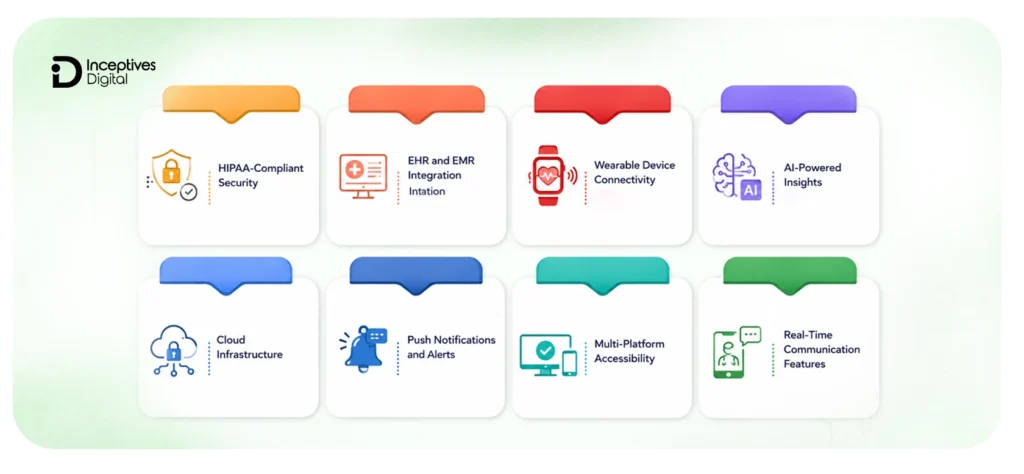
Healthcare apps deal with sensitive data and real-world care decisions, so the feature set is less about “nice-to-have” and more about reliability, safety, and usability under pressure. The following are some of the must have features for a healthcare app to stay competitive.
1. HIPAA-Compliant Security
Strong encryption, secure authentication, and controlled data access are essential to protect patient information and meet healthcare regulations.
2. EHR and EMR Integration
Reliable system integration and API automation services help connect electronic health records so authorized doctors can access patient histories without constantly switching systems.
3. Wearable Device Connectivity
Integration with smartwatches and medical devices enables real-time tracking of vitals like heart rate, glucose levels, and oxygen saturation.
4. AI-Powered Insights
AI helps analyze patient data, detect patterns, and support early diagnosis or personalized recommendations.
5. Cloud Infrastructure
Cloud systems ensure secure storage, scalability, and seamless access to patient data across devices and locations.
6. Push Notifications and Alerts
Reminders for medications, appointments, and abnormal health readings help improve patient engagement and adherence.
7. Multi-Platform Accessibility
Apps should work smoothly across mobile, tablet, and web so both patients and providers can access data without friction.
8. Real-Time Communication Features
Chat, video, or secure messaging systems allow instant interaction between patients, doctors, and caregivers when needed.
Know What Your Healthcare App Needs Before Investing
Get a realistic development estimate based on your healthcare app’s features, compliance requirements, integrations, and the complexity of your project.
Get My Healthcare App Estimate!Challenges Startups Face When Building Healthcare Apps
Healthcare apps look attractive on paper, but the execution side is where most startups slow down or fail. The gap between a working product and a trusted medical-grade platform is much wider than in most industries. Here are the common challenges businesses often face during the healthcare development process.
1. Regulatory Compliance
Healthcare apps have to follow strict rules depending on the region, like HIPAA in the US or GDPR in Europe. These aren’t optional layers added later. They shape how data is collected, stored, and shared from the start.
2. Data Privacy and Security
Patient data is highly sensitive. Even a small security gap can damage credibility. Following mobile app security best practices helps startups establish encryption, secure authentication, and controlled access from the beginning.
3. User Retention Challenges
Many users download health apps but stop using them after initial curiosity. Keeping users engaged long-term requires continuous value, not just one-time utility.
4. Integration With Healthcare Systems
Connecting with hospitals, labs, pharmacies, and EHR systems is often more complex than building the app itself. Different systems don’t always follow the same standards, which slows down integration work.
5. Scalability Issues
As user data grows, performance, storage, and real-time processing become harder to manage. Healthcare apps need infrastructure that can scale without breaking reliability.
6. Building Patient Trust
Users are careful with anything related to health. Without trust in data accuracy, privacy, and reliability, even a well-built app struggles to gain adoption.
How Much Does It Cost to Build a Healthcare App?
Healthcare app development costs vary a lot because the difference between a simple booking app and a full clinical platform is huge. What you’re building, who it’s for, and how deep the integrations go will shape the budget more than anything else.
1. Basic Healthcare Apps
These are simple apps like appointment booking, medication reminders, or basic wellness tracking tools.
Estimated cost: $20,000 – $50,000
Usually includes limited features, simple UI, and minimal backend complexity.
2. Mid-Level Healthcare Platforms
These apps typically include telemedicine, basic EHR integration, wearable sync, or patient dashboards.
Estimated cost: $50,000 – $120,000
More backend work, real-time communication features, and compliance considerations start becoming important here.
3. Advanced AI-Powered Healthcare Solutions
These are complex systems with AI diagnostics, remote patient monitoring, predictive analytics, and deep system integrations. Starting with focused AI MVP development can help validate one high-value capability before expanding the platform.
Estimated cost: $120,000 – $300,000+
Heavy focus on scalability, security, compliance, and advanced data processing.
Cost Factors
Several elements influence the final budget:
- Features
More features directly increase development time and cost. - Platform Selection
Building for iOS, Android, and the web together increases complexity. - Compliance
HIPAA, GDPR, and other regulations add legal and technical overhead. - Integrations
Connecting with EHR systems, wearables, or third-party APIs increases development effort. - AI Implementation
Machine learning models and predictive systems require specialized expertise. - Development Team Location
Costs vary significantly depending on whether the team is based in North America, Europe, or Asia.
How to Launch a Healthcare App Successfully?
Before publishing your app on the app stores, making sure the fundamentals are right is very important, rather than just focusing on speed. If any part of compliance, usability, or trust is weak, the product usually struggles even if the idea is strong.
1. Conduct Market Research
Start by understanding real problems inside clinics, hospitals, or patient routines. Look at what users already complain about in existing apps and where gaps keep repeating.
2. Build an MVP First
Don’t try to ship a complete platform at once. Focus on the core problem and build only the features needed to test whether people actually use it.
3. Prioritize User Experience
Healthcare apps are often used in stressful or time-sensitive situations. If navigation feels confusing, users drop off quickly. Simplicity usually wins over feature-heavy design.
4. Ensure Compliance Early
Regulations like HIPAA or GDPR shouldn’t be added later. They influence architecture, data handling, and security decisions from the beginning.
5. Test With Real Users
Internal mobile app testing is not enough. Feedback from actual patients, doctors, or caregivers reveals issues that don’t show up in controlled environments.
6. Create a Go-To-Market Strategy
After release, post-launch analytics iteration helps identify where the user experience needs improvement. This includes partnerships with clinics, digital marketing, app store optimization, and onboarding flow design.
Build Your Healthcare App With the Right Strategy
Healthcare apps are no longer limited to convenience tools. They’re slowly becoming part of how care is delivered, managed, and experienced on a daily basis. From telemedicine and AI diagnostics to chronic disease tracking and wellness platforms, each idea in this space is tied to a very real shift in how patients and providers interact. What stands out across all these models is not just innovation, but practicality. The ideas that succeed tend to solve specific, repeated problems rather than trying to reinvent the entire system at once.
For startups exploring this space, execution matters as much as the idea itself. Compliance, user trust, and system integration often decide whether an app survives beyond early adoption. Working with an experienced mobile app development company can help bridge that gap, especially when dealing with healthcare-specific challenges like data security and scalability. The focus should stay on building something useful first, then refining it into something sustainable as feedback comes in from real users and real-world usage.
Join the $86B Digital Health Shift Before the Market Crowds In
Build a secure, scalable healthcare app with the right strategy, features, and technology stack tailored to your startup vision.
Launch Your Healthcare AppFrequently Asked Questions
Some of the most promising healthcare app ideas include telemedicine platforms, AI symptom checkers, remote patient monitoring apps, mental health support apps, and digital pharmacy solutions. These ideas work well because they solve real, everyday healthcare problems.
Healthcare apps generate revenue through multiple models such as paid consultations, subscription plans, freemium upgrades, commissions on medicine or appointments, B2B licensing, and partnerships with hospitals, pharmacies, and insurance providers.
The timeline depends on complexity. A basic app can take around 3–5 months, while mid-level platforms like telemedicine apps may take 6–9 months. Advanced solutions with AI, IoT, and integrations can take 9–12 months or more.
Healthcare apps commonly use mobile frameworks like Flutter or React Native, backend systems like Node.js or Python, cloud platforms such as AWS or Azure, and integrations with AI, wearable devices, and EHR/EMR systems.
Look for a company with experience in healthcare projects, compliance standards like HIPAA or GDPR, and integrations with systems such as EHRs, telemedicine platforms, or wearable devices. It’s also important to evaluate their UI/UX approach, security practices, scalability planning, and previous healthcare case studies before choosing a healthcare app development company.