On average, the blockchain app development costs between $25,000 and $300,000+, varying based on the app’s complexity, features, blockchain platforms, security requirements, and the blockchain app development company you choose. A basic blockchain application could be priced at the lower end of the mentioned range, while advanced corporate or decentralized finance platforms would have a price tag easily above $100,000.
According to an industry report, over 47% of companies use blockchain for security, 52% of digital payment companies use it to reduce operational costs, and 43% of logistics firms are embedding it to improve traceability. These adoption numbers explain why organizations are willing to allocate significant budgets to blockchain development projects, but they also highlight why cost estimates vary so widely.
Blockchain apps do not carry the same price tag as regular mobile or web applications. The range of prices is very large since blockchain development includes smart contracts, decentralized infrastructure, higher security standards, and constant maintenance. Even minor modifications to the platform’s functionality or selection can have a significant impact on the final budget.
In this guide, we will explain the costs of blockchain app development in a very practical manner. Factors that influence pricing, the costs of different kinds of blockchain apps, and budgeting exercises that result in realistic estimates for your project are all within your reach. Startups validating an idea or businesses developing a complete solution can all benefit from this detailed blockchain app development breakdown, as it would allow them to make decisions without paying too much or underestimating important costs.
What Is Blockchain App Development?
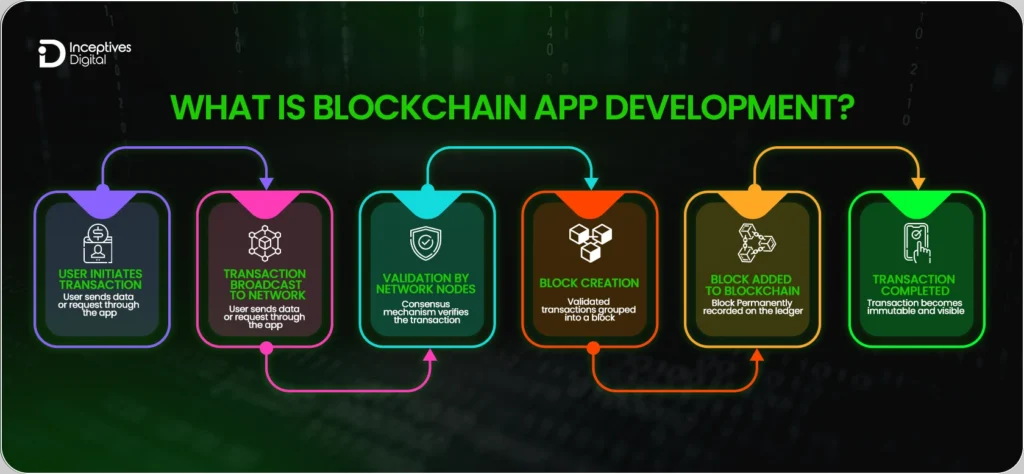
The process of blockchain app development creates applications that either operate on or interact with decentralized blockchain networks, where distributed data across several nodes provides better transparency and security.
A typical blockchain app includes:
- User-facing frontend
- Smart contracts for business logic
- Blockchain network for data validation
- Backend integrations
Blockchain, unlike conventional applications, does not depend on a central authority but rather on cryptography and consensus mechanisms, which in turn add security and complexity. Payment, DeFi, digital wallets, NFT marketplaces, supply chain tracking, and identity verification are among the most common applications of blockchain technology. The management of sensitive data and high-value transactions makes blockchain applications more expensive and technically demanding than regular software.
Why Blockchain App Development Costs Are Hard to Estimate
Estimating blockchain app development costs is definitely not an easy task. Compared to the conventional applications, the blockchain projects consist of several layers of complexities, which can be quite different from one project to another in terms of the extent and nature.
Key reasons include:
- App Complexity: More features, advanced smart contracts, or high transaction volumes increase time and cost.
- Blockchain Platform Choice: Public, private, or consortium blockchains have different development and maintenance demands.
- Security & Compliance: Rigorous audits, encryption, and regulatory requirements add both time and expense.
- Integration Needs: Connecting with existing systems or third-party APIs can significantly raise costs.
- Ongoing Maintenance: Decentralized apps often require continuous updates, monitoring, and scaling.
Even slight modifications in functionality, platform, or security level can greatly affect your blockchain development budget. This is the reason why cost estimates from various blockchain app development firms are so markedly different, which makes it very important to comprehend all the aspects involved and discussed before planning your blockchain project.
Average Blockchain App Development Cost in 2026
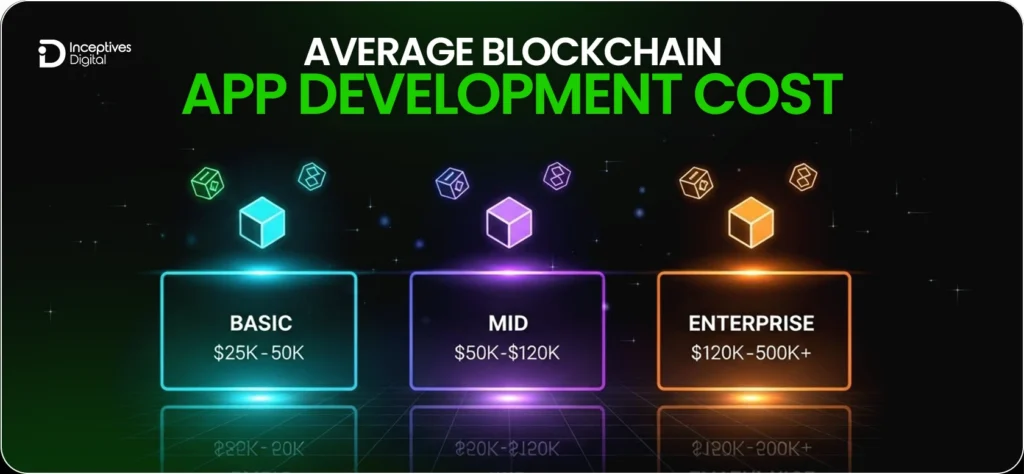
The blockchain application development costs can differ a lot depending on factors like complexity, selected platform, and business needs. Although every project is unique, the figures below represent the average blockchain app development cost breakdown encountered in the US market right now.
| App Type | Estimated Cost Range | Examples |
| Basic Blockchain App | $25,000 – $50,000 | Simple wallet, basic tracking app |
| Mid‑Level Blockchain App | $50,000 – $120,000 | Standard DeFi feature set, NFT marketplace with limited features |
| Advanced / Enterprise Blockchain App | $120,000 – $300,000+ | Full DeFi platform, supply chain solution, custom enterprise system |
The given ranges are indicative of the work done by highly skilled and professional US-based teams or well-known blockchain app development companies. The lowest development costs usually mean the implementation of less complex functions or very few smart contract deployments. On the other hand, the upper-range projects usually comprise:
- Complex smart contract architecture
- Multi‑chain support (e.g., Ethereum + Polygon + Solana)
- Custom backend and API integrations
- Advanced security audits
- Scalable infrastructure built for enterprise use
Keep in mind that the numbers presented here are approximate estimates. Your true expense will depend on various factors such as features, performance needs, the location of the team, and the level of blockchain integration into your business processes.
In the following parts, we will elaborate on the varying blockchain development cost ranges according to the type of application, the sector, and the choices made in the development process, thus allowing you to draw up your blockchain app development budget with greater accuracy.
Key Factors That Affect Blockchain App Development Cost
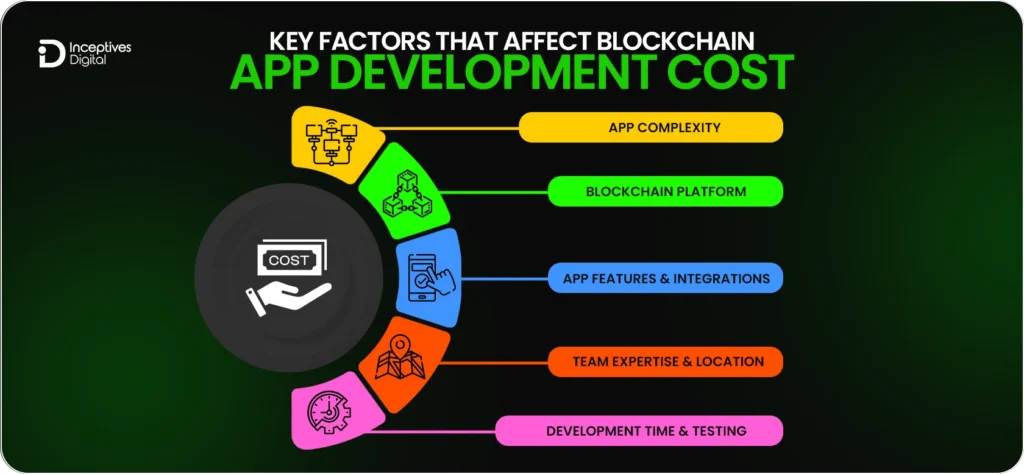
The costs of blockchain application development are not constant. They differ according to various technical, design, and business factors. Knowing these aspects will allow you to create a pragmatic blockchain app development budget and also select the appropriate partner that provides top blockchain app development services in usa.
1. App Complexity and Features
The complexity of your application is a primary factor that contributes largely to the overall project cost. The addition of new features or complex algorithms means that the time and resources spent on development, testing, and maintenance will all increase. The following are the factors that lead to the increase in costs:
- Multiple user roles: Each role may require unique permissions, dashboards, and workflows.
- High transactions per second: Apps handling frequent transactions need optimized infrastructure and faster blockchain nodes.
- Advanced smart contract logic: Complex contracts require more coding, testing, and auditing.
- Integration with external systems or APIs: Each connection adds development effort and testing overhead.
Impact on cost: Each time an extra feature or an added level of complexity comes along, the budget goes up by 15–40%, a varying percentage, dependent on the level of interaction with blockchain logic.
2. Type of Blockchain Network Used
The blockchain network affects both development and operational costs:
| Blockchain Type | Cost Impact | Best Use Case |
| Public | Moderate – network fees (gas) and slower transactions can add to costs | Cryptocurrency apps, public DeFi platforms |
| Private | Higher upfront cost – faster, scalable, controlled access | Enterprise solutions, internal finance systems |
| Consortium | Highly complex governance and shared infrastructure increase setup and maintenance costs | Multi-organization supply chain, healthcare networks |
Impact on cost: Public blockchains have lower setup costs but higher ongoing transaction fees. Private or consortium networks require more development time and expertise, raising upfront budgets.
Read this detailed guide, “What Are The Different Types Of Blockchain Technology,” to differentiate better between the blockchain types.
3. Choice of Blockchain Platform
The platform determines development tools, ecosystem maturity, and transaction costs:
- Ethereum: High gas fees lead to higher operational costs despite being widely supported.
- Polygon: Faster transactions and lower fees will cut running costs, but an additional integration task might still be needed.
- Solana: High-performance, but fewer developers may drive higher development rates.
- Hyperledger Fabric: Enterprise-grade, private network requires skilled developers and longer timelines.
- Binance Smart Chain: Custom integrations may inflate costs, but low fees and quick transactions are still the main attraction.
Impact on cost: The selection of the platform determines the development speed and the operational expenses that go on, thus making the budget vary by 10-25%.
4. Smart Contract Development Cost
Smart contracts are the backbone of blockchain apps:
- Simple contracts: Limited logic, fewer testing requirements, lower cost.
- Complex contracts: Multi-party workflows, staking mechanisms, or DeFi logic require more coding and extensive testing.
- Additional costs: Security audits and thorough testing are critical to prevent costly vulnerabilities.
Impact on cost: Complex smart contracts and audit requirements can account for 20–30% of the total development budget.
5. UI/UX Design Requirements
Good UI/UX builds trust and ensures smooth interaction with blockchain apps:
- Wallet integrations and transaction flows must be intuitive.
- Clear visualization of blockchain transactions improves transparency.
- User trust features (e.g., confirmation screens, security notices) increase development time.
Impact on cost: By investing in robust UI/UX design, the initial cost is increased by 10–15%, but the user errors, support requests, and application abandonment are decreased in the future.
6. Backend Infrastructure and APIs
A blockchain app’s backend is critical for performance and scalability:
- Node setup and maintenance require additional resources.
- Data indexing and query optimization improve speed but add complexity.
- Cloud infrastructure supports scaling, especially for high-transaction apps.
- Third-party integrations require additional development and testing.
Impact on cost: For enterprise-grade blockchain applications, the overall budget can be increased by 15–25%, especially in the case of complex backends and API integrations.
7. Security and Compliance Requirements
Security is non-negotiable in blockchain development:
- Code audits and penetration testing ensure smart contracts and apps are safe.
- Regulatory compliance (KYC/AML) may require custom logic and integration with external systems.
- Ongoing monitoring and updates protect against emerging threats.
Impact on cost: Security and compliance alone can take up 20–30% of the project budget, especially for financial apps or high-value platforms.
Blockchain app development costs are heavily influenced by the factors mentioned in this section. Each of these factors has a direct impact on the amount of time developers spend, the resources they use, and eventually on the operational costs, thus careful planning and selecting the right app development approach becomes essential.
Need Clarity on What’s Driving Your Blockchain App Costs?
Our team has designed and audited complex smart contracts, DeFi platforms, and enterprise blockchain systems. We can help you identify where to invest and where to optimize.
Talk to a Blockchain ExpertBlockchain App Development Cost by App Type
The cost of blockchain app development varies a lot with respect to the kind of app you are building. Every app class has its own specific technical requirements, security concerns, and development budget, which are the factors that affect the pricing the most. Below is a breakdown of the most common blockchain app types and what typically drives their cost.
1. Blockchain Wallet App Development Cost
Blockchain wallet apps function as secure storage, sending, receiving, and managing accounts for digital assets. However, beneath their seemingly simple exterior, the security needs make them a technically demanding area.
Key features include:
- Multi-currency support
- Private key management
- Transaction history and tracking
- Integration with public blockchains
- Biometric or multi-factor authentication
Security Needs
Strong encryption, secure key storage, and protection against unauthorized access are necessary for wallets. Any security flaw will result in asset loss, which makes the testing and auditing of security even more important.
Estimated Cost Range
The development of a blockchain wallet app usually costs from $30,000 up to $90,000 based on the assets supported, platform (mobile or web), and security measures implemented.
Why Does The Cost Vary?
Additional features like hardware wallet support should substantially raise engineering as well as audit costs.
2. DeFi App Development Cost
Owing to their intricacy and financial risk, decentralized finance applications are, by far, the most expensive blockchain applications in terms of development.
Common DeFi features include:
- Liquidity pools
- Staking and yield farming
- Token swaps
- Governance mechanisms for voting and protocol upgrades
Audit and Testing Requirements
Due to their capacity to manage huge amounts of digital assets, DeFi platforms are the most attractive target for hackers. Therefore, smart contract audits and extensive testing are essential and often repeated before launch.
Estimated Cost Range
DeFi app development costs usually fall between $80,000 and $250,000+, with security audits accounting for a large portion of the budget.
Why is the cost higher?
Development timeline and costs are considerably raised by complex smart contracts, numerous integrations, and continuous security reviews.
3. NFT Marketplace Development Cost
NFT-trading platforms enable users to create, purchase, sell, and exchange virtual assets. The prices vary according to the extent of the features and the kind of storage chosen.
Core features include:
- NFT minting and listing
- Creator royalties
- Marketplace search and filtering
- User profiles and wallets
Storage options:
- On-chain storage (higher cost, more decentralization)
- Off-chain storage like IPFS (lower cost, better scalability)
Estimated Cost Range
NFT marketplace development costs generally range from $50,000 to $150,000, with the final price affected by the selection of blockchain, marketplace functionalities, and storage system.
Why the Cost Varies
Customization of royalty logic, support for multiple chains, and sophisticated marketplace functionalities can all be reasons that lead the blockchain project costs to be on the higher side.
4. Enterprise Blockchain App Development Cost
Enterprise blockchain applications are designed specifically for big corporations and are typically involved in supporting complicated operations in various areas.
Common use cases include:
- Supply chain tracking
- Healthcare data sharing
- Financial settlement systems
- Government and public sector applications
Why enterprise apps cost more:
- Custom architecture and integrations
- High scalability requirements
- Strict compliance and data privacy rules
- Longer testing and approval cycles
Estimated cost range
Usually, enterprise blockchain app development costs start at about $120,000 and may reach up to $300,000, depending on the regulatory and complexity factors.
Timeline impact
Enterprise projects usually take longer to finish because the tedious process of planning, aligning stakeholders, and conducting compliance reviews is going on, and this results in a rise in the total expense.
Blockchain App Development Cost Summary by App Type
| App Type | Primary Use Case | Key Cost Drivers | Estimated Cost Range (US) |
| Blockchain Wallet App | Asset storage and transfers | Security layers, key management, and audits | $30,000 – $90,000 |
| DeFi Application | Lending, staking, liquidity | Complex smart contracts, audits, and testing | $80,000 – $250,000+ |
| NFT Marketplace | Minting and trading NFTs | Royalties, storage, marketplace features | $50,000 – $150,000 |
| Enterprise Blockchain App | Supply chain, finance, healthcare | Custom architecture, compliance, scalability | $120,000 – $300,000+ |
This breakdown illustrates how blockchain app development cost changes based on the app type, thus enabling you to adjust your budget in line with your business objectives and technological needs.
Blockchain App Development Cost by Industry

Each sector has its distinctive combination of compliance rules, data sensitivity, and scalability needs that have an effect on the price and time for developing a blockchain app. There are some sectors that demand extra security and regulatory operations, while others have the main concern of performance and user experience.
Below is a breakdown of how blockchain app development costs typically differ across major industries.
1. Fintech and Banking
Fintech and banking apps are among the most expensive blockchain solutions to build.
- They require heavy regulatory compliance (KYC, AML, data privacy)
- They require advanced security and encryption requirements
- They rely on complex smart contracts for payments, lending, or settlements
Cost impact
Compliance with all rules, regulations, and constant checking greatly adds to the development costs. The cost of fintech blockchain applications that handle transactions on a large scale is approximately between $100,000 to $300,000+.
2. Healthcare
Blockchain development services for the healthcare sector are being widely adopted to ensure safe sharing of data and management of records.
- Sensitive patient data handling
- Compliance with healthcare regulations
- Integration with existing healthcare systems
Cost impact
The overall cost of healthcare blockchain applications is increased by the need for security, privacy measures, and system integration. Healthcare applications typically require lengthy planning and testing. Therefore, the related costs are likely to be at the upper end of the mid-to-enterprise spectrum.
3. Real Estate
Real estate blockchain applications prioritize transparency, the creation of digital tokens backed by assets, and the monitoring of transactions.
- Smart contracts for property transfers
- Tokenization of real estate assets
- Integration with legal and financial systems
Cost impact
Although the compliance adherence for real estate app development is lighter as compared to fintech, the need for legal integrations and accurate smart contracts makes it complex. Blockchain development costs for the real estate sector usually lie between the mid-range, based on the complexity and geographic scope.
4. Supply Chain and Logistics
Supply chain blockchain apps are built for traceability and multi-party collaboration.
- Tracking goods across multiple stakeholders
- Real-time data recording and verification
- Integration with IoT devices and ERP systems
Cost impact
Access by multiple organizations, scalability, and integrations are some of the factors that pose a challenge and require more developers’ time and effort. Usually, these applications get classified as enterprise-level costing, particularly for international business operations.
5. Gaming and Metaverse
Blockchain gaming and metaverse apps prioritize performance, scalability, and user experience.
- NFT-based assets and marketplaces
- In-game wallets and token economies
- High transaction volumes and real-time interactions
Cost impact
Even though compliance standards are not so strict for game development, the costs are increased by performance tuning and scalability. Blockchain applications for gaming and the metaverse could be budgeted either for the mid-range or high-end, depending on the number of users and the complexity of the features.
How Industry Affects Blockchain App Development Cost?
Fintech, healthcare, and other similar sectors that have to follow strict compliance regulations and handle highly sensitive data need to incur higher costs for development. Whereas gaming and logistics that rely on scalability and performance need to invest heavily in infrastructure and ongoing optimizations.
Therefore, it is crucial to understand your industry’s requirements in order to accurately estimate your blockchain app development cost and avoid any surprises in the budget.
Let’s Build Your Next-Gen Blockchain Solution
From fintech to gaming, we create scalable, secure, and compliant blockchain apps.
Plan Your App NowDevelopment Team Structure and Its Cost Impact
Team configuration significantly impacts how much your blockchain app will cost. The price depends on the team type you choose, either in-house or outsourced. An in-house setup, for example, is much more expensive than an outsourced or virtual one. Knowing these options gives you a chance to set a proper blockchain app development budget.
1. In-House Development Team
An in-house team gives you full control over the development process, but it’s usually the most expensive option.
Typical roles include:
- Blockchain developers
- Smart contract engineers
- Backend and frontend developers
- UI/UX designers
- QA and security specialists
- Project manager
Cost impact
Salaries, benefits, infrastructure, and long-term commitments account for a huge portion of the expenses pretty fast. The total yearly costs for teams based in the USA can highly exceed even $200,000 and $500,000+, especially in the case of professional blockchain engineers.
Best for: Large enterprises with ongoing blockchain initiatives.
2. Outsourced Blockchain App Development Company
The common new practice for startups is blockchain app development outsourcing.
Benefits include:
- Access to experienced blockchain talent
- Faster project start
- Predictable project-based pricing
Cost impact
Outsourcing reduces overhead costs drastically and, at the same time, retains quality. The project expenses generally range from $25,000 to $300,000 and over, depending on the size and intricacy of the project.
Suitable for: Companies that want professional skills without the expense of long-term labor.
3. Freelance Blockchain Developers
Freelancers might be a good option for minor tasks or building prototypes. The hourly pay is smaller, but once more, the challenges come up in terms of coordination, consistency, and security. Often, it is necessary to involve several freelancers, which would result in more work and risk in terms of management.
Best for: MVPs or short-term experiments.
4. Hybrid Team Model
A hybrid method merges internal supervision with external development. This pattern resolves the issue of cost and quality at the same time. You spend less than what it would cost for a complete in-house team, yet at the same time, you can keep the strategic control, which often leads to moderate total costs and rapid delivery.
Best for: Growing companies with technical leadership in place.
Blockchain App Development Cost Comparison By Team Type
| Team Type | Cost Level | Pros | Cons |
| In-House Team | Very High | Full control, long-term focus | High salaries, slow scaling |
| Outsourced Company | Medium | Expertise, faster delivery | Less direct daily control |
| Freelancers | Low to Medium | Flexible, lower upfront cost | Higher risk, coordination issues |
| Hybrid Model | Medium | Balanced cost and control | Requires strong project management |
How Team Structure Affects Blockchain App Development Cost?
The selection of a proper team structure may either save or cost you tens of thousands of dollars. In-house teams provide control but require huge budgets. The quality of outsourced teams and hybrid models could be the same as in-house ones, but with a price advantage. The appropriate option is determined by your timeline, budget, and long-term goals.
Blockchain App Development Cost by Region
The location of your development team significantly impacts the cost of your blockchain application. Pricing is affected by hourly rates, talent availability, time zone synchronization, and communication. Although it is generally true that higher rates are associated with more seasoned professionals, numerous firms opt for a hybrid model of cost and quality through the use of global teams.
Below is a regional cost comparison to help set realistic expectations.
1. North America (United States & Canada)
North America has some of the highest blockchain development rates in the world.
- Highly experienced developers
- Strong understanding of compliance and security
- Easy communication for US-based businesses
Hourly rates: $100 – $180
Cost impact
Higher labor costs increase overall project budgets, but quality, reliability, and regulatory expertise are often worth the premium. Best suited for enterprise or compliance-heavy projects.
2. Western Europe
Western Europe offers strong technical expertise with slightly lower costs than North America.
- Mature blockchain ecosystem
- High security and data protection standards
- Good project management practices
Hourly rates: $80 – $150
Cost impact
Costs remain high, but are often 15–25% lower than US teams, making this a solid option for quality-focused projects.
3. Eastern Europe
Eastern Europe is a popular choice for cost-effective blockchain development.
- Strong engineering talent
- Competitive pricing
- Growing blockchain experience
Hourly rates: $40 – $80
Cost impact
Lower hourly rates can reduce development costs by 30–50% without sacrificing technical quality, especially for well-defined projects.
4. Asia (South Asia & Southeast Asia)
Asia offers some of the most affordable blockchain development rates.
- Large developer pool
- Lower labor costs
- Suitable for MVPs and cost-sensitive projects
Hourly rates: $25 – $60
Cost impact
Lower upfront costs are attractive, but project management, security standards, and experience levels vary widely. Best when working with a reputable blockchain app development firm.
Comparing Blockchain App Development Cost by Regions
| Region | Hourly Rate Range | Best For |
| North America | $100 – $180 | Enterprise, compliance-heavy apps |
| Western Europe | $80 – $150 | High-quality, regulated projects |
| Eastern Europe | $40 – $80 | Cost-effective, mid-to-large apps |
| Asia | $25 – $60 | MVPs, budget-focused projects |
How does Region Affect the Blockchain App Development Cost Overall?
Selecting the correct region can significantly impact your overall blockchain application development cost. Mobile app development companies in the USA provide direct collaboration and regulatory knowledge, while offshore and nearshore teams can lower the costs if well-managed. The optimum method is often determined by your budget, time, and the difficulty of your project.
Partner with a Top US Blockchain App Development Company
From smart contracts to enterprise solutions, get a blockchain app built for speed, security, and growth.
Get Started NowHidden Costs in Blockchain App Development
Many groups, when budgeting for a blockchain application, consider only initial development. Nevertheless, such projects often entail hidden costs that, if not taken into account early on, can severely affect the total investment.
Knowing these hidden blockchain app development costs prevents overspending on the budget and causes unforeseen delays.
Gas Fees and Transaction Costs
Public blockchains charge transaction fees, often referred to as gas fees.
- Costs fluctuate based on network usage
- High transaction volumes increase ongoing expenses
- Fees apply to smart contract execution, not just user transactions
Cost impact
Gas fees can become a recurring operational expense, especially for apps built on networks like Ethereum.
Smart Contract Audits and Re-Audits
One audit is rarely enough.
- Major updates often require re-auditing
- Third-party audits can be expensive
- Security fixes add development time
Cost impact
Audits can cost anywhere from $5,000 to $50,000+ per round, depending on contract complexity.
Blockchain App Maintenance and Updates
Blockchain apps are not “set it and forget it.”
- Bug fixes and performance improvements
- Protocol updates and network changes
- Feature enhancements after launch
Cost impact
Typically, annual maintenance costs 15–30% of the initial development budget.
Scalability and Infrastructure Expansion
As user adoption grows, infrastructure needs increase.
- Additional nodes and servers
- Higher cloud hosting costs
- Load balancing and performance optimization
Cost impact
Scaling can significantly raise monthly operational expenses, especially for high-traffic apps.
Compliance and Legal Costs
Regulatory requirements evolve constantly.
- Legal reviews and compliance checks
- KYC/AML integration updates
- Industry-specific regulations
Cost impact
Compliance-related updates can add both one-time and recurring costs, particularly in regulated industries.
Post-Launch Support and Monitoring
Launching the app is only the beginning.
- 24/7 monitoring and incident response
- Customer support for users
- Security threat detection
Cost impact
Ongoing support adds to operational costs but is critical for reliability and user trust.
Why Hidden Costs Matter?
The total cost of blockchain application development could increase by 20-40% if the hidden costs are not taken into account beforehand. Planning for these costs at the beginning will help in setting realistic expectations and avoiding unpleasant surprises when the product is already in the market.
How to Reduce Blockchain App Development Cost Without Compromising Quality
Lowering the blockchain app development costs does not necessarily imply compromising on security, performance, or reliability. The secret lies in making intelligent choices at the beginning and redirecting your funds to the most crucial areas.
Here are proven ways to control costs without lowering quality.
1. Start With an MVP
Instead of building a full-featured product upfront, launch a minimum viable product (MVP).
- Focus on core functionality
- Validate your idea with real users
- Avoid unnecessary features early on
Cost benefit
An MVP can reduce initial development costs by 30–50% while still proving market demand.
Read More: What is the cost to develop an MVP?
2. Choose the Right Blockchain Platform
Not every project needs the most complex or expensive blockchain.
- Use lower-fee networks when possible
- Avoid over-engineering with unnecessary chains
- Match the platform to your use case
Cost benefit
The right platform choice lowers development time and long-term transaction fees.
3. Prioritize Features Based on Business Value
More features mean more code, testing, and audits.
- Identify must-have vs nice-to-have features
- Delay advanced functionality until after launch
- Focus on features that drive revenue or adoption
Cost benefit
Clear prioritization prevents scope creep and keeps budgets under control.
4. Use Proven Frameworks and Tools
Custom development from scratch is expensive.
- Leverage existing blockchain libraries
- Use tested smart contract templates
- Avoid experimental tools unless necessary
Cost benefit
Using the best frameworks and tools speeds up development and reduces testing and debugging costs.
5. Pan Security and Audits Early
Security issues discovered late are costly to fix.
- Design with security in mind from day one
- Schedule audits early in the development cycle
- Avoid major post-launch contract changes
Cost-benefit:
Early planning reduces rework and repeat audit expenses.
6. Work With the Right Blockchain App Development Company
The cheapest option often costs more in the long run.
- Choose teams with proven blockchain experience
- Look for transparent pricing and clear timelines
- Avoid constant rework due to poor execution
Cost benefit
An experienced blockchain app development company helps you avoid costly mistakes and delays.
Cost Control Without Compromise
Efficiency is the key factor in lowering blockchain application development costs, not shortcuts. Lean initiation, appropriate technology selection, and collaboration with the right development partner can lead to the creation of a safe and scalable product that is not financially burdensome.
Blockchain App Maintenance and Long-Term Costs
Blockchain app development does not end at launch. Ongoing maintenance is a real and often underestimated part of the total cost. In many cases, long-term expenses can equal or even exceed initial development costs over time.
Here’s what ongoing blockchain app costs typically include and how each one affects your budget.
1. Smart Contract Updates and Upgrades
Smart contracts are not as flexible as traditional backend code.
- Bug fixes often require redeploying contracts
- Feature upgrades may involve migrating users or data
- Poorly designed contracts increase future costs
Cost impact
Well-architected contracts reduce upgrade costs, while rushed ones can lead to expensive development mistakes, redeployments, and audits later.
2. Infrastructure and Node Maintenance
Most blockchain apps rely on external infrastructure.
- Node hosting and monitoring
- Cloud servers for APIs and indexing
- Load balancing as usage grows
Cost impact
Infrastructure costs scale with traffic and transaction volume. As adoption grows, monthly expenses increase steadily.
3. Gas Fees and Transaction Costs
Public blockchains introduce ongoing transaction expenses.
- Every on-chain action costs gas
- High network congestion increases fees
- Poor contract optimization raises costs per transaction
Cost impact
Apps with frequent transactions can incur high operational costs if gas efficiency is not planned early.
4. Security Monitoring and Audits
Security is not a one-time investment.
- Continuous monitoring for vulnerabilities
- Periodic smart contract re-audits
- Updates to address new attack vectors
Cost impact
Skipping ongoing security increases the risk of exploits, which can result in financial loss far greater than maintenance costs.
5. Compliance and Regulatory Updates
For US-based businesses, regulations evolve constantly.
- KYC and AML updates
- Data privacy requirements
- Industry-specific compliance changes
Cost impact
Regulated apps require recurring legal and technical updates to remain compliant, especially in fintech and healthcare.
6. Performance Optimization and Scaling
As your user base grows, performance expectations rise.
- Faster transaction processing
- Improved UI responsiveness
- Backend optimization
Cost impact
Scaling after launch is more expensive than planning for it upfront, especially on public blockchains.
Typical Annual Maintenance Cost Range
For most blockchain applications, annual maintenance costs range between 15% and 30% of the initial development cost, depending on complexity, user activity, and compliance needs.
Why Long-Term Costs Matter?
Understanding long-term blockchain app costs helps you budget realistically and avoid surprises. Teams that plan for maintenance early build more sustainable products and protect their investment over time.
Is Blockchain App Development Worth the Investment?
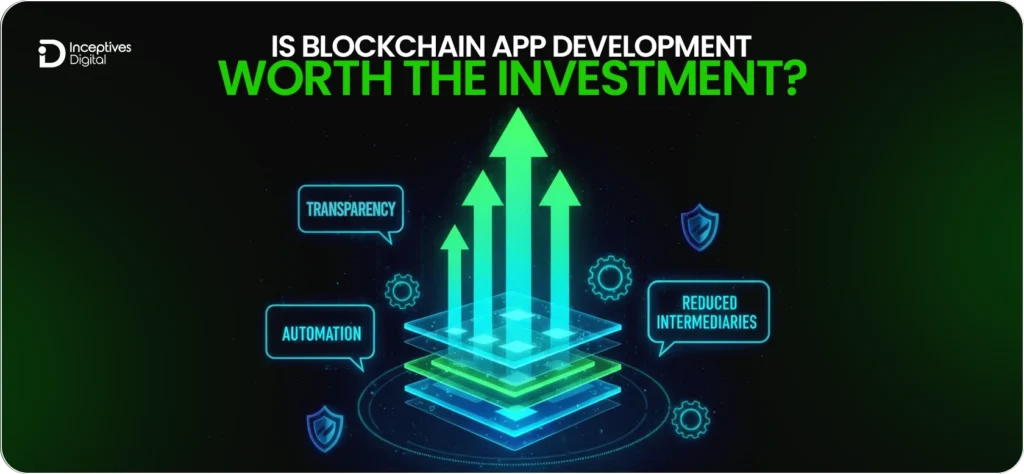
Blockchain app development requires a significant upfront investment, but for many businesses, the long-term benefits far outweigh the costs. Whether it’s improving security, enabling decentralized operations, or creating new revenue streams, a well-executed blockchain app can deliver measurable value.
Key Benefits That Justify Investing in Blockchain App Development
1. Enhanced Security and Trust
Blockchain’s decentralized nature and cryptography reduce fraud, hacks, and data tampering. For industries handling sensitive data, like finance, healthcare, and supply chain, this can save millions in potential losses and regulatory penalties.
2. Transparency and Traceability
Transactions on the blockchain are immutable and easily auditable. This builds trust with customers, partners, and regulators, which can directly improve business credibility and adoption.
3. Operational Efficiency
Smart contracts automate processes like settlements, approvals, and transfers, reducing manual work and operational overhead. This efficiency can lead to faster transactions and lower administrative costs.
4. New Revenue Opportunities
Blockchain enables decentralized finance (DeFi), NFT marketplaces, tokenized assets, and other innovative business models. These new streams can generate revenue that traditional systems cannot.
5. Competitive Advantage
Early adopters in fintech, logistics, healthcare, and gaming can differentiate themselves by offering innovative, secure, and transparent solutions that competitors may lack.
ROI Considerations
- Short-term ROI: Proof-of-concept apps or MVPs can help validate ideas quickly while controlling costs.
- Long-term ROI: Enterprise blockchain solutions often generate returns through operational savings, new revenue streams, and enhanced customer trust.
- Maintenance & Hidden Costs: Planning for gas fees, audits, infrastructure, and compliance upfront ensures realistic ROI calculations.
Final Verdict
For US-based businesses and startups, blockchain app development is worth the investment if aligned with clear business goals. While costs can be high, the benefits in security, efficiency, transparency, and revenue potential make it a strategic move for companies looking to innovate and future-proof their operations.
The key is careful planning: choosing the right team, platform, features, and industry approach ensures your investment delivers maximum value without unnecessary overspending.
Read this detailed guide, “What Are the Main Benefits of Blockchain Technology?” to get a clear understanding of how blockchain can add value to your business.
Ready to Plan Your Blockchain App with Confidence?
With deep experience in smart contracts, security audits, and enterprise blockchain systems, we help businesses turn ideas into reliable, production-ready solutions.
Schedule a ConsultationHow to Get an Accurate Blockchain App Development Cost Estimate
Estimating blockchain app development costs accurately requires careful planning. A clear roadmap and detailed requirements help blockchain app development companies provide precise quotes, avoiding surprises later. Use this checklist to guide the process:
1. Define Your Goals
- Determine what your app aims to achieve
- Identify the business problems it should solve
- Decide whether it’s an MVP, full-scale product, or enterprise solution
Why it matters: Clear goals help developers scope the project correctly, reducing unnecessary features and costs.
2. Choose the Blockchain Type
- Public, private, or consortium
- Single-chain or multi-chain integration
Why it matters: Blockchain type affects development complexity, transaction fees, and security requirements.
3. List Features
- Identify must-have vs nice-to-have functionality
- Consider smart contracts, wallet integrations, NFTs, staking, or tokenization
Why it matters: The number and complexity of features are major cost drivers.
4. Decide Target Users
- Estimate expected user volume
- Determine geographic regions and platforms (iOS, Android, web)
Why it matters: Scalability and infrastructure requirements increase with larger or global user bases.
5. Select a Development Partner
- Choose between an in-house, an outsourced company, freelancers, or a hybrid
- Review expertise, past projects, and pricing models
Why it matters: The development team’s experience directly impacts efficiency, quality, and cost predictability.
6. Consult for a Precise Estimate
- Share your checklist with the blockchain app development company
- Request a detailed project proposal, timeline, and cost breakdown
Why it matters: Even with careful planning, consultation is essential to account for hidden costs, platform choices, and industry-specific compliance needs.
Following this checklist ensures your budget estimate is realistic, your project scope is clear, and your blockchain app development investment is optimized for both cost and value.
Final Thoughts on Blockchain App Development Cost
The costs of blockchain app development depend on the choices you will make at the very beginning, such as the type of technology, the security and scalability levels required, and so on. Properly done upfront budget planning turns out to be manageable and predictable, instead of uncertain, which allows the companies to come up with solutions that are both handy and ready for the future.
If you are thinking of a blockchain concept, going back to check the needs and assumptions can prevent wastage of money and time later. A brief consultation with a professional mobile app development company can provide enlightenment on the project’s feasibility, the cost range, and the coming stages with no pressure to commit.
Frequently Asked Questions About Blockchain App Development Cost
Developing a crypto app typically costs between $30,000 and $250,000+, depending on features such as wallets, exchanges, token management, security layers, and regulatory requirements. Apps with advanced trading, DeFi functionality, or multi-chain support tend to fall on the higher end.
Blockchain developer rates in the US usually range from $100 to $180 per hour, while offshore developers may charge $25 to $80 per hour. The cost varies based on experience, blockchain expertise, and the complexity of the project.
Building a blockchain app generally costs $25,000 to $300,000+. Simple apps with limited smart contract logic cost less, while enterprise platforms, DeFi apps, and applications with heavy compliance and security requirements can exceed six figures.
Smart contract audits typically cost between $5,000 and $50,000+, depending on contract size and complexity. Audits are essential for detecting vulnerabilities, preventing exploits, and building user trust, especially for financial and public-facing blockchain applications.
Blockchain development involves decentralized architecture, smart contracts, cryptographic security, ongoing audits, and higher infrastructure demands. These factors increase development time, expertise requirements, and long-term maintenance costs compared to traditional applications.