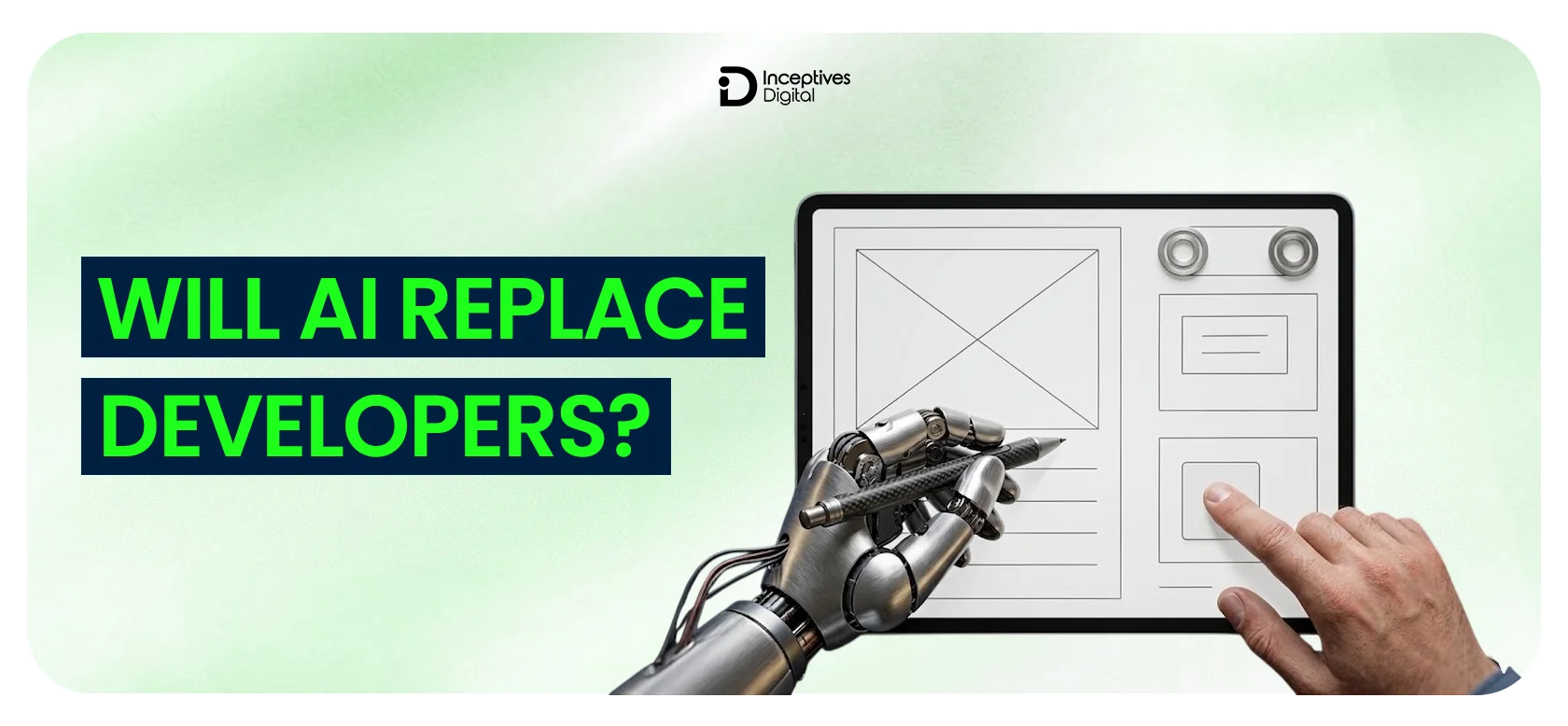
- AI coding tools can generate application code and automate development tasks, but production systems still need reliable testing and engineering oversight.
- CodeRabbit found approximately 1.7 times more review issues in AI-authored pull requests than human-only submissions across its 470-PR sample.
- Veracode’s Spring 2026 research identified security weaknesses in 45% of generated solutions across its selected coding tasks.
- Sonar’s latest survey found that AI generates or significantly assists 65% of the code respondents commit.
- Only 39% of Sonar’s 2027 survey respondents always verify AI-generated code before committing it.
- AI-assisted development can introduce technical debt when teams overlook security, maintainability, and code quality.
- AI does not consistently improve development speed. Results depend on the task, tools, and developer experience.
- The U.S. Bureau of Labor Statistics projects 10% growth in software developer employment between 2025 and 2035.
- Developers remain responsible for validating software architecture, managing business requirements, and maintaining production applications.
Tools like GitHub Copilot, ChatGPT, and Google Gemini can give us code, suggest fixes, and even draft modules quickly.
These advances are exciting, but they also create a misunderstanding: many people assume that AI will replace app developers, who can now build complete, production-ready applications with minimal human involvement. “In reality, this is not the case.”
AI coding tools can work with project context and assist with architecture, but their output still needs human evaluation. Developers remain responsible for ensuring that the application meets business requirements and remains secure and maintainable.
Recent studies have identified higher defect and security-risk rates in certain AI-generated code samples, raising concerns about how teams review and maintain AI-assisted applications.
A CodeRabbit study examining 470 open-source pull requests found approximately 1.7 times more issues in AI-authored contributions than in human-authored code. The findings included concerns about logic, security, and maintainability, highlighting why AI-generated code still needs careful review before production deployment.
This creates technical debt and increases app development costs due to the need for corrections and maintenance.
As an experienced mobile app development company, we know what goes into full-fledged AI app development services. We have gathered actual data, industry figures, and studies in this guide to explain why AI can assist with parts of app development, but cannot replace skilled human developers.
Wondering How AI Fits Into Your Development Team?
Find out where AI can truly help and where human expertise is still irreplaceable in building secure, scalable apps.
Schedule a ConsultationWhy AI-Generated Applications Still Need Engineering Oversight
Machine learning development services often produce output by recognizing patterns in data they have already reviewed. This approach is good for repetitive tasks, common code setups, and problems that are clearly defined. Full applications need more than just pattern recognition.
Production-grade software needs to:
- Be flexible to changing business needs
- Process rare situations and unpredictable inputs
- Keep security measures operating even against real-world attacks
- Grow without any issues over time
- Stay understandable and serviceable for the coming teams
AI development can assist with these requirements, but its reliability varies across tasks and environments. Production applications still need appropriate testing, security controls, and human accountability.
AI Outputs Are Not the Same as Human Understanding
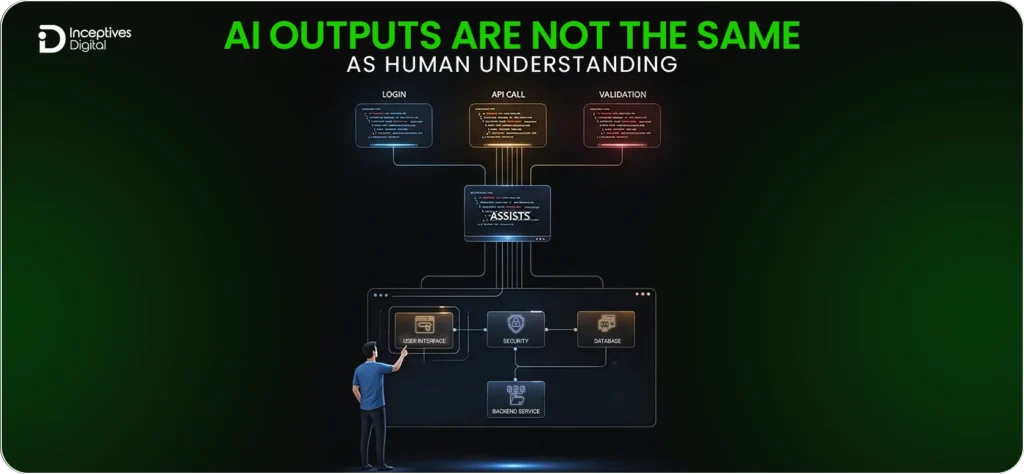
How Generative AI Produces Code
At its core, generative AI development company tools predict what token (word, symbol, or code snippet) should come next based on patterns in their training data. It does not truly “understand” business logic or complex software architecture in the way a human does.
This approach works well for common programming tasks such as:
- Writing standard CRUD operations
- Generating basic UI/UX design components
- Creating boilerplate code
Why Context and Business Logic Still Require Humans
AI tools are excellent at surface-level patterns and routine coding tasks. They can write a function that validates an email address or craft a basic login form. But they struggle with decisions that require deep reasoning about system behavior, long-term implications, or nuanced business rules.
AI models can reason through discovery sprint requirements and suggest architectural decisions, but they can still overlook business constraints, make incorrect assumptions, or introduce inconsistencies across a codebase.
This gap shows up in practice. In large-scale academic comparisons of human versus AI code. AI-generated code tends to be simpler and more repetitive, and more prone to non-functional issues like maintainability problems and high-risk security vulnerabilities.
Security and Quality Concerns Are Real and Measurable
One of the most critical limitations of current AI-generated code is security and quality. According to Veracode’s Spring 2026 GenAI Code Security Update, researchers evaluated more than 150 large language models across security-focused coding tasks. Approximately 55% of generated solutions passed Veracode’s security checks, while 45% contained known weaknesses across the study’s selected coding tasks.
These results apply to the study’s selected tasks, reinforcing the need for security testing before AI-generated code reaches production.
These issues include:
- Improper input validation
- Insecure authentication logic
- Weak data handling practices
- Exposure to common web exploits
Security issues aren’t limited to rare edge cases. They include significant vulnerabilities such as failures to defend against common web exploits, insecure authentication patterns, and data handling flaws. Because AI models are trained on a large corpus of existing code, they can inadvertently reproduce insecure or outdated patterns learned from that dataset.
Another academic study specifically analyzing code from GitHub Copilot and similar AI tools discovered a high incidence of security weaknesses across languages like Python and JavaScript. They found common weakness categories among a significant proportion of samples, including some of the most severe vulnerability types.
From an engineering perspective, this means AI-generated code needs to be audited meticulously. Without human review, testing, and continuous security oversight, it cannot be considered ready for production.
AI-Generated Code Produces More Defects Over Time
Studies looking at the defect rates in AI-generated code compared to human-authored code show a clear quality gap. One industry report found that AI-generated code contains approximately 1.7 times more issues, including logic errors, security flaws, and maintainability problems, than comparable human code.
These problems don’t just increase bug counts. They influence project timelines and costs. For example:
- Security weaknesses happen more often and need special resources for fixing.
- Non-functional problems, such as bad performance or an untidy software architecture, grow gradually, making it more expensive to change and refactor the code in the future.
- The quality of the code readability and consistency goes down, the code reviews get slower, and the process of bringing new developers to the team is also longer.
The use of AI can improve speed in specific areas, but in larger and more complex systems, it often introduces technical debt that must be resolved before the software can be considered robust.
AI-Generated Code Can Introduce More Defects
CodeRabbit’s analysis of 470 pull requests found more review issues in AI-authored contributions than in human-only submissions, particularly around code logic and maintainability.
One industry report found that AI-generated code contains approximately 1.7 times more issues, including logic errors, security flaws, and maintainability problems, than comparable human code.
These problems don’t just increase bug counts. They influence project timelines and costs. For example:
- Security weaknesses happen more often and need special resources for fixing.
- Non-functional problems, such as bad performance or an untidy software architecture, grow gradually, making it more expensive to change and fix through product rescue scaling in the future.
- The quality of code readability and consistency goes down, code reviews get slower, and the process of bringing new developers to the team is also longer.
The use of AI can improve speed in specific areas, but in larger and more complex systems, it often introduces technical debt that must be resolved before the software can be considered robust.
Verification and Trust Challenges in AI Development Are Bigger Challenges Than You Might Think
Sonar’s 2027 State of Code Developer Survey found that AI now generates or significantly assists 65% of the code respondents commit. Yet only 39% always verify AI-generated code before committing it, while 76% report generating code faster than they can review it. These findings highlight the growing pressure on software teams to strengthen code verification.
This statistic highlights a practical reality:
- Developers recognize AI can make mistakes.
- Many developers are not yet adapting their workflows to properly validate AI outputs.
- AI code might look correct on the surface, but contain hidden logical or security errors.
The Hidden Cost of Verification Debt
Sonar’s latest survey found that only 39% of respondents always check AI-generated code before committing it. This gap can leave teams with more work to validate changes later.
Experts call this a “verification debt.” It means the time and effort needed afterwards to check, correct, and ensure the validity of what was initially trusted too much.
Digital product development relies on confidence in correctness, traceability, and auditability. AI can’t yet take over these basic human responsibilities.
Maintainability Matters More Than Speed in App Development
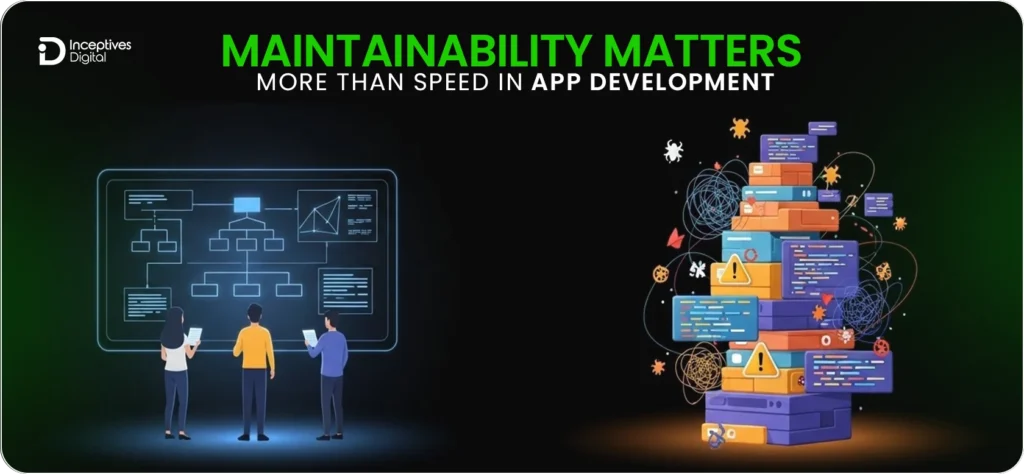
Why Maintainable Code Is Critical for Scaling
Functionality is only part of what makes a software application valuable. Think about aspects beyond just what it does. Maintainability is key for a codebase to adapt to changing needs, new features, and bug fixes.
Applications must support:
- New features
- Changing requirements
- Bug fixes
- Team growth
How AI-Generated Code Can Create Maintenance Problems
Some studies have found higher complexity and duplication in AI-generated code, particularly when teams rely on generated output without sufficient review. However, maintainability depends on how AI is used and the engineering standards applied throughout development.
Research shows that AI-generated code can introduce maintainability problems, although the findings vary across studies. An IEEE study found that AI-written code was generally simpler and more repetitive, while human-written code showed greater structural complexity.
Technical debt is a serious issue, not just a buzzword. In actual projects, the use of poor-quality code brings development to a crawl, increases the probability of errors, and requires significantly more engineering effort for fixing and adding features.
Humans can distinguish architecture, design patterns, modularity, and long-term implications in a way AI cannot yet. This is the reason why architectural decisions and product strategy consulting still have to rely on human proficiency.
Building an App With AI? Make Sure It Can Scale.
AI tools can accelerate development, but growing applications need reliable architecture. Inceptives Digital can help turn your AI-assisted prototype into a maintainable, production-ready product.
Discuss Your App DevelopmentHow Can AI Tools Slow Down Experienced Developers?
It’s critical to acknowledge that AI doesn’t always provide acceleration, especially with seasoned developers.
In February 2026, METR reported that newer AI tools appeared more likely to accelerate development. Its follow-up experiment suggested potential speed improvements, but researchers cautioned that participation bias and measurement limitations made the newer results unreliable. The findings show that AI productivity depends on the tools, developers, and tasks involved rather than following one consistent pattern.
When AI Becomes a Distraction Instead of an Accelerator
The conclusion drawn from this is that the benefits of AI in terms of productivity are not the same for everyone. AI-assisted development can save time on familiar tasks, while complex codebases may require additional review and debugging. The productivity impact depends on developer experience, task complexity, and the tools involved.
AI Works Best When Treating It as a Partner, Not a Replacement
What Industry Leaders Say About AI in Development
Industry leaders disagree on how quickly AI will automate software development. Anthropic CEO Dario Amodei has predicted extensive coding automation while also emphasizing the continuing role of engineers in reviewing and directing software projects.
The article notes that while AI tools like Claude accelerate routine development, they do not replace the strategic decision-making, architectural oversight, or accountability that human developers provide. (Business Insider, 2025)
The Ideal Human + AI Collaboration Model
This philosophy is reflected across professional development organizations:
- AI automation services can handle repetitive tasks and produce boilerplate code.
- Developers can offload documentation, initial scaffolding, and suggestions to AI.
- But humans still define architecture, refine logic, enforce security, and build systems that stand the test of time.
AI is a tool, not a replacement. It amplifies human productivity when used correctly, but it cannot fully carry the weight of understanding and responsibility that software engineering demands.
The Role of Human Developers in Long-Term Software Success
Entirely operational applications are living entities. They grow up with users, markets, laws, and tech. The modifications imposed on them require wisdom, flexibility, and responsibility.
AI agent development can assist with architecture, compliance checks, and ongoing code changes. However, businesses still need engineers to validate critical decisions, approve security controls, and maintain accountability as requirements evolve.
It is the human developers who are still liable for converting software into a sustainable asset.
The long-term employment outlook also challenges the idea that AI will eliminate software development jobs.
The U.S. Bureau of Labor Statistics projects 10% employment growth for software developers between 2025 and 2035, representing approximately 174,700 additional jobs. This forecast suggests continued demand, although it cannot predict how AI will reshape individual developer roles.
This does not mean AI will leave developer roles unchanged, but it suggests continued demand for custom software development expertise as automation becomes more widespread.
Conclusion: AI Enhances Development, But Humans Remain Essential
AI is gradually becoming an essential tool in the app development process and has a rising impact. The tools that produce code, propose corrections, or reduce human involvement in tasks will keep on getting better. Nonetheless, the notion that AI alone can create and control a working, expandable, safe application with all the needed features is not supported by current data.
Major constraints consist of:
- The absence of real contextual comprehension and architectural knowledge.
- Quantifiable shortcomings in security and maintainability.
- A great diversity of errors and problems that demand heavy human supervision.
- Uncertain effects on developer productivity in the real world.
In serious, long-lasting applications, human developers will still be indispensable. AI comes into its own when it is working with talented mobile app developers, not when it is taking over their jobs. In the near future, the best software teams will consider AI as a partner that amplifies human skills, not as a self-sufficient developer.
Worried About AI-Generated Code Breaking Your App?
AI can speed up coding, but human oversight is essential to ensure security, maintainability, and production-ready quality.
Request a Security AuditFrequently Asked Questions (FAQs)
AI coding agents can build functional applications and automate substantial development tasks. However, production releases still require appropriate testing, security validation, operational monitoring, and clear accountability for critical decisions.
AI-generated code can support production applications after appropriate validation. Teams should review critical logic, run automated security checks, test integrations, and verify that the code meets operational requirements.
AI models produce code according to familiar patterns and not with an understanding of the whole system. This results in the frequent occurrence of repeated logic, increased complexity, and uneven structure. Eventually, all these problems turn the codebase into a maintenance nightmare, an extension hampered by slowness and high development cost for refactoring.
AI will automate more software development tasks, but current evidence cannot establish whether it will replace developers entirely. Engineering roles will likely evolve around system design, verification, and accountability.
The use of AI is most advantageous in the following scenarios:
Creating drafts or coding tasks that are repetitive
Providing help with documentation
Accelerating the process of prototyping and testing
Offering recommendations for clearly stated issues
However, the greatest benefit comes when skilled app developers supervise it.
The best method is a human-centered development approach that utilizes AI. Developers should still be in charge of architecture, security, and long-term planning, but AI can help by speeding up routine tasks. This balance produces higher-quality, lower-risk, and more sustainable software.