

Key Takeaways
- Build custom when technology is the differentiator. If personalization, wearable data, or AI coaching drives your value proposition, a template can’t keep up.
- Typical cost range: $40,000–$80,000 for an MVP, $80,000–$180,000 for a growth-stage app, and $180,000–$350,000+ for AI-powered or wearable-heavy platforms.
- Start narrow. The strongest fitness startups solve one specific problem well before expanding into coaching, community, or B2B.
- Validate before you build. Off-the-shelf platforms remain the smarter choice until you’ve confirmed real demand.
The global fitness app market is projected to reach $13.9 billion in 2026 and grow to $33.6 billion by 2033.
So, should your startup build a custom fitness app or launch on an off-the-shelf platform?
A generic platform can be a smart way to test demand. But as your product becomes more specialized, custom fitness app development gives you more control over what you build.
If you’re still weighing whether it’s worth the investment, this guide will help you make that call and show you what to look for in a fitness app development company before you commit.
The Fitness App Market Opportunity in 2026
The fitness app market is growing, and that growth pulls in more competition every year.
The numbers show where the opportunity is:
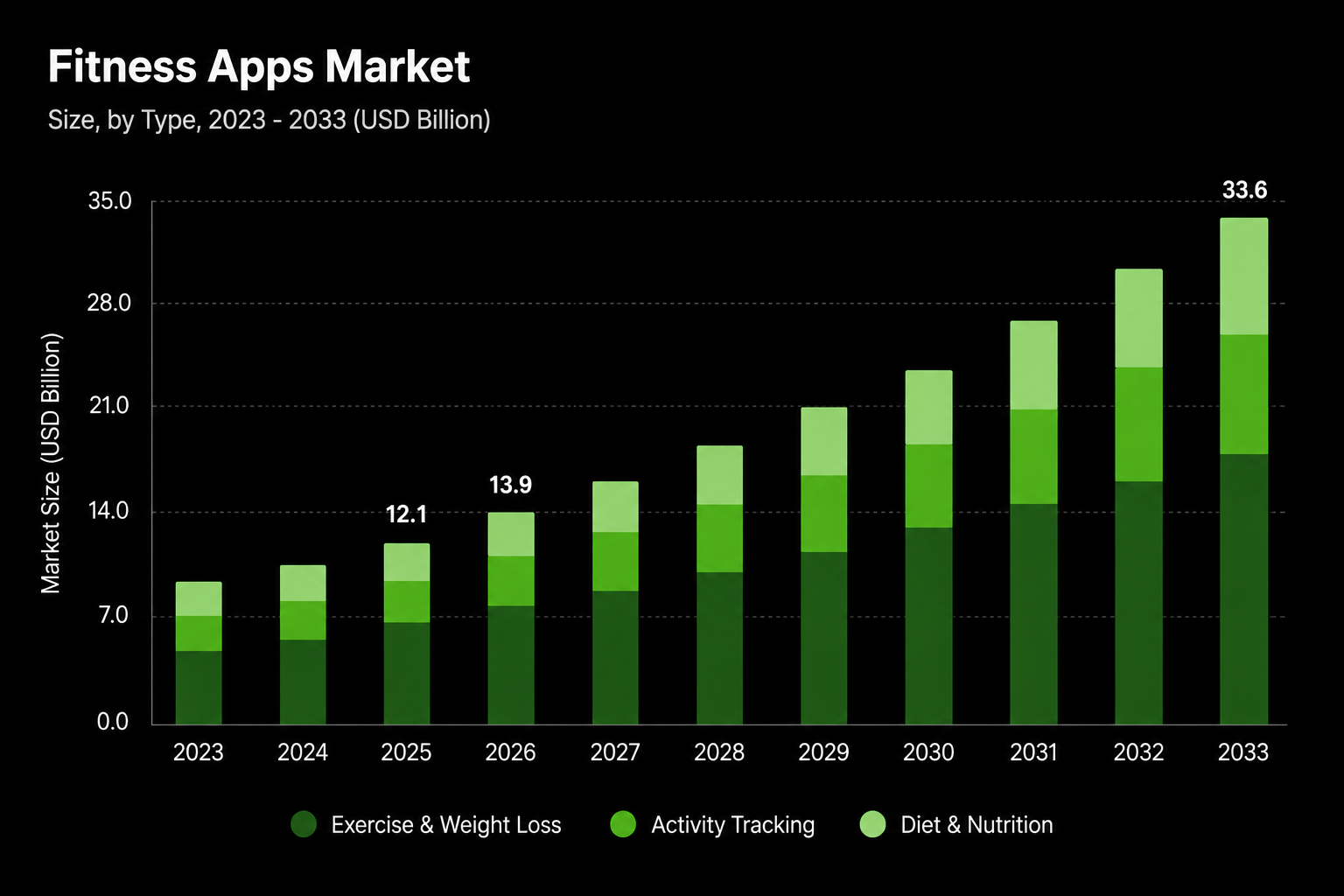
- $13.9 billion: Estimated global fitness app market size in 2026.
- $33.6 billion: Projected market size by 2033, representing a 13.4% CAGR from 2026 to 2033.
- North America: Generated 39.8% of global fitness app revenue in 2025, the largest share of any region, ultimately making the U.S. a significant market for fitness app businesses.
- 20% of top-rated fitness apps reportedly use AI-powered personalized workout plans.
That shift asks you to build a fitness app around what users expect.
Off-the-Shelf vs Custom Fitness App Development: What’s the Real Difference?
Both approaches can launch a functional fitness product. The difference shows up once the startup needs to move beyond the capabilities a platform provides out of the box.
| Factor | Off-the-Shelf Platform | Custom Fitness App |
| Upfront cost | Lower | Higher |
| Time to launch | Faster | Longer |
| Personalization depth | Limited to built-in rules | Fully custom |
| Wearable and health data integration | Depends on platform support | Matches your exact product needs |
| Monetization models | Platform-dependent | Business-specific |
| Data ownership | Provider-controlled | Startup-controlled |
| Long-term flexibility | Bound to platform roadmap | Bound to your own roadmap |
An off-the-shelf platform is the smarter starting point when you’re still validating demand. For startups taking that route, an MVP can provide a focused way to test the core product before investing in the full platform.
Custom development earns its cost once your differentiation depends on something the platform can’t do.
Signs Your Startup Has Outgrown a Generic Fitness Platform
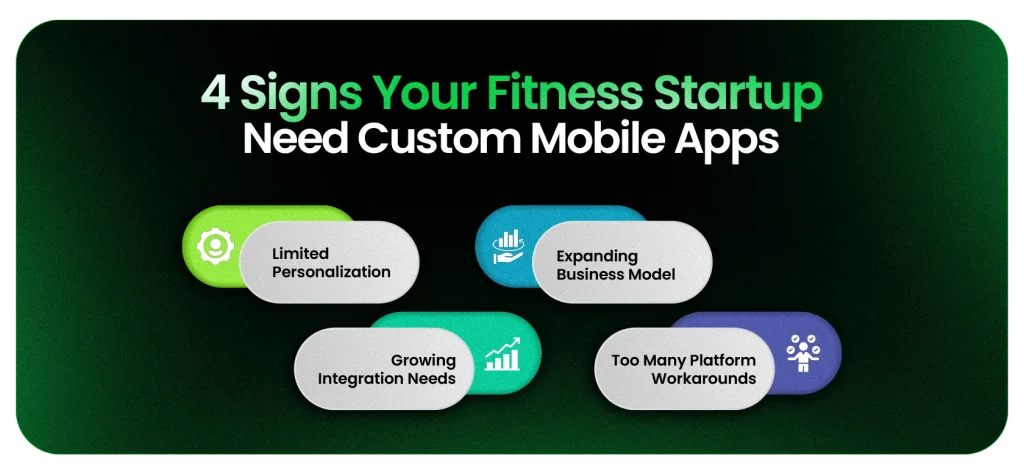
A few signals can indicate that a startup is ready to move beyond a generic fitness platform:
- Your personalization logic doesn’t fit the platform’s rules. If your app needs to combine training history, recovery signals, and adherence together, a generic recommendation engine won’t cut it.
- Your integration list keeps growing. Once you need GPS, heart rate, sleep, and equipment data working together, platform limitations start blocking the product experience itself.
- Your monetization model has outgrown a single subscription. Coaching, B2B wellness, and marketplace models each need their own workflow, and most templates only support one path well.
- You’re building workarounds instead of features. If your team spends more time routing around platform limits than shipping improvements, the platform has become the bottleneck.
When several of these signals appear together, it is worth comparing the cost of custom development with the cost of continuing to work around the platform.
That decision becomes easier when you have already validated your mobile app idea with real users.
What Custom Development Actually Gives Your Fitness Startup
The strongest case for custom fitness app development is not a longer feature list. It is more control over the advantage that makes the product worth using in the first place.
That level of control is one of the main reasons startups consider custom mobile app development instead of adapting an existing platform.
1. A Fitness Experience Competitors Cannot Easily Copy
A startup that controls its software can shape its onboarding, training methodology, progression rules, and coaching experience around its specific audience. It does not have to inherit another platform’s defaults.
For example:
- A strength-training startup can apply progressive overload rules that adjust future workouts based on completed sets and performance.
- A marathon platform can adapt training volume week to week based on recent adherence and recovery, not a fixed template.
In both cases, the software becomes part of the coaching experience rather than simply delivering workout content.
2. Personalization That Actually Changes the User Journey
Real personalization goes beyond addressing a user by name. It adapts the experience around several relevant inputs at once:
- Training history and stated goals
- Recent performance and adherence
- Recovery signals from the last session
- Available time and equipment
A user completes a high-intensity session and shows lower-than-usual recovery indicators the next morning. Instead of pushing the same plan forward, the app drops today’s intensity and adjusts tomorrow’s plan to compensate.
3. Turn Wearable Data Into Useful Product Decisions
Custom fitness apps can use wearable data from platforms such as Apple HealthKit and Android Health Connect to personalize workouts and recommendations. These platforms give apps access to authorized health and fitness information, depending on user permissions and supported data types.
The opportunity is not simply collecting more wearable data. It is turning relevant signals into useful product decisions:
Collect → Interpret → Recommend → Adapt
For example, a recovery-focused fitness app could combine recent training and sleep data to recommend a lighter session when appropriate. That gives users an actionable recommendation instead of another dashboard to monitor.
4. Build the Product Around Your Business Model
Fitness startups may eventually move beyond a simple subscription model into coaching, paid programs, B2B wellness, or trainer marketplaces.
Choosing between these monetization models affects everything from pricing flows to subscriptions and in-app payments.
For example, a fitness coach app may need:
- Coach assignment based on user goals or training needs
- Messaging between coaches and clients
- Scheduling for sessions and check-ins
- Payments for coaching packages or subscriptions
- Progress reviews to track user outcomes
A generic platform may support subscriptions but offer limited control over these connected workflows. Custom development lets the product evolve around the business model instead of forcing the business into a platform’s predefined structure.
5. Use Product Data to Improve What You Build
A custom application gives startups greater control over the product data they collect and how they use it.
Useful signals include:
- Onboarding completion
- First-workout completion
- Workout frequency
- Subscription conversion
- Program completion
- Churn indicators
The value comes from using these signals to guide product decisions.
If users who complete their first workout within 24 hours retain better, for example, that becomes a measurable activation target. The team can then experiment with onboarding, recommendations, and reminders to improve it.
Analytics should help the team decide what to change next, not simply fill a dashboard.
6. Fitness App Scalability Without a Rebuild
Fitness products evolve quickly. An MVP may start with workouts and subscriptions, then expand into wearables, AI coaching, community features, or B2B offerings.
The solution is not to build every future feature upfront. It is to establish a technical foundation that can accommodate meaningful changes without forcing a complete rebuild.
That may include modular architecture, well-defined APIs, centralized authentication, scalable infrastructure, and reliable data models.
The goal is not to predict the future. It is to avoid making future growth unnecessarily expensive.
Must-Have Features for a Fitness Startup’s Custom App

A strong fitness app starts with the smallest set of capabilities that delivers its core promise and generates useful user feedback.
Do not match every competitor’s feature list. Build around the core product loop first, then expand.
1. Onboarding
Collect only information that directly improves the initial experience:
- Primary fitness goal
- Fitness level
- Training preferences
- Available equipment
- Time available
2. Workout Loop
Connect every session to the next action:
Plan → Train → Track → Learn → Adapt
Workout completion and performance data can inform future recommendations.
3. AI That Solves a Real Problem
AI should improve a specific part of the fitness experience, not simply add a chatbot.
| AI Capability | What It Solves |
| Adaptive workout generation | Adjusts plans based on recent performance and recovery |
| Recovery recommendations | Flags when a user needs rest instead of another hard session |
| Conversational coaching | Answers form and program questions in context |
| Progress analysis | Turns raw activity data into a clear next step |
4. Wearable Integration
Apple HealthKit documentation and Android Health Connect documentation provide authorized access to health and fitness data.
Use that data to support specific product decisions, such as:
- Adjusting workout intensity
- Personalizing training plans
- Improving recovery recommendations
- Tracking progress
5. Retention Mechanics
Use engagement features that reinforce the startup’s fitness methodology:
- Streaks
- Milestones
- Personalized reminders
- Challenges
- Coach messaging
6. Progress Tracking
Users need a clear view of whether their effort is producing results.
- Workout history
- Goal progress
- Performance trends
- Personal milestones
7. Personalized Notifications
Notifications should reflect user behavior rather than follow a fixed schedule.
- Workout reminders
- Progress updates
- Recovery prompts
- Goal-based notifications
8. Admin and Coach Management
The customer-facing app is only one part of a fitness product, especially for coaching or hybrid business models.
- User management
- Workout and program management
- Coach assignments
- Content management
- Basic analytics
How Much Does Custom Fitness App Development Cost in 2026?
| Fitness App Type | Typical Cost Range | What’s Usually Included |
| MVP | $40,000–$80,000 | Onboarding, profiles, workouts, tracking, basic subscriptions |
| Growth-stage app | $80,000–$180,000 | Personalization, integrations, analytics, expanded backend |
| AI or connected platform | $180,000–$350,000+ | AI coaching, multiple wearable integrations, complex data pipelines |
Treat these as planning ranges. For a broader breakdown of fitness app development cost, including the factors that influence the final budget, see the detailed cost guide.
What Drives the Cost Up
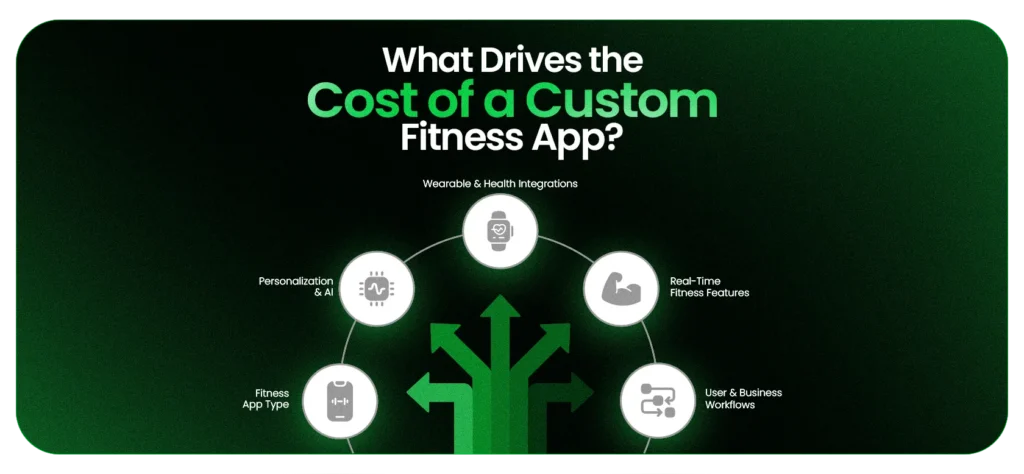
A few specific requirements push mobile app development cost higher for fitness apps and account for most of the budget swing between tiers:
- AI and personalization. Rule-based recommendations cost far less than a system that weighs workout history, wearable signals, and behavioral data together.
- Wearable and health integrations. Each connection adds authentication, data syncing, and privacy work, since Apple and Android both require careful permission handling.
- Backend complexity. Real-time syncing, video delivery, and multiple user roles all add infrastructure cost beyond a simple workout library.
- Security and compliance. Apps handling sensitive health data need stronger authentication, encryption, and access controls from day one.
- Design depth. Live coaching and adaptive recommendations require more research and usability testing than a static workout list.
Understanding the factors affecting app development cost helps founders prioritize the requirements that actually justify the additional investment.
How to Control Custom App Costs Without Cutting Corners
A bigger budget doesn’t automatically produce a better product. Knowing how to reduce mobile app development costs without compromising the core product can help founders keep the first release focused.
These four moves keep spending disciplined without weakening the core experience.
- Build your core loop first. Identify the smallest version that delivers your main promise, then resist adding features that don’t strengthen it.
- Prioritize one integration ecosystem. Launch with the wearable platform your target users already use, then expand once demand is confirmed.
- Separate must-have AI from experimental AI. If AI is your core value proposition, invest early. If it’s a convenience layer, validate the base product first.
- Design the architecture for growth, not for scale you don’t have yet. Avoid decisions that create expensive rebuilds later, but don’t over-engineer for a user base you haven’t earned.
Steps to Choose a Fitness App Development Partner
Portfolio size tells you less than you’d think. A team can ship dozens of apps and still lack real experience with health data, wearable sync, or AI systems.
So, before you commit, it is worth knowing how to choose the right mobile app development company based on its ability.
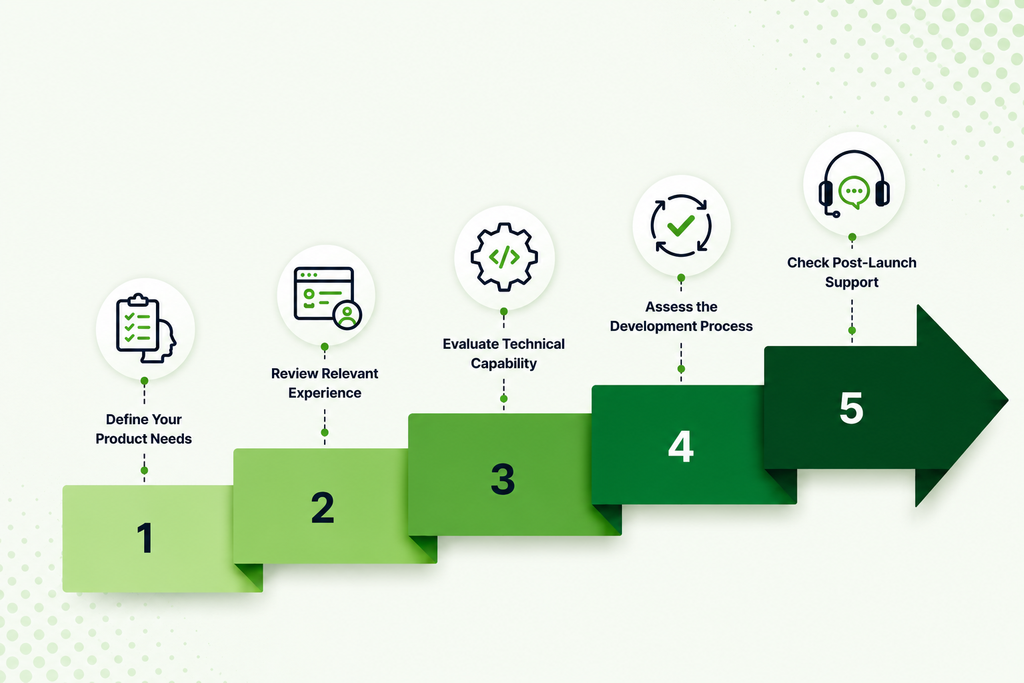
Ask any potential partner these questions before you commit:
| Area | What to Ask |
| Product discovery | How do you challenge assumptions before writing code? |
| Architecture | How will this handle new integrations and more users later? |
| Health data | Which wearable platforms have you actually integrated? |
| AI development | How do you evaluate output and protect user data? |
| Security | Is security part of architecture, or a final testing step? |
| Post-launch support | Who owns analytics, monitoring, and iteration after launch? |
A partner who can’t answer these clearly will struggle with the parts of your product that actually need custom engineering.
How Inceptives Approached a Complex Product Challenge
State of the Art Chiropractic is one example, where Inceptives developed a custom, HIPAA-compliant telehealth platform with appointment management, encrypted video consultations, and remote patient progress tracking.
The project demonstrates the same development principle fitness startups can apply: start with the product workflow, then build the technology around it.
View the State of the Art Chiropractic project
Common Mistakes Fitness Startups Make When Building Custom Apps
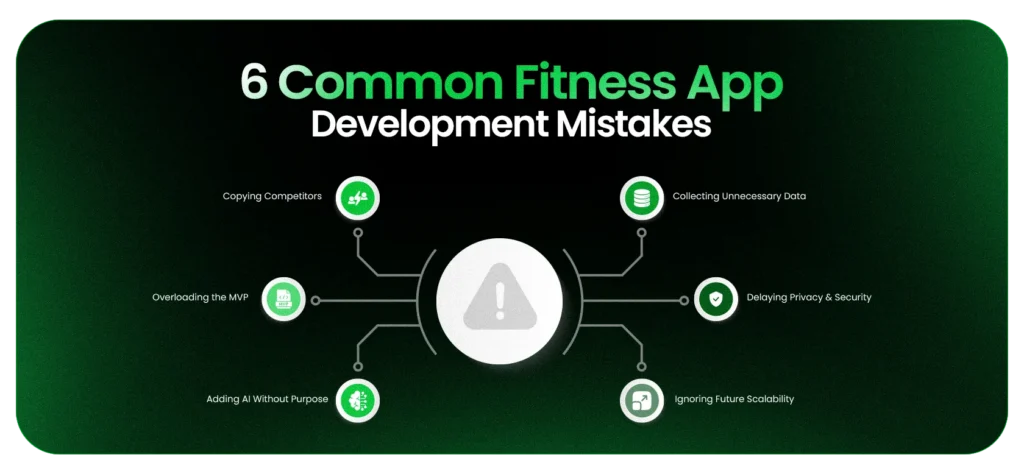
Most custom fitness app problems start with product strategy rather than code. These six mistakes can create unnecessary cost, complexity, and weak user adoption.
1. Copying Established Fitness Apps
Large fitness platforms can provide useful inspiration, but copying their feature sets rarely creates differentiation. Start with the specific problem your app can solve better, then build around it.
2. Overloading the First Release
An MVP does not need every integration, social feature, or subscription tier. Prioritize the smallest product that can test your core hypothesis with real users.
3. Treating AI as a Feature Instead of a System
Adding a chatbot to a workout library does not automatically create an AI-powered fitness product. AI should connect to relevant user context, product logic, and measurable outcomes. Otherwise, it adds complexity without improving the experience.
4. Collecting Data Without a Clear Purpose
More wearable data does not automatically create better personalization. Every data point should support a specific product decision, such as adjusting workout intensity or improving recovery recommendations.
5. Ignoring Privacy and Security Until Launch
Fitness apps can handle sensitive health and personal information, making privacy and security important from the beginning.Permissions, data protection, authentication, and access controls should form part of the architecture rather than become a pre-launch checklist.
6. Designing Only for the First 1,000 Users
Early architecture should stay simple enough to support fast iteration, but it should not create unnecessary barriers to growth. The goal is not maximum complexity upfront. It is an architecture that can evolve without forcing a costly rebuild later.
Custom Build or Off-the-Shelf? A Quick Decision Check
Answer these questions honestly before approving a custom build:
- Does your product depend on proprietary training or coaching logic?
- Is deep personalization central to your value proposition?
- Do wearable or health integrations sit at the core of the experience?
- Does your business need a monetization model beyond a single subscription?
- Have you already validated real user demand?
If you answered yes to three or more, custom development is likely worth the investment. If most answers are no, an off-the-shelf platform still gives you the better economics for now.
Final Takeaway
A fitness startup does not need a custom app just to have more features. It needs one when the product experience itself is the competitive advantage.
If your app depends on adaptive training, wearable data, personalized coaching, or a business model that generic platforms cannot support, custom development gives you the control to build those capabilities around your users.
The right approach is not to build everything at once.
- Validate the core idea
- Identify the experience that makes it different
- Build the technology around that advantage.
Once you know what makes your product different, invest in the technology that lets you own and scale that advantage.
Frequently Asked Questions
It’s building a fitness app from scratch around your specific business model, data, and user journey, instead of configuring a pre-built template. You control the product, features, and roadmap.
A basic MVP typically costs $40,000–$80,000. Growth-stage apps with deeper personalization run $80,000–$180,000, and AI-powered or wearable-heavy platforms often exceed $180,000, depending on integrations and backend complexity.
A focused MVP usually takes 3 to 6 months. Feature-rich platforms with AI and multiple integrations can take 6 to 12 months or longer, depending on scope.
Not always. White-label solutions work well for validating demand quickly. Custom development pays off once your product needs proprietary workflows, deep personalization, or a monetization model a template can’t support.
Yes. Both platforms provide developer frameworks for accessing authorized health and fitness data. The integration should serve a specific product purpose rather than collecting data without a clear use.
Business of Apps puts industry-wide day-30 retention at just 3% for health and fitness apps. Annual subscribers retain far better, around 33%, so the first month matters most.
Often, yes. Cross-platform frameworks launch iOS and Android from one codebase. Apps with deep wearable, Bluetooth, or real-time tracking needs may still require native modules.
Yes. Many startups launch on an off-the-shelf platform to validate demand and pricing first. Once you confirm real traction and hit its limits, migrate to custom development.
Rarely the technology. CB Insights found poor product-market fit drives 43% of startup failures. Custom development amplifies a working model. It doesn’t create one.


