- Cross-platform development lets teams write code once and launch on Android and iOS, so businesses reduce cost and reach more users faster.
- No single framework wins every project, so you should weigh performance, UI complexity, budget, time to market, and scalability before you decide.
- Flutter suits apps with custom interfaces because it renders its own components, while React Native fits teams that already work with JavaScript and React.
- .NET MAUI, the successor to Xamarin, works well for enterprises in the Microsoft ecosystem, and Microsoft ended Xamarin support in May 2024.
- Kotlin Multiplatform shares business logic and keeps native UI, which makes it a strong option for complex, high-performance products.
- Ionic helps teams prototype simple apps quickly, although its WebView approach can limit performance in highly interactive apps.
- Native development still makes sense for demanding games, hardware-heavy apps, and projects with strict security requirements.
- For most business apps, marketplaces, and SaaS platforms, cross-platform delivers the best balance between cost and performance.
Mobile app development today is not just about choosing iOS or Android. Businesses want speed, wider reach, and lower development costs. That is why cross-platform development has become such a practical choice. Instead of maintaining two separate codebases, companies can launch on multiple platforms with a single shared architecture.
If you are planning your next product or working with a cross-platform app development company, one question will come up almost immediately: Which framework should we use?
There is no one-size-fits-all answer. The right option depends on your app’s complexity, performance expectations, budget, and long-term scalability goals.
In this guide, we will break down the best cross-platform frameworks, compare their strengths, and help you choose the one that fits your project before you build cross-platform mobile apps.
What Is Cross-Platform App Development?
Cross-platform app development allows developers to write code once and deploy it across multiple operating systems, primarily Android and iOS.
Instead of building two separate native apps using Swift for iOS app development and Kotlin for Android app development, developers use a shared framework that translates code into native components.
This approach offers:
- Faster development cycles
- Lower overall cost
- Easier maintenance
- Simultaneous updates across platforms
- Broader market reach
However, choosing the wrong framework ranks among the common app development mistakes and can affect performance, UI consistency, and long-term maintainability. So let’s look at the top contenders.
Best Cross-Platform Frameworks in 2027
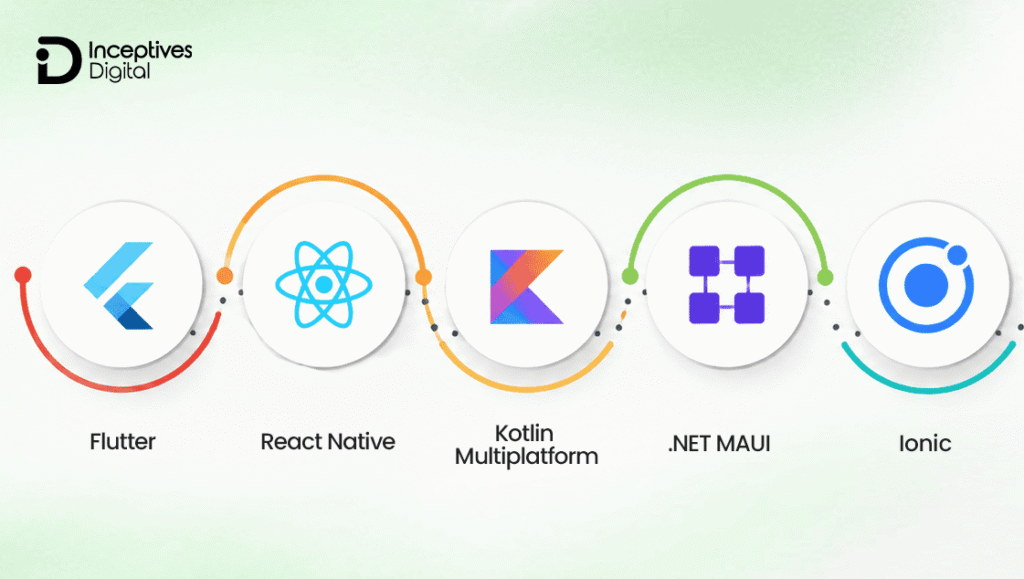
Below are the most reliable and widely adopted frameworks that continue to dominate the cross-platform landscape.
1. Flutter
Flutter, developed by Google, has quickly become one of the most popular choices for cross-platform development.
Why Developers Choose Flutter
- Single codebase for mobile, web, and desktop
- High-performance rendering engine
- Rich customizable widgets
- Strong community support
Flutter uses Dart and renders its own UI components instead of relying entirely on native ones, which explains why many teams choose Flutter. This gives developers more control over design and performance.
Best For:
- Startups planning MVP mobile app development
- Apps requiring custom UI
- Scalable enterprise applications
Flutter app development is often preferred when visual consistency across platforms matters.
2. React Native
React Native, backed by Meta, is another widely used framework for cross-platform development.
Key Strengths
- Uses JavaScript and React
- Large developer community
- Reusable components
- Native-like performance
React Native bridges JavaScript with native modules. This allows developers to create apps that feel close to native while still benefiting from shared code.
Best For:
- Social media apps
- E-commerce platforms
- Content-based applications
If your team already works with React for web, React Native app development becomes a natural extension.
3. .NET MAUI
.NET MAUI, developed by Microsoft, lets developers use C# and .NET to build apps for Android, iOS, macOS, and Windows. It replaced Xamarin, which Microsoft stopped supporting in May 2024, so new projects should start with MAUI instead.
Advantages
- Native API access
- Strong enterprise integration
- Shared business logic
- Single project structure for all platforms
.NET MAUI compiles to native code and uses native UI controls, which improves performance compared to some hybrid frameworks. As a result, apps feel responsive and familiar to users on every platform.
Best For:
- Enterprise apps
- Business applications
- Internal corporate systems
It works especially well for organizations already invested in the Microsoft stack, because their existing C# developers can start building right away.
4. Kotlin Multiplatform
Kotlin Multiplatform app development allows developers to share business logic across platforms while keeping native UI components.
Why It Stands Out
- Maintains native performance
- Shared backend logic
- High flexibility
- Ideal for gradual adoption
Instead of replacing native development entirely, it complements it. Developers can reuse code for networking, data handling, storage, and backend API development.
Best For:
- Complex apps
- High-performance products
- Teams wanting partial code sharing
5. Ionic
Ionic is a hybrid framework built on web technologies like HTML, CSS, and JavaScript.
Key Benefits
- Fast development
- Web-based approach
- Easy prototyping
- Large plugin ecosystem
Ionic apps run inside a WebView, which can slightly impact performance for highly interactive apps.
Best For:
- Simple business apps
- Internal tools
- Rapid prototyping
Not Sure Which Framework Fits Your App?
Our experts review your goals, budget, and timeline, then recommend the cross-platform framework that delivers the best performance and value for your product.
Get Free ConsultationFactors to Consider Before Choosing a Framework
Selecting your mobile app tech stack from the best cross-platform frameworks depends on several critical factors. Here is what you should evaluate:
1. Performance Requirements
If your app involves animations, gaming elements, or heavy data processing, performance becomes non-negotiable, so mobile app performance optimization should start early. Frameworks like Flutter and Kotlin Multiplatform often perform better in such cases.
For simpler apps, React Native or Ionic may be sufficient.
2. UI and Design Complexity
Apps with highly customized interfaces and strong UI/UX design benefit from frameworks that allow flexible UI control. Flutter excels in this area because it controls rendering directly.
If you prefer native UI components, React Native or Kotlin Multiplatform might be more suitable.
3. Development Budget
Cross-platform development generally lowers mobile app development cost compared with building two native apps.
However, framework choice still affects how you reduce app development cost:
- Larger community = easier hiring
- Better documentation = faster development
- Fewer workarounds = lower app maintenance cost
React Native and Flutter often offer cost advantages due to their extensive ecosystems.
4. Time to Market
If your product launch strategy prioritizes speed, frameworks with ready-to-use components and strong tooling can shorten your app development timeline significantly.
Flutter and React Native typically offer faster development cycles compared to more enterprise-focused solutions.
5. Long-Term Scalability
Your app might start small but grow over time. Choose a framework that:
- Supports modular architecture
- Allows integration with native modules
- Has strong community backing
- Receives regular updates
Framework longevity matters. Both Flutter and React Native show strong signs of long-term viability.
Cross-Platform vs Native: Is It Always the Best Choice?
Cross-platform development is powerful, but native vs hybrid options sometimes fit better.
Native Might Be Better If:
- You are building a high-performance game
- Your app depends heavily on device hardware
- You need platform-specific UI behavior
- Your mobile app security compliance is extremely strict
However, for most business apps, marketplaces, SaaS platforms, and on-demand services, cross-platform frameworks offer an ideal balance between cost and performance.
Real-World Use Cases
Many global brands, from fintech app development to healthcare app development, rely on cross-platform frameworks to reduce development time and maintain consistent user experiences across platforms.
Examples include:
- E-commerce applications
- Ride-sharing apps
- Healthcare solutions
- Fintech platforms
- Social networking apps
These businesses benefit from centralized code management and synchronized updates.
Which Framework Is Best Overall?
There is no universal winner, but here is a simplified breakdown:
| Framework | Best For | Performance | Development Speed |
| Flutter | Custom UI apps | High | Fast |
| React Native | Content-heavy apps | High | Fast |
| .NET MAUI | Enterprise apps | High | Moderate |
| Kotlin Multiplatform | Complex scalable apps | Very High | Moderate |
| Ionic | Simple apps | Moderate | Very Fast |
If you want flexibility, strong community support, and balanced performance, Flutter and React Native often lead the race.
If enterprise integration and Microsoft ecosystem compatibility matter, .NET MAUI becomes attractive.
If you need high performance with shared logic, Kotlin Multiplatform stands out.
The Future of Cross-Platform Development
Cross-platform frameworks continue to evolve rapidly. Improvements in:
- Native performance bridging
- UI rendering engines
- AI-driven development tools
- Cloud integration
are making cross-platform solutions more powerful than ever.
In the coming years, we will likely see tighter integration between mobile, web, and desktop platforms through unified frameworks.
Businesses are increasingly prioritizing efficiency and scalability, making cross-platform development a strategic part of digital product development rather than just a cost-saving option.
Final Thoughts
Choosing the right framework for cross-platform app development depends entirely on your project goals. Performance needs, budget constraints, design expectations, and long-term growth plans all play a role.
If you are planning MVP development for a startup, Flutter or React Native can help you move fast without sacrificing quality. For enterprise-grade custom software development, .NET MAUI or Kotlin Multiplatform may offer more control and integration flexibility.
The key is not just selecting from the best cross-platform frameworks, but aligning the framework with your business objectives and choosing the right development company.
When chosen wisely, cross-platform development can reduce costs, speed up deployment, and deliver a consistent user experience across devices. And in today’s competitive app market, that advantage can make all the difference.
Let’s Build Your Next App the Right Way
Share your idea with our team, and we will help you choose the right framework, plan your roadmap, and launch a high-performing app on every platform.
Talk to Our ExpertsFrequently Asked Questions
No single framework wins every project, but Flutter and React Native lead for most teams. Flutter suits custom interfaces, while React Native suits teams that already know JavaScript and React.
Neither is better in every case. Flutter gives you more design control because it renders its own components, while React Native lets web teams reuse their React skills. Choose based on your interface needs.
No, Microsoft ended Xamarin support in May 2024 and replaced it with .NET MAUI. Therefore, new projects should start with .NET MAUI, and teams with existing Xamarin apps should plan their migration soon.
Yes, in most cases, because one shared codebase replaces two separate native apps and reduces development time, maintenance effort, and update costs. However, your savings still depend on the framework you choose.
Choose native when you build a demanding game, rely heavily on device hardware, need platform-specific behavior, or face strict security rules. For most business apps and SaaS platforms, however, cross-platform works better.