Skip to content
  • Services
    Services
    Application Development
    • Mobile App Development
    • Blockchain Development
    By Platform
    • iOS App
    • Android App
    • React Native App
    • Flutter
    • Kotlin Multiplatform
    By Type
    • Web App Development
    • Backend and API
    • Cross-Platform Development
    • Web Development
    • Mobile Game Development
    • AR App Development
    • VR Development
    Launch & Growth
    • App Store Optimization
    • Product Launch Strategy
    • Post Launch Analytics and Iteration
    Artificial Intelligence
    AI Services
    • AI Development
    • AI App Development
    • AI Chatbot Development
    • AI Agent Development
    • Generative AI Development
    • Machine Learning Development
    • NLP Development
    • AI MVP Development
    Automation
    • AI Automation
    • System Integration & API Automation Services
    • Business Process Automation Services
    • RPA Development
    • IoT Development
    Digital Product Development
    By Engagement
    • Digital Product Development
    • Discovery Sprint
    • MVP Development
    • Product Rescue & Scaling
    • Product Strategy & Consulting
    • Custom Software Development
    • Staff Augmentation
    By Craft
    • UI/UX Design
    • Interactive Prototyping
  • Industries
    Industries
    • Healthcare App Development
    • Fitness App Development
    • Fintech App Development
    • Education App Development
    • Real Estate App Development
    • Travel App Development
    • Food Delivery App Development
    • Dating App Development
  • Locations
    Locations
    • San Francisco
    • New York
    • Austin
    • Toronto
    • London
    • Dubai
    • Singapore
  • Case Studies
  • Company
    Company
    • About
    • Blogs
    • Press & Media
    • Partnership
    • Life At Inceptives Digital
    • Leadership
    • Founder's Letter
    • Contact Us
Inceptives Digital
  • (469) 788-8527
Get In Touch
  • Blogs
Digital Products
  • Digital Product Development Process Explained

Digital Product Development Process Explained

  • Last Updated: November 4, 2026
  • Picture of Soha Shakeel Written By: Soha Shakeel
Muhammad Usman
Reviewed by: Muhammad Usman
On this page
Share
Digital Product Development Process
  • The process moves through seven stages, each with its own deliverables, typical duration, and risk if it gets rushed.
  • Methodology choice, whether Agile, Lean, or Waterfall, changes how the stages are executed, not which stages exist.
  • A mid-complexity product typically takes 5 to 8 months from ideation through launch.
  • Most process failures come from treating the stages as strictly one-directional instead of allowing feedback loops back to earlier steps.
  • Post-launch iteration is a stage, not an afterthought, and skipping it is where otherwise solid products quietly lose users.

Every digital product that worked followed a process. And every one that flopped usually skipped part of it, which explains most of the reasons digital products fail.

The digital product development process runs through seven stages: ideation, discovery, planning, design, development, launch, and post-launch iteration.

Founders and product leads often picture this as a straight line from idea to launch, but the real sequence loops back on itself constantly. 

Understanding where those loops belong is what separates a smooth build from a chaotic one.

The Product Development Journey 

StagePrimary GoalTypical Duration
1. Ideation and market researchConfirm the problem is real2 – 3 weeks
2. Discovery and strategyDefine vision and success metrics2 – 4 weeks
3. Planning and roadmappingPrioritize features and resources1 – 2 weeks
4. DesignTurn strategy into a testable experience3 – 6 weeks
5. DevelopmentBuild the working product8 – 16 weeks
6. LaunchRelease to real users1 – 2 weeks
7. Post-launch iterationImprove based on real usageOngoing

These durations shift with product complexity, so compare them with a typical app development timeline before you commit.

The stage order also matters less than most people assume, since several of these steps loop back on each other rather than running once and closing forever.

Stage-by-Stage Digital Product Development Process 
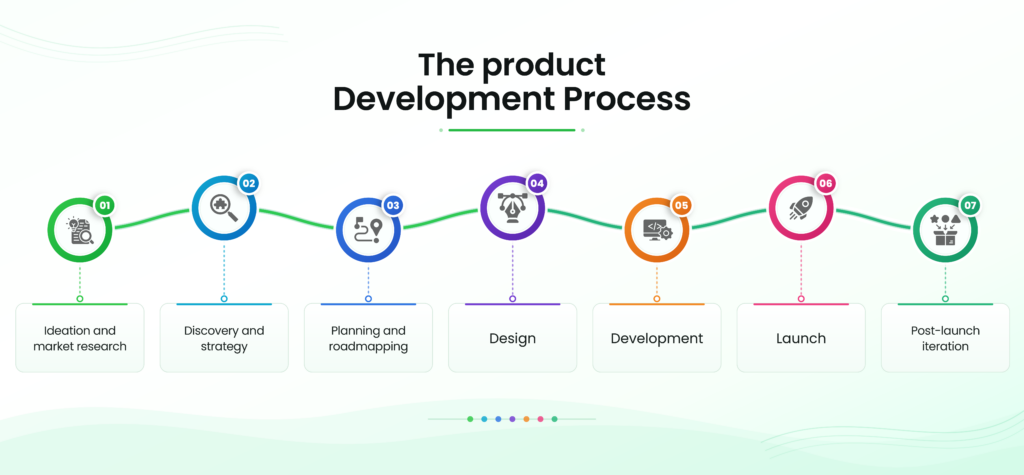
Stage-by-Stage Digital Product Development Process

Stage 1: Ideation and Market Research

Every product starts with a problem worth solving, confirmed through direct research rather than internal conviction. 

This stage exists to kill weak ideas cheaply, so you can validate your app idea before it absorbs a design or engineering budget, since a flawed premise only gets more expensive to fix the further it travels.

Key deliverables:

  • A written problem statement describing who is affected and how
  • A competitive analysis covering two or three direct alternatives
  • Evidence of demand, gathered through interviews, surveys, or a landing page test

Primary owner: Product manager, working closely with a researcher or founder who has direct access to potential users, a pattern common in software development for startups. 

In practice: the ideas that survive this stage rarely look like the first version pitched internally. Real user conversations tend to reshape the problem statement more than they confirm it.

Stage 2: Discovery and Strategy

Once the problem is validated, a discovery sprint defines the product vision in terms specific enough to guide decisions later.

This is where a vague idea turns into a scoped direction with measurable goals attached, and where the team agrees on what success will actually look like.

Key deliverables:

  • User personas built from real interview data, not assumptions
  • A defined set of success metrics, such as retention or activation rate
  • A short product vision brief that the whole team can reference

Primary owner: Product manager, in close collaboration with design leadership to make sure the vision is grounded in something buildable.

A clear strategy from product strategy consulting prevents a common failure mode: chasing every new feature idea that surfaces later without a shared standard for judging it.

Stage 3: Planning and Roadmapping

With a validated direction in hand, the team ranks and resources features before any design or engineering work begins, which helps reduce app development cost.

This stage is short but disproportionately important, since mistakes here compound through every stage that follows, often invisibly until development is already underway.

Key deliverables:

  • A prioritized feature backlog, typically scored with a framework like RICE or MoSCoW
  • A resourcing plan covering team roles, timeline, and budget
  • A technology stack decision, including backend api development choices, documented along with the reasoning behind it

Primary owner: Product manager, with the technical lead weighing in heavily on stack decisions and dependency mapping.

In practice: the planning stage that gets rushed usually causes the most expensive delays later, since unresolved feature dependencies surface mid-development as hidden software development costs instead of on a whiteboard. 

Stage 4: Design

Designers use UI/UX design to translate the strategy into an experience that teams can test before anyone writes a single line of production code.

This stage is where usability problems are cheapest to catch and most expensive to ignore, since a confusing flow costs a design revision now or a rebuild later.

Key deliverables:

  • Wireframes mapping the core user flows
  • An interactive, clickable prototype
  • A starter design system for consistent components as the product grows

Primary owner: Lead designer, with the product manager confirming the flow still matches the goals set during discovery and avoids common UI/UX design mistakes.

Interactive prototyping with even five real users at this stage tends to surface the same usability issues that a much larger internal review would miss entirely.

Stage 5: Development

Engineers build the product in structured sprints, typically producing a working increment every one to two weeks. 

This is usually the longest and most expensive stage (see typical MVP development cost ranges), and the one most sensitive to unclear planning further back in the process.

Key deliverables:

  • A working minimum viable product from MVP development with only the core features included
  • Regular sprint demos showing real, testable progress
  • A QA test coverage report confirming core flows work as intended

Primary owner: Technical lead, coordinating closely with QA, using proven mobile app testing strategies, to keep quality checks running alongside the build rather than after it.

In practice: sprint reviews that skip an actual working demo tend to drift furthest from the original scope, since verbal status updates hide gaps that a live demo cannot.

Stage 6: Launch

The product reaches real users for the first time, usually through a staged rollout guided by product launch strategy rather than an all-at-once release.

A launch plan exists to make this moment controlled instead of chaotic, with clear ownership for what happens if something goes wrong.

Key deliverables:

  • A launch checklist covering server load, support readiness, and rollback steps
  • A go-to-market plan, including app store optimization for mobile products, for reaching the first cohort of users
  • A monitoring setup to catch issues within hours, not days

Primary owner: Product manager, working with marketing on timing, using effective mobile app marketing tactics, and with engineering on technical launch readiness.

A soft launch to a smaller group before the full release gives the team a chance to catch problems while the stakes are still manageable.

Stage 7: Post-Launch Iteration

Launch is the start of a longer cycle of post-launch analytics iteration, not the finish line.

This stage runs indefinitely, shaped by real usage data instead of assumptions made before anyone touched the product.

Key deliverables:

  • An analytics dashboard tracking the metrics defined back in Stage 2
  • A prioritized backlog of user feedback and observed friction points
  • An updated roadmap reflecting what real usage actually revealed

Primary owner: Product manager, drawing on data analysts and support teams for the raw signal that shapes what gets prioritized next.

Products that treat this stage seriously tend to retain users far better than those quietly shelved the week after launch, which often need product rescue scaling later.

How Methodology Shapes the Process
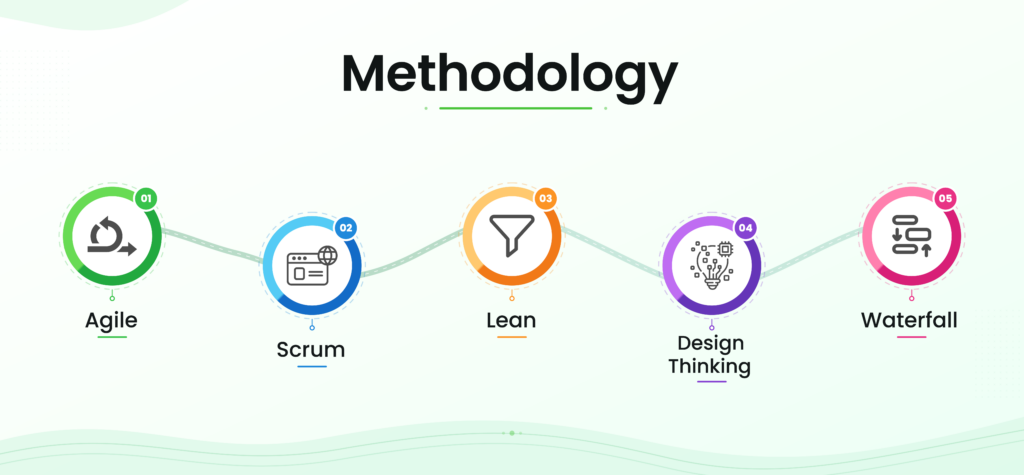
How Methodology Shapes the Process

The seven stages above stay constant. What changes between methodologies is how those stages get executed and how much they loop back on each other.

MethodologyHow It Changes the ProcessBest Fit
AgileDesign, development, and testing repeat in short cycles instead of one long passProducts with evolving requirements
ScrumAdds fixed sprint cycles and regular demos inside the Agile loopTeams needing structured accountability
LeanCompresses ideation and discovery into rapid, low-cost validation experimentsEarly-stage startups are still testing the idea
Design ThinkingExpands discovery and design with deeper user research before buildingProducts needing strong user empathy
WaterfallKeeps each stage sequential with little overlap or backtrackingProjects with fixed, well-defined scope

Most modern digital products use some version of Agile, since user needs rarely stay fixed long enough for a strict Waterfall sequence to hold up.

Have a Product Idea but No Clear Development Roadmap?

Work with Inceptives Digital to define your product scope, choose the right development approach, and establish realistic delivery milestones.

Plan Your Product Development!

Watching the Process Play Out for DPS Airem at Inceptives Digital  
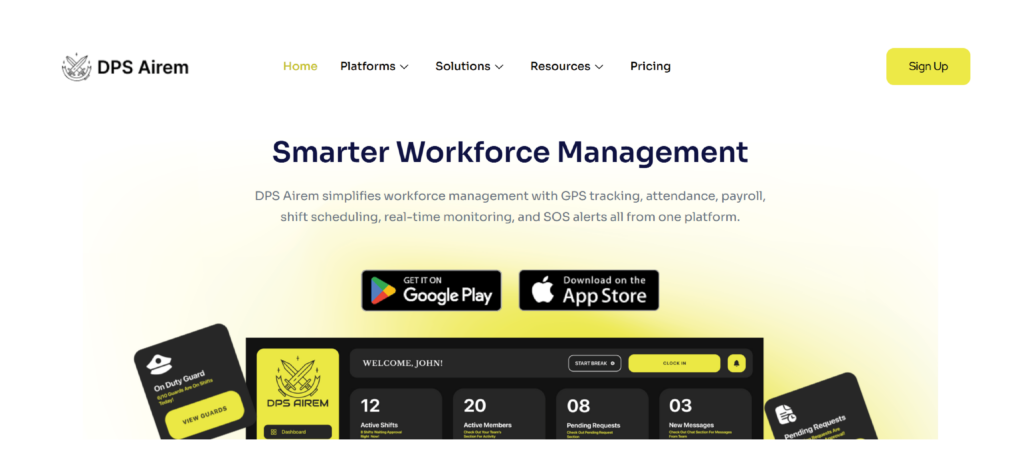
Watching the Process Play Out for DPS Airem at Inceptives Digital

Inceptives Digital ran this exact process to build a workforce management platform, DPS Airem, through mobile application development for a security staffing company managing guards across multiple client sites.

CategoryDetails
ProblemPaper-based attendance and no real-time visibility across sites
SolutionGeo-fenced mobile app, offline-first, live GPS dashboard
PlatformsiOS, Android, web
StatusLive in production

Results

  • 90% reduction in manual paperwork
  • 1,000+ field operatives tracked in real time
  • 4 role-specific interfaces, one for each user type

Head of Product 

“Process discipline is what separates products that scale from ones that stall. The stages matter less than the team’s willingness to follow them under pressure.”

“Process discipline is what separates products that scale from ones that stall. The stages matter less than the team’s willingness to follow them under pressure.” — Head of Product 

Tools Commonly Used at Each Stage

The right tool depends on which stage a team is actually in, not on picking one platform to cover everything.

StageCommon ToolsWhat They Support
Ideation and discoveryGoogle Forms, Typeform, NotionSurveys, interview notes, and early research
PlanningJira, Linear, AirtableBacklog prioritization and roadmap tracking
DesignFigma, Adobe XDWireframes, prototypes, and design systems
DevelopmentGitHub, VS CodeCode collaboration and version control
Launch and post-launchGoogle Analytics, Mixpanel, AmplitudeUsage tracking and post-launch iteration

A lean team often moves faster with two or three well-integrated tools mapped to the stage at hand than with a large, disconnected toolkit spanning every stage at once, and teams can also accelerate development with AI inside those tools.

Where the Process Actually Breaks Down

The seven stages are simple on paper, but app development risk management shows where real projects slip. Most real-world breakdowns come from a handful of recurring execution mistakes rather than a flaw in the sequence itself, and the same four issues tend to resurface across very different teams and product types.

1. Treating Stages as Strictly Sequential

AspectDetail
What HappensEach stage gets locked before the next starts, with no way to revisit an earlier decision
Why It MattersDesign and development especially need small feedback loops to catch issues before they compound
The FixBuild those loops in from the start, before deadline pressure makes them harder to add

2. Skipping the Feedback Loop Back to Discovery

AspectDetail
What HappensPost-launch data reveals a discovery assumption was wrong, but nothing feeds that insight back
Why It MattersThe same miscalculation quietly repeats in every future release without a return path
The FixCorrect a required workflow step, not something left to memory

3. Rushing the Handoff Between Design and Engineering

AspectDetail
What HappensA prototype that looks finished hides technical complexity nobody flagged early
Why It MattersRework after code is written costs far more than catching it in a design review
The FixReview designs with engineers before development starts, not after

4. No Clear Owner at Each Stage Gate

AspectDetail
What HappensSign-off gets revisited by committee instead of finalized, and stages drag
Why It MattersStages without a single accountable owner tend to stall indefinitely
The FixAssign one accountable person to each stage transition

5. Measuring Progress by Activity Instead of Outcomes

AspectDetail
What HappensHours logged or tickets closed get tracked instead of real results
Why It MattersBusy work can quietly hide a lack of actual progress toward the goal
The FixTie progress to the success metrics defined back in discovery

How Long Does the Full Process Actually Take

Total timeline scales directly with product complexity, and it maps closely to the same tiers used when estimating cost. 

A tight scope compresses every stage, while added system integration api automation, and custom logic stretch development and testing the most.

Product TierTotal TimelineWhere Time Concentrates
Narrow MVP3 – 5 monthsDevelopment, since the scope is deliberately narrow
Mid-complexity product5 – 8 monthsDevelopment and design combined
Enterprise-grade platform8 – 14 monthsDevelopment, testing, and integration work

These timelines pair directly with the cost ranges for each tier, covered in digital product development cost.

Time and cost tend to move together, since both scale with the same underlying complexity, which is why a rushed timeline and an underpriced quote are often symptoms of the same missing scope of work.

The Decisions That Define a Successful Product Launch

The seven stages of digital product development are not a formality, a point the difference between software vs product development makes clear. Each one exists because skipping it moves the same work later, where it costs more time and more money to fix.

It is a process that is easy to describe but hard to execute without discipline. Inceptives Digital is glad to walk through where yours currently stands, from product planning to custom software development.

Ready to Put This Process to Work?

A clear process turns a good idea into a real, working product. Inceptives Digital is glad to map out yours.

Plan Your Digital Product!

Frequently Asked Questions

1. What are the 7 stages of digital product development?

The seven stages are ideation and market research, discovery and strategy, planning and road mapping, design, development, launch, and post-launch iteration. Each stage produces specific deliverables that feed directly into the one that follows.

2. How long does the digital product development process take?

A narrow MVP typically takes 3 to 5 months, a mid-complexity product takes 5 to 8 months, and an enterprise-grade platform can take 8 to 14 months from start to launch. Development is almost always the longest single stage, regardless of overall product complexity.

3. What is the most important stage in the process?

Discovery and market research carry outsized weight, since a flawed problem statement at this stage undermines every decision made afterward, no matter how well the later stages are executed. A well-designed product built to solve the wrong problem is still the wrong product.

4. Can the stages overlap or run in parallel?

Yes, and in Agile-based processes, they usually do. Design, development, and testing often run in overlapping cycles rather than waiting for a strict handoff between each one, which shortens the overall timeline considerably.

5. What methodology is best for the digital product development process?

Agile and Scrum fit most products with evolving requirements, while Waterfall still suits projects with a fixed, well-defined scope that is unlikely to change once approved. The right choice depends more on how much uncertainty exists in the requirements than on team size or budget.

6. Who should be involved in the discovery stage?

A product manager typically leads discovery, working closely with a researcher or founder who has direct access to potential users. Design and engineering leads often join partway through to sanity-check that early ideas are technically feasible before they get locked into the roadmap.

7. Does the process differ for a mobile app versus a web platform?

The seven stages stay the same regardless of platform, though design and development often split into parallel workstreams when a mobile app and a web platform ship together, so a web app development company and a mobile team often work side by side. Testing typically takes longer too, since each platform needs its own QA pass before launch.

8. How can I tell if a vendor is actually following this process?

Ask to see real deliverables from each stage, such as a written problem statement, a clickable prototype, or a QA report, rather than just a project timeline, and use that evidence to choose the right company. A vendor who can point to concrete outputs from past work is far more likely to be running the process seriously than one who only describes it.

Picture of Soha Shakeel

Soha Shakeel

Soha Shakeel is a Senior Content Writer at Inceptives Digital, a mobile app development company working across a range of technology-driven industries. Her work covers website copy, thought leadership, service pages, blogs, and detailed industry guides, with a strong focus on accuracy, clarity, and subject understanding. Drawing on experience in technology and digital services, she turns technical concepts into polished, accessible content while keeping search performance, audience intent, and brand credibility firmly in view.
✦ Summarize with AI
ChatGPT Claude Perplexity Gemini Grok

Have a Product in Mind?

Let’s build it the right way, together
Start the Conversation
Blog / Digital Products / Digital Product Development Process Explained

Digital Product Development Process Explained

Soha Shakeel
WRITTEN BY Soha Shakeel
Muhammad Usman
REVIEWED & APPROVED BY Muhammad Usman
On This Page
The Product Development JourneyStage-by-Stage Digital Product Development ProcessStage 1: Ideation and Market ResearchStage 2: Discovery and StrategyStage 3: Planning and RoadmappingStage 4: DesignStage 5: DevelopmentStage 6: LaunchStage 7: Post-Launch IterationHow Methodology Shapes the ProcessHave a Product Idea but No Clear Development Roadmap?Watching the Process Play Out for DPS Airem at Inceptives DigitalResultsTools Commonly Used at Each StageWhere the Process Actually Breaks Down1. Treating Stages as Strictly Sequential2. Skipping the Feedback Loop Back to Discovery3. Rushing the Handoff Between Design and Engineering4. No Clear Owner at Each Stage Gate5. Measuring Progress by Activity Instead of OutcomesHow Long Does the Full Process Actually TakeThe Decisions That Define a Successful Product LaunchReady to Put This Process to Work?Frequently Asked Questions
Share This Article
Digital Product Development Process Explained
  • The process moves through seven stages, each with its own deliverables, typical duration, and risk if it gets rushed.
  • Methodology choice, whether Agile, Lean, or Waterfall, changes how the stages are executed, not which stages exist.
  • A mid-complexity product typically takes 5 to 8 months from ideation through launch.
  • Most process failures come from treating the stages as strictly one-directional instead of allowing feedback loops back to earlier steps.
  • Post-launch iteration is a stage, not an afterthought, and skipping it is where otherwise solid products quietly lose users.

Every digital product that worked followed a process. And every one that flopped usually skipped part of it, which explains most of the reasons digital products fail.

The digital product development process runs through seven stages: ideation, discovery, planning, design, development, launch, and post-launch iteration.

Founders and product leads often picture this as a straight line from idea to launch, but the real sequence loops back on itself constantly. 

Understanding where those loops belong is what separates a smooth build from a chaotic one.

The Product Development Journey 

StagePrimary GoalTypical Duration
1. Ideation and market researchConfirm the problem is real2 – 3 weeks
2. Discovery and strategyDefine vision and success metrics2 – 4 weeks
3. Planning and roadmappingPrioritize features and resources1 – 2 weeks
4. DesignTurn strategy into a testable experience3 – 6 weeks
5. DevelopmentBuild the working product8 – 16 weeks
6. LaunchRelease to real users1 – 2 weeks
7. Post-launch iterationImprove based on real usageOngoing

These durations shift with product complexity, so compare them with a typical app development timeline before you commit.

The stage order also matters less than most people assume, since several of these steps loop back on each other rather than running once and closing forever.

Stage-by-Stage Digital Product Development Process 

Stage-by-Stage Digital Product Development Process

Stage 1: Ideation and Market Research

Every product starts with a problem worth solving, confirmed through direct research rather than internal conviction. 

This stage exists to kill weak ideas cheaply, so you can validate your app idea before it absorbs a design or engineering budget, since a flawed premise only gets more expensive to fix the further it travels.

Key deliverables:

  • A written problem statement describing who is affected and how
  • A competitive analysis covering two or three direct alternatives
  • Evidence of demand, gathered through interviews, surveys, or a landing page test

Primary owner: Product manager, working closely with a researcher or founder who has direct access to potential users, a pattern common in software development for startups. 

In practice: the ideas that survive this stage rarely look like the first version pitched internally. Real user conversations tend to reshape the problem statement more than they confirm it.

Stage 2: Discovery and Strategy

Once the problem is validated, a discovery sprint defines the product vision in terms specific enough to guide decisions later.

This is where a vague idea turns into a scoped direction with measurable goals attached, and where the team agrees on what success will actually look like.

Key deliverables:

  • User personas built from real interview data, not assumptions
  • A defined set of success metrics, such as retention or activation rate
  • A short product vision brief that the whole team can reference

Primary owner: Product manager, in close collaboration with design leadership to make sure the vision is grounded in something buildable.

A clear strategy from product strategy consulting prevents a common failure mode: chasing every new feature idea that surfaces later without a shared standard for judging it.

Stage 3: Planning and Roadmapping

With a validated direction in hand, the team ranks and resources features before any design or engineering work begins, which helps reduce app development cost.

This stage is short but disproportionately important, since mistakes here compound through every stage that follows, often invisibly until development is already underway.

Key deliverables:

  • A prioritized feature backlog, typically scored with a framework like RICE or MoSCoW
  • A resourcing plan covering team roles, timeline, and budget
  • A technology stack decision, including backend api development choices, documented along with the reasoning behind it

Primary owner: Product manager, with the technical lead weighing in heavily on stack decisions and dependency mapping.

In practice: the planning stage that gets rushed usually causes the most expensive delays later, since unresolved feature dependencies surface mid-development as hidden software development costs instead of on a whiteboard. 

Stage 4: Design

Designers use UI/UX design to translate the strategy into an experience that teams can test before anyone writes a single line of production code.

This stage is where usability problems are cheapest to catch and most expensive to ignore, since a confusing flow costs a design revision now or a rebuild later.

Key deliverables:

  • Wireframes mapping the core user flows
  • An interactive, clickable prototype
  • A starter design system for consistent components as the product grows

Primary owner: Lead designer, with the product manager confirming the flow still matches the goals set during discovery and avoids common UI/UX design mistakes.

Interactive prototyping with even five real users at this stage tends to surface the same usability issues that a much larger internal review would miss entirely.

Stage 5: Development

Engineers build the product in structured sprints, typically producing a working increment every one to two weeks. 

This is usually the longest and most expensive stage (see typical MVP development cost ranges), and the one most sensitive to unclear planning further back in the process.

Key deliverables:

  • A working minimum viable product from MVP development with only the core features included
  • Regular sprint demos showing real, testable progress
  • A QA test coverage report confirming core flows work as intended

Primary owner: Technical lead, coordinating closely with QA, using proven mobile app testing strategies, to keep quality checks running alongside the build rather than after it.

In practice: sprint reviews that skip an actual working demo tend to drift furthest from the original scope, since verbal status updates hide gaps that a live demo cannot.

Stage 6: Launch

The product reaches real users for the first time, usually through a staged rollout guided by product launch strategy rather than an all-at-once release.

A launch plan exists to make this moment controlled instead of chaotic, with clear ownership for what happens if something goes wrong.

Key deliverables:

  • A launch checklist covering server load, support readiness, and rollback steps
  • A go-to-market plan, including app store optimization for mobile products, for reaching the first cohort of users
  • A monitoring setup to catch issues within hours, not days

Primary owner: Product manager, working with marketing on timing, using effective mobile app marketing tactics, and with engineering on technical launch readiness.

A soft launch to a smaller group before the full release gives the team a chance to catch problems while the stakes are still manageable.

Stage 7: Post-Launch Iteration

Launch is the start of a longer cycle of post-launch analytics iteration, not the finish line.

This stage runs indefinitely, shaped by real usage data instead of assumptions made before anyone touched the product.

Key deliverables:

  • An analytics dashboard tracking the metrics defined back in Stage 2
  • A prioritized backlog of user feedback and observed friction points
  • An updated roadmap reflecting what real usage actually revealed

Primary owner: Product manager, drawing on data analysts and support teams for the raw signal that shapes what gets prioritized next.

Products that treat this stage seriously tend to retain users far better than those quietly shelved the week after launch, which often need product rescue scaling later.

How Methodology Shapes the Process

How Methodology Shapes the Process

The seven stages above stay constant. What changes between methodologies is how those stages get executed and how much they loop back on each other.

MethodologyHow It Changes the ProcessBest Fit
AgileDesign, development, and testing repeat in short cycles instead of one long passProducts with evolving requirements
ScrumAdds fixed sprint cycles and regular demos inside the Agile loopTeams needing structured accountability
LeanCompresses ideation and discovery into rapid, low-cost validation experimentsEarly-stage startups are still testing the idea
Design ThinkingExpands discovery and design with deeper user research before buildingProducts needing strong user empathy
WaterfallKeeps each stage sequential with little overlap or backtrackingProjects with fixed, well-defined scope

Most modern digital products use some version of Agile, since user needs rarely stay fixed long enough for a strict Waterfall sequence to hold up.

Have a Product Idea but No Clear Development Roadmap?

Work with Inceptives Digital to define your product scope, choose the right development approach, and establish realistic delivery milestones.

Plan Your Product Development!

Watching the Process Play Out for DPS Airem at Inceptives Digital  

Watching the Process Play Out for DPS Airem at Inceptives Digital

Inceptives Digital ran this exact process to build a workforce management platform, DPS Airem, through mobile application development for a security staffing company managing guards across multiple client sites.

CategoryDetails
ProblemPaper-based attendance and no real-time visibility across sites
SolutionGeo-fenced mobile app, offline-first, live GPS dashboard
PlatformsiOS, Android, web
StatusLive in production

Results

  • 90% reduction in manual paperwork
  • 1,000+ field operatives tracked in real time
  • 4 role-specific interfaces, one for each user type

Head of Product 

“Process discipline is what separates products that scale from ones that stall. The stages matter less than the team’s willingness to follow them under pressure.”

“Process discipline is what separates products that scale from ones that stall. The stages matter less than the team’s willingness to follow them under pressure.” — Head of Product 

Tools Commonly Used at Each Stage

The right tool depends on which stage a team is actually in, not on picking one platform to cover everything.

StageCommon ToolsWhat They Support
Ideation and discoveryGoogle Forms, Typeform, NotionSurveys, interview notes, and early research
PlanningJira, Linear, AirtableBacklog prioritization and roadmap tracking
DesignFigma, Adobe XDWireframes, prototypes, and design systems
DevelopmentGitHub, VS CodeCode collaboration and version control
Launch and post-launchGoogle Analytics, Mixpanel, AmplitudeUsage tracking and post-launch iteration

A lean team often moves faster with two or three well-integrated tools mapped to the stage at hand than with a large, disconnected toolkit spanning every stage at once, and teams can also accelerate development with AI inside those tools.

Where the Process Actually Breaks Down

The seven stages are simple on paper, but app development risk management shows where real projects slip. Most real-world breakdowns come from a handful of recurring execution mistakes rather than a flaw in the sequence itself, and the same four issues tend to resurface across very different teams and product types.

1. Treating Stages as Strictly Sequential

AspectDetail
What HappensEach stage gets locked before the next starts, with no way to revisit an earlier decision
Why It MattersDesign and development especially need small feedback loops to catch issues before they compound
The FixBuild those loops in from the start, before deadline pressure makes them harder to add

2. Skipping the Feedback Loop Back to Discovery

AspectDetail
What HappensPost-launch data reveals a discovery assumption was wrong, but nothing feeds that insight back
Why It MattersThe same miscalculation quietly repeats in every future release without a return path
The FixCorrect a required workflow step, not something left to memory

3. Rushing the Handoff Between Design and Engineering

AspectDetail
What HappensA prototype that looks finished hides technical complexity nobody flagged early
Why It MattersRework after code is written costs far more than catching it in a design review
The FixReview designs with engineers before development starts, not after

4. No Clear Owner at Each Stage Gate

AspectDetail
What HappensSign-off gets revisited by committee instead of finalized, and stages drag
Why It MattersStages without a single accountable owner tend to stall indefinitely
The FixAssign one accountable person to each stage transition

5. Measuring Progress by Activity Instead of Outcomes

AspectDetail
What HappensHours logged or tickets closed get tracked instead of real results
Why It MattersBusy work can quietly hide a lack of actual progress toward the goal
The FixTie progress to the success metrics defined back in discovery

How Long Does the Full Process Actually Take

Total timeline scales directly with product complexity, and it maps closely to the same tiers used when estimating cost. 

A tight scope compresses every stage, while added system integration api automation, and custom logic stretch development and testing the most.

Product TierTotal TimelineWhere Time Concentrates
Narrow MVP3 – 5 monthsDevelopment, since the scope is deliberately narrow
Mid-complexity product5 – 8 monthsDevelopment and design combined
Enterprise-grade platform8 – 14 monthsDevelopment, testing, and integration work

These timelines pair directly with the cost ranges for each tier, covered in digital product development cost.

Time and cost tend to move together, since both scale with the same underlying complexity, which is why a rushed timeline and an underpriced quote are often symptoms of the same missing scope of work.

The Decisions That Define a Successful Product Launch

The seven stages of digital product development are not a formality, a point the difference between software vs product development makes clear. Each one exists because skipping it moves the same work later, where it costs more time and more money to fix.

It is a process that is easy to describe but hard to execute without discipline. Inceptives Digital is glad to walk through where yours currently stands, from product planning to custom software development.

Ready to Put This Process to Work?

A clear process turns a good idea into a real, working product. Inceptives Digital is glad to map out yours.

Plan Your Digital Product!

Frequently Asked Questions

1. What are the 7 stages of digital product development?

The seven stages are ideation and market research, discovery and strategy, planning and road mapping, design, development, launch, and post-launch iteration. Each stage produces specific deliverables that feed directly into the one that follows.

2. How long does the digital product development process take?

A narrow MVP typically takes 3 to 5 months, a mid-complexity product takes 5 to 8 months, and an enterprise-grade platform can take 8 to 14 months from start to launch. Development is almost always the longest single stage, regardless of overall product complexity.

3. What is the most important stage in the process?

Discovery and market research carry outsized weight, since a flawed problem statement at this stage undermines every decision made afterward, no matter how well the later stages are executed. A well-designed product built to solve the wrong problem is still the wrong product.

4. Can the stages overlap or run in parallel?

Yes, and in Agile-based processes, they usually do. Design, development, and testing often run in overlapping cycles rather than waiting for a strict handoff between each one, which shortens the overall timeline considerably.

5. What methodology is best for the digital product development process?

Agile and Scrum fit most products with evolving requirements, while Waterfall still suits projects with a fixed, well-defined scope that is unlikely to change once approved. The right choice depends more on how much uncertainty exists in the requirements than on team size or budget.

6. Who should be involved in the discovery stage?

A product manager typically leads discovery, working closely with a researcher or founder who has direct access to potential users. Design and engineering leads often join partway through to sanity-check that early ideas are technically feasible before they get locked into the roadmap.

7. Does the process differ for a mobile app versus a web platform?

The seven stages stay the same regardless of platform, though design and development often split into parallel workstreams when a mobile app and a web platform ship together, so a web app development company and a mobile team often work side by side. Testing typically takes longer too, since each platform needs its own QA pass before launch.

8. How can I tell if a vendor is actually following this process?

Ask to see real deliverables from each stage, such as a written problem statement, a clickable prototype, or a QA report, rather than just a project timeline, and use that evidence to choose the right company. A vendor who can point to concrete outputs from past work is far more likely to be running the process seriously than one who only describes it.

✦ Summarize with AI
Soha Shakeel
WRITTEN BY

Soha Shakeel

Soha Shakeel is a Senior Content Writer at Inceptives Digital, a mobile app development company working across a range of technology-driven industries. Her work covers website copy, thought leadership, service pages, blogs, and detailed industry guides, with a strong focus on accuracy, clarity, and subject understanding. Drawing on experience in technology and digital services, she turns technical concepts into polished, accessible content while keeping search performance, audience intent, and brand credibility firmly in view.

Muhammad Usman
REVIEWED & APPROVED BY

Muhammad Usman

Usman is an experienced organic growth expert with 3+ years of expertise in helping businesses increase visibility, attract qualified audiences, and achieve sustainable online growth. At Inceptives Digital, he develops data-driven organic growth strategies tailored to diverse industries, including clients in the mobile app development space. His approach focuses on understanding audience behavior, identifying growth opportunities, optimizing digital channels, and building strategies that generate consistent, measurable results. By staying ahead of evolving digital trends and user behavior, Usman helps businesses strengthen their online presence, expand their reach, and achieve long-term organic growth.

✦ Summarize with AI

Have a Product in Mind?

Discuss your idea with our product development team.

Start the Conversation →
On This Page
The Product Development JourneyStage-by-Stage Digital Product Development ProcessStage 1: Ideation and Market ResearchStage 2: Discovery and StrategyStage 3: Planning and RoadmappingStage 4: DesignStage 5: DevelopmentStage 6: LaunchStage 7: Post-Launch IterationHow Methodology Shapes the ProcessHave a Product Idea but No Clear Development Roadmap?Watching the Process Play Out for DPS Airem at Inceptives DigitalResultsTools Commonly Used at Each StageWhere the Process Actually Breaks Down1. Treating Stages as Strictly Sequential2. Skipping the Feedback Loop Back to Discovery3. Rushing the Handoff Between Design and Engineering4. No Clear Owner at Each Stage Gate5. Measuring Progress by Activity Instead of OutcomesHow Long Does the Full Process Actually TakeThe Decisions That Define a Successful Product LaunchReady to Put This Process to Work?Frequently Asked Questions
Locations

Get in touch!

Scalable solutions from teams worldwide!

  • Privacy Policy
  • |
  • Terms of Services
Inceptives Digital

We build apps, digital products, and AI-powered systems for businesses that cannot afford to get it wrong.

  • info@inceptivesdigital.com
  • (469) 788-8527
Linkedin Instagram Facebook
Services
  • Mobile App Development
  • AI Development
  • Digital Product Development
  • Mobile App Development
  • AI Development
  • Digital Product Development
Industries
  • Healthcare
  • Fitness
  • Dating
  • Education
  • Real Estate
  • Travel
  • Food Delivery
  • Healthcare
  • Fitness
  • Dating
  • Education
  • Real Estate
  • Travel
  • Food Delivery
Case Studies
  • WordSmith Pro
  • DPS Airem
  • State of the Art Chiropractic
  • Family Entertainment Group
  • StakBread
  • WordSmith Pro
  • DPS Airem
  • State of the Art Chiropractic
  • Family Entertainment Group
  • StakBread
Locations
  • San Francisco
  • Toronto
  • Austin
  • New York
  • Singapore
  • London
  • Dubai
  • San Francisco
  • Toronto
  • Austin
  • New York
  • Singapore
  • London
  • Dubai
Company
  • About
  • Blog
  • Press & Media
  • Partnership
  • Life At Inceptives Digital
  • Leadership
  • Founder’s Letter
  • Contact Us
  • About
  • Blog
  • Press & Media
  • Partnership
  • Life At Inceptives Digital
  • Leadership
  • Founder’s Letter
  • Contact Us
Recognized and Reviewed On

Independent reviews and industry recognition from established B2B platforms.

Clutch Review Badge
Bark Review Badge
Trustpilot Review Badge
Our Locations
United States
New York, USA

1178 Broadway, 3rd Floor New York, NY 10001 United States

United States
San Francisco, USA

490 Post St, Ste 500 San Francisco, CA 94102 United States

United States
Austin, USA

5900 Balcones Drive, Suite 100 Austin, Texas 78731 United States

United States
Allen, USA

450 Century Parkway, Suite 250 1005 Allen, TX 75013, USA

Canda
Toronto, Canada

2482 Yonge Street Toronto, ON M4P 2H5 Canada

united kingdom
London, UK

Office 1776, 60 Tottenham Court Road, Fitzrovia, London W1T 2EW

Dubai, UAE

IFZA Business Park Building A2, Dubai Silicon Oasis Dubai, UAE

Singapore
Singapore

No. 7 Temasek Boulevard #12-07, Suntec Tower One Singapore 038987

Pakistan
Karachi, Pakistan

Office No. 1, Najeeb Center 172-B Tariq Road, PECHS Karachi 74400, Pakistan

© 2026 IT Core Solutions LLC DBA Inceptives Digital. All Rights Reserved.

  • Privacy Policy
  • Terms of Use
DMCA.com Protection Status

Get Expert Direction for Your Next Digital Product

Inceptives Digital has helped businesses across regions bring their visions to life. See what their experience says about working with us. We don’t do magic. We build with expertise.

“
Inceptives Digital has been professional, responsive, and genuinely committed to understanding our vision for Evoltion Enterprise. The team communicated clearly, explained technical details patiently, and made payments hassle-free. Special thanks to Aaron Francis for his clarity and support throughout. Highly recommend them as a transparent, easy-to-work-with technology partner
Tyrrell Gibson CEO, Evoltion Enterprise
When I came to these guys, it was just me in an idea. I’ve had ideas before that. I thought were good and sat on them only to watch others take the initiative and reap the rewards because I lacked confidence. When I had the idea for my app I figured, “Not this time.
Edward Eller, GoRyde
I absolutely recommend this company. This team is absolutely Amazing!
I can't say enough good things about them. I had tried 3 other app makers before finding them. All of them fell short in the end. The Inceptive team was the literal answer of my prayers.
DC & Owner, State of the Art Chiropractic
AWARDS & RECOGNITION
Inceptives Digital award badge 1
Top Mobile App Developers 2025
Inceptives Digital award badge 3
RightFirms company badge
Inceptives Digital award badge 5
FEATURED ON MEDIA & REVIEW PLATFORMS
Associated Press
Trustpilot
Google
The New York Times
The Globe and Mail
USA Today

Let us help you build the next innovative digital product with precision and expertise. Share your idea and get a customized roadmap to your app within 24 hours.

Fully NDA-Protected
  • Privacy Policy
  • |
  • Terms of Services

Schedule a Meeting

Loading calendar...
Calendar is taking longer than expected

Please try again, or open Calendly directly to book your meeting.

Open Calendly